

How Does Lecturer Training Prepare Educators for the Future of Higher Education
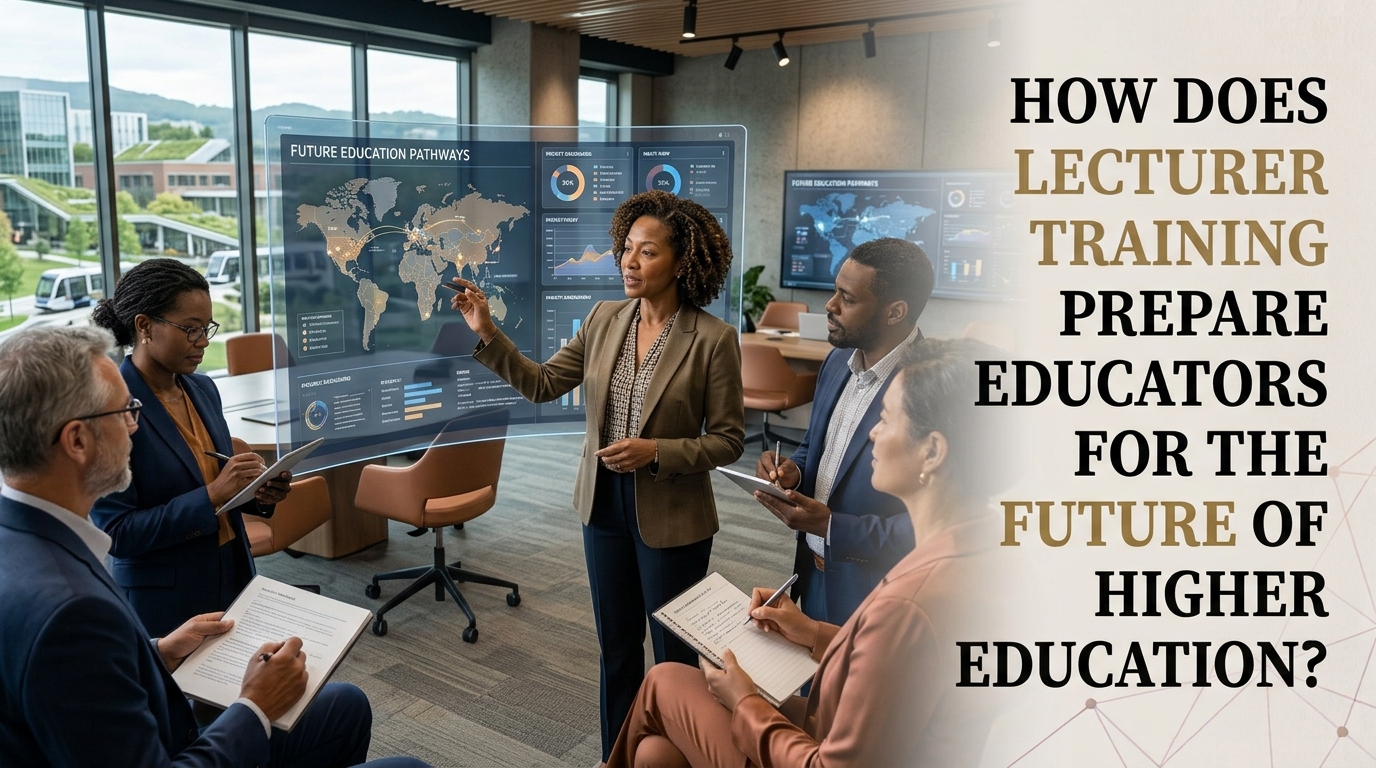
The future of higher education is shaped by rapid technological changes, new learning methods, and evolving student needs. Lecturers are expected to do more than deliver academic information. They must also develop critical thinking, encourage creativity, support diverse learners, and prepare students for changing professional environments. Lecturer training helps educators develop the knowledge and skills needed to respond to these changes. Through continuous professional development, universities can prepare lecturers to create more effective learning experiences and maintain high academic standards.
DEVELOPING MODERN TEACHING SKILLS
Modern higher education requires teaching methods that encourage students to participate actively in the learning process. Lecturer training introduces educators to student-centered learning, collaborative activities, problem-based learning, and project-based approaches. These methods encourage students to analyze information, solve problems, and apply theoretical knowledge to real situations. They also help lecturers move beyond traditional teaching methods that rely mainly on lectures and memorization.
Training programs can provide practical opportunities for lecturers to design lessons, test new teaching strategies, and evaluate their effectiveness. Lecturers can also learn how to adapt their methods to different subjects and student abilities. Effective teaching skills are essential for creating engaging classrooms where students feel encouraged to ask questions and share ideas. As higher education evolves, these skills help lecturers respond to changing academic expectations.
IMPROVING DIGITAL LITERACY AND TECHNOLOGY USE
Technology has become an important part of teaching, learning, and academic administration. Universities increasingly use learning management systems, online classrooms, digital assessment tools, and interactive educational resources. Lecturer training helps educators understand how to use these technologies effectively and integrate them into their courses. It also introduces practical ways to combine face-to-face instruction with online learning when appropriate.
Digital competence involves more than knowing how to operate software. Lecturers must understand digital learning design, accessibility, data privacy, and responsible technology use. Training can help them select suitable tools based on learning objectives rather than using technology simply because it is available. With these abilities, lecturers can create flexible learning experiences that meet the needs of students in a digitally connected world.
PREPARING LECTURERS FOR ARTIFICIAL INTELLIGENCE
Artificial intelligence is creating new opportunities and challenges in higher education. AI tools can assist with generating learning materials, organizing information, providing practice questions, and supporting feedback. However, their use also raises concerns about accuracy, academic integrity, privacy, and overdependence on automated systems. Lecturer training helps educators understand both the benefits and limitations of these technologies.
Educators need guidance on how to use AI responsibly while maintaining meaningful interaction with students. They should learn to evaluate AI-generated information, explain acceptable use, and design assessments that encourage independent thinking. AI literacy can help lecturers make informed decisions about when technology supports learning and when human judgment is essential. This preparation enables universities to respond to technological change without losing sight of academic integrity and educational values.
STRENGTHENING CRITICAL THINKING AND PROBLEM SOLVING
Future graduates will need to analyze information, evaluate evidence, and make decisions in complex situations. Lecturers play an important role in developing these abilities through their teaching practices. Training programs can introduce educators to case studies, research-based assignments, classroom debates, and real-world problem-solving activities. These methods encourage students to examine different perspectives instead of accepting information without question.
Lecturers also need to understand how to assess critical thinking fairly. Training can help them develop assignments and assessment criteria that measure reasoning, creativity, and the ability to explain conclusions. Critical thinking skills are especially important in an environment where information is widely available but not always accurate. By using appropriate learning strategies, lecturers can help students become more independent and responsible learners.
SUPPORTING DIVERSE STUDENT NEEDS
Higher education classrooms include students with different backgrounds, learning preferences, abilities, and levels of preparation. Future-ready lecturers must be able to recognize these differences and provide appropriate learning support. Training programs can introduce inclusive teaching methods, accessible learning materials, differentiated instruction, and strategies for supporting student participation. These approaches help create learning environments in which students have fair opportunities to succeed.
Lecturers can also learn how to identify students who may need additional academic guidance. This does not mean lowering academic standards, but rather providing suitable ways for students to understand course material and demonstrate their knowledge. Inclusive education supports fairness, accessibility, and student engagement. These competencies help lecturers respond to the diverse needs of modern university communities.
ENCOURAGING RESEARCH AND LIFELONG LEARNING
Research remains a central responsibility in many higher education institutions. Lecturer training can strengthen research design, data analysis, academic writing, research ethics, and collaboration across disciplines. These skills help educators maintain their academic expertise and contribute to the development of knowledge. Research training can also help lecturers connect current discoveries with classroom discussions and learning materials.
Professional development should not end after a single course or workshop. Lecturers need opportunities to attend seminars, collaborate with colleagues, participate in research communities, and update their knowledge throughout their careers. Lifelong learning allows educators to remain informed about developments in their disciplines and changes in educational practice. This commitment helps universities maintain relevant curricula and strengthen their academic communities.
DEVELOPING COMMUNICATION AND COLLABORATION SKILLS
The future of higher education requires lecturers to communicate effectively with students, colleagues, researchers, and industry partners. Training programs can strengthen presentation skills, academic discussion, mentoring, conflict management, and professional communication. These abilities help lecturers explain difficult concepts clearly and build positive relationships with students. Strong communication also makes it easier to provide constructive feedback and guide students through academic challenges.
Collaboration is equally important because many educational and research activities involve teamwork. Lecturers may need to work with colleagues from different disciplines to develop courses, conduct research, or solve institutional problems. Training can help them share ideas, manage group projects, and coordinate responsibilities more effectively. Communication and teamwork prepare educators to contribute to collaborative academic environments and build stronger professional networks.
ADAPTING TO CHANGES IN THE WORLD OF WORK
Higher education must respond to changing industry needs and new professional opportunities. Employers increasingly value communication, adaptability, digital competence, analytical thinking, and the ability to solve unfamiliar problems. Lecturer training can help educators connect academic concepts with practical situations and current workplace expectations. This can include learning about industry developments, designing applied projects, and building partnerships with professional organizations.
Lecturers should also maintain the academic depth of their subjects while helping students develop transferable skills. Training can show them how to use internships, simulations, case studies, and collaborative projects to connect theory with practice. Career readiness becomes stronger when students understand how their knowledge can be applied beyond the classroom. By updating their teaching approaches, lecturers can help graduates prepare for changing careers and continued professional learning.
PROMOTING ETHICAL AND RESPONSIBLE EDUCATION
Future educators must understand the ethical responsibilities associated with teaching, research, and technology use. Training can strengthen awareness of academic integrity, fair assessment, research ethics, student privacy, and responsible use of digital tools. These principles are essential for maintaining trust between lecturers, students, and institutions. They also help educators make sound decisions when facing difficult academic situations.
Ethical education requires lecturers to apply consistent standards and act as role models for students. Training can provide practical examples of academic misconduct, data protection concerns, and potential conflicts of interest. Professional ethics supports a learning environment built on honesty, fairness, and accountability. By strengthening ethical awareness, universities can prepare lecturers to manage future challenges responsibly.
BUILDING A CULTURE OF CONTINUOUS PROFESSIONAL DEVELOPMENT
Universities need to treat lecturer training as a long-term investment rather than a one-time activity. Regular professional development allows educators to review their teaching practices, learn new approaches, and respond to emerging academic needs. Institutions can support this process through mentoring, peer observation, workshops, online courses, and opportunities for collaboration. Training should be relevant to lecturers' responsibilities and the university's educational goals.
Universities should also evaluate whether training produces meaningful improvements. Feedback, practical assessments, teaching observations, and follow-up reviews can show whether lecturers apply their new knowledge. Continuous professional development is most effective when educators receive enough time, resources, and institutional encouragement to improve. This approach helps universities build a flexible academic workforce that is ready to adapt to future developments.
CONCLUSION
Lecturer training prepares educators for the future of higher education by strengthening teaching skills, digital literacy, critical thinking, research abilities, communication, and professional ethics. It helps lecturers adapt to technological developments, respond to diverse student needs, and connect academic learning with real-world challenges. These competencies can improve teaching quality and support better student learning experiences.
However, effective preparation requires more than attending training sessions. Universities must provide relevant programs, practical learning opportunities, and ongoing support. By making continuous professional development part of their academic culture, universities can help lecturers remain adaptable, innovative, and committed to educational excellence in a rapidly changing world.
Recent Posts

Bagaimana Sistem SKS pada Program Kuliah... 22.11.2026/45 View

How Does Technology Make Daily Evaluation... 21.11.2026/73 View

Apa Strategi Menghadapi Kesenjangan antara Kompetensi... 21.11.2026/75 View

Mengapa Inventaris Aset Penting bagi Kelancaran... 21.11.2026/71 View

When Should Musicians Join a Record... 21.11.2026/75 View
