

How Does Logical Intelligence Help People Adapt to Future Changes?
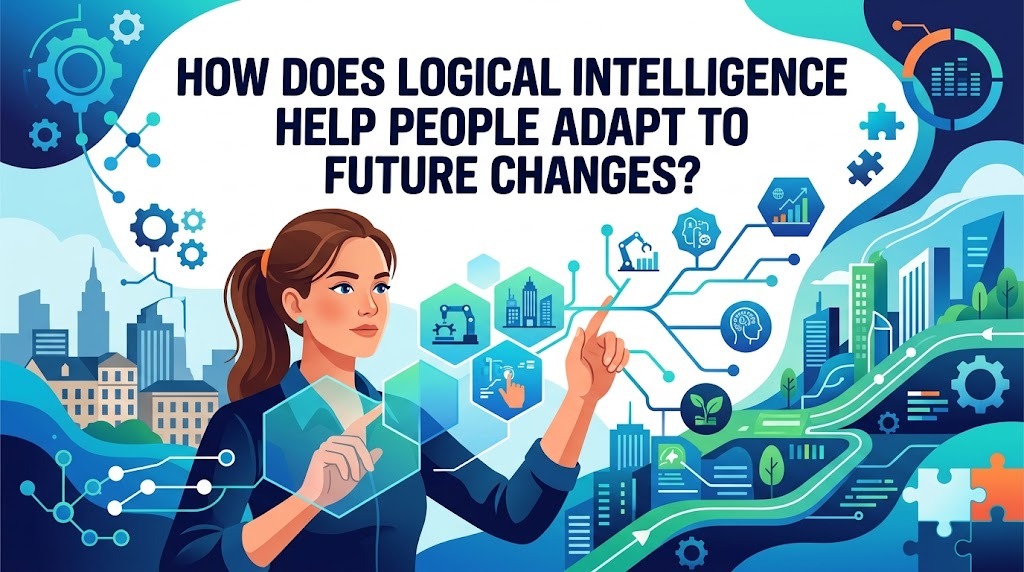
The world continues to change because of developments in technology, education, business, and society. These changes can create new opportunities while also requiring people to learn new skills and adjust to unfamiliar situations. Logical intelligence can help individuals understand changes, evaluate information, and determine appropriate responses. Instead of reacting without considering the situation, people can use reasoning to examine what has changed and what actions may be needed. This ability can support adaptation in both personal and professional life.
UNDERSTANDING LOGICAL INTELLIGENCE
Logical intelligence is the ability to analyze information, recognize patterns, understand relationships, and use reasoning to solve problems. It helps people organize different pieces of information and identify connections between them. This ability is useful when individuals encounter situations that require careful analysis and decision making. Logical intelligence can also help people understand complex situations without relying only on assumptions.
Logical thinking is not limited to mathematics or academic activities. It can be applied to technology, business, education, communication, and everyday decision making. For example, someone learning a new digital tool may need to understand how its features are connected before using it effectively. A worker may also need to analyze changes in a workplace process and determine how to adjust their responsibilities. These situations require reasoning and flexibility.
ANALYZING CHANGES AND NEW INFORMATION
Future changes often bring new information that people need to understand quickly. Logical intelligence can help individuals organize this information and determine which parts are most relevant. Analyzing facts, identifying patterns, and comparing different sources can make unfamiliar situations easier to understand. This process can prevent people from making decisions based only on assumptions or incomplete information.
Logical reasoning also helps individuals recognize relationships between different changes. For example, a new technology may change how a company communicates, manages data, or serves customers. Understanding these connections can help employees anticipate which skills may become more important. Seeing relationships between causes and effects can therefore support a more informed response to change.
SUPPORTING PROBLEM SOLVING AND DECISION MAKING
Changes can create unexpected problems that require practical solutions. Logical intelligence helps people identify the main problem, examine available information, and consider several possible responses. Breaking a complex situation into smaller parts can make it easier to determine what needs to be addressed first. Individuals can then compare possible solutions based on their potential benefits and consequences.
Decision making is also important when adapting to new circumstances. People may need to choose whether to learn a new skill, change a process, or try a different approach. Logical reasoning encourages them to consider evidence, available resources, risks, and possible outcomes before making a decision. Although logical thinking cannot predict every future event, it can provide a structured way to respond to uncertainty.
ENCOURAGING FLEXIBLE AND ADAPTIVE THINKING
Logical intelligence can support adaptability when people are willing to reconsider their approach. A solution that worked in the past may not always work in a new situation. Flexible thinking allows individuals to examine new information and adjust their strategy when circumstances change. This does not mean abandoning previous knowledge but using it as a foundation for developing a better response.
People can also learn from unsuccessful attempts. When a strategy does not produce the expected result, they can examine what happened and identify which part needs to change. Reflection and learning from mistakes can help individuals develop more effective approaches over time. This mindset is valuable because adapting to change often requires continuous adjustment rather than one permanent solution.
DEVELOPING LOGICAL INTELLIGENCE FOR THE FUTURE
Logical intelligence can be strengthened through activities that require analysis and reasoning. Students and adults can practice with problem solving, coding, data analysis, puzzles, research, and strategic activities. Learning how to evaluate information from reliable sources can also improve analytical thinking. These activities encourage individuals to understand problems rather than simply search for immediate answers.
Continuous learning is another important part of preparing for future changes. People can develop new knowledge while applying logical reasoning to understand how new skills relate to their existing abilities. Combining logical thinking with digital skills, communication, creativity, and adaptability can provide a broader foundation for dealing with changing environments. Regular practice can make it easier to approach unfamiliar challenges with a structured mindset.
CONCLUSION
Logical intelligence can help people adapt to future changes by improving their ability to analyze information, solve problems, and make reasoned decisions. It allows individuals to identify patterns, understand relationships, and evaluate possible responses when circumstances change. Logical thinking can also support flexibility because people can examine new information and adjust their strategies when necessary. These abilities are useful in education, work, technology, and everyday life.
Future changes cannot always be predicted, but people can prepare themselves to respond effectively. Continuous learning, problem solving, information analysis, and reflection can strengthen logical intelligence over time. By developing these skills alongside communication, creativity, and adaptability, individuals can build a stronger foundation for handling new challenges and opportunities.
Recent Posts

Bagaimana Sistem SKS pada Program Kuliah... 22.11.2026/21 View

How Does Technology Make Daily Evaluation... 21.11.2026/64 View

Apa Strategi Menghadapi Kesenjangan antara Kompetensi... 21.11.2026/65 View

Mengapa Inventaris Aset Penting bagi Kelancaran... 21.11.2026/62 View

When Should Musicians Join a Record... 21.11.2026/60 View
