

How Does Mental Health Influence Concentration?
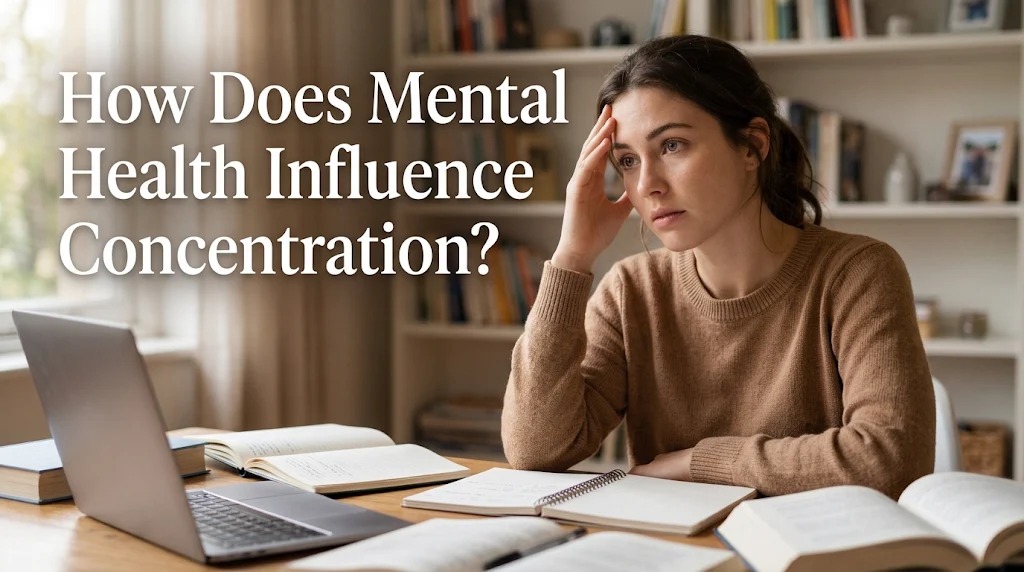
Mental health plays an important role in how people think, process information, manage emotions, and maintain concentration. When someone experiences emotional difficulties or psychological pressure, focusing on daily activities can become more challenging. Even simple tasks, such as reading, studying, working, or listening to conversations, may require greater effort.
Mental health conditions such as anxiety, depression, and prolonged stress can affect attention and memory. These difficulties may influence academic performance, work productivity, and personal relationships. Understanding the connection between mental health and concentration can help people recognize the causes of focus problems and find appropriate support.
THE CONNECTION BETWEEN MENTAL HEALTH AND CONCENTRATION
Mental health influences the brain's ability to control attention, organize thoughts, and respond to information. When someone feels emotionally balanced, it is generally easier to focus on tasks and manage everyday responsibilities. However, emotional distress can make the mind feel crowded with worries, negative thoughts, or uncomfortable feelings. These experiences may interrupt concentration even when a person wants to stay focused.
The brain uses attention and memory to complete many daily activities. When mental health difficulties affect these processes, people may struggle to understand information, remember instructions, or make decisions. They may also become easily distracted by their own thoughts. This does not necessarily mean they lack motivation or ability, but it may indicate that they are experiencing emotional or psychological challenges.
HOW STRESS AND ANXIETY AFFECT FOCUS
Stress and anxiety are common factors that can interfere with concentration. When someone faces pressure from school, work, family responsibilities, or personal problems, their thoughts may become focused on the source of stress. This can make it difficult to pay attention to the activity in front of them. Excessive worrying may also reduce the ability to organize information and make clear decisions.
Anxiety can cause someone to repeatedly think about possible problems or negative outcomes. For example, a student who is worried about an examination may struggle to understand the material while studying. Physical symptoms such as muscle tension, restlessness, and difficulty sleeping can make concentration even harder. Learning to manage stress through healthy routines, relaxation techniques, and appropriate support may help improve attention.
THE EFFECTS OF DEPRESSION ON CONCENTRATION
Depression can influence concentration, memory, motivation, and decision-making. People experiencing depression may find it difficult to complete tasks, follow conversations, or remember information. They may also feel mentally exhausted even when performing activities that previously seemed simple. These difficulties can affect their ability to study, work, and manage everyday responsibilities.
Depression may also reduce interest in activities and make it harder to begin or finish tasks. Negative thoughts and persistent sadness can occupy mental attention, leaving less capacity for other activities. Sleep disturbances and changes in appetite associated with depression may further affect brain performance. If these symptoms continue or interfere with daily life, seeking help from a qualified mental health professional is important.
EMOTIONAL EXHAUSTION AND OVERTHINKING
Emotional exhaustion can develop when someone experiences continuous pressure without enough time to recover. It may cause mental fatigue, reduced motivation, and difficulty maintaining attention. People experiencing emotional exhaustion may feel overwhelmed by ordinary responsibilities and struggle to complete tasks that require sustained focus. This condition can also make it harder to manage emotions and respond calmly to everyday situations.
Overthinking can create similar concentration difficulties because the mind repeatedly focuses on the same concerns. Someone may spend so much time analyzing past events or worrying about the future that they struggle to pay attention to the present. This can interrupt studying, working, and communication with others. Learning to recognize unhelpful thought patterns and taking planned breaks may help reduce mental overload.
WAYS TO SUPPORT MENTAL HEALTH AND IMPROVE CONCENTRATION
Maintaining healthy daily habits can support both mental well-being and concentration. Getting enough sleep, eating balanced meals, exercising regularly, and maintaining a consistent routine can help improve overall energy and brain function. Taking short breaks during demanding activities may also prevent excessive mental fatigue. Limiting unnecessary distractions can make it easier to focus on important tasks.
Talking to trusted people can help reduce emotional pressure and provide a different perspective on personal problems. Relaxation activities, such as deep breathing, meditation, or spending time outdoors, may also help manage everyday stress. However, these habits are not a replacement for professional treatment when someone has a mental health condition. If emotional difficulties or concentration problems persist, a psychologist, psychiatrist, or other qualified healthcare professional can provide appropriate assessment and support.
CONCLUSION
Mental health has a significant influence on concentration because emotions, thoughts, and psychological conditions affect how the brain processes information. Stress, anxiety, depression, emotional exhaustion, and overthinking can make it harder to maintain attention and complete daily activities. Healthy routines and emotional support may help improve focus, but persistent difficulties should not be ignored. Seeking professional help when necessary can support better mental well-being and concentration.
Recent Posts

How Does Technology Make Daily Evaluation... 21.11.2026/63 View

Apa Strategi Menghadapi Kesenjangan antara Kompetensi... 21.11.2026/64 View

Mengapa Inventaris Aset Penting bagi Kelancaran... 21.11.2026/60 View

When Should Musicians Join a Record... 21.11.2026/59 View

Daily Evaluation or Daily Planning Which... 21.11.2026/67 View
