

How Does Migration Affect the Use of Regional Languages?
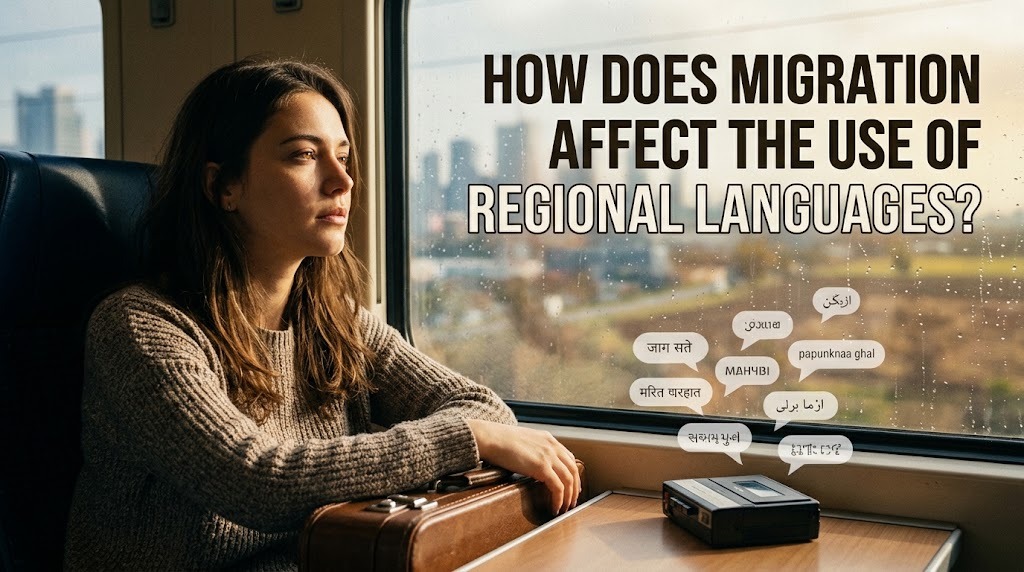
Migration is a common part of modern life, as people move from one region to another for education, employment, family reasons, or better living opportunities. In Indonesia, migration often brings people from different linguistic and cultural backgrounds into the same community. As a result, regional languages may be used differently when people live outside their places of origin. Some migrants continue speaking their mother tongue, while others gradually adopt the language used by the surrounding community. Migration can influence whether regional languages remain strong, adapt to new environments, or become less frequently used across generations.
WHY PEOPLE MIGRATE TO DIFFERENT REGIONS
People migrate for various reasons, including finding employment, pursuing higher education, joining family members, and seeking better living conditions. For example, students from Central Java may move to Jakarta to attend university, while workers from Sulawesi may relocate to other Indonesian cities for employment. These changes bring people into contact with languages and cultural practices that differ from those in their hometowns. Over time, migrants often adjust their communication styles to interact more easily with others.
Indonesian is commonly used as a shared language among people from different regions because it supports communication across linguistic backgrounds. In some areas, local languages also become important for everyday interaction. Migrants may learn the language of their new community while continuing to speak their original regional language with family and friends. Migration creates new linguistic environments in which people balance their original language with the communication needs of their new surroundings.
CHANGES IN REGIONAL LANGUAGE USE AMONG MIGRANTS
Moving to a new region can change how frequently migrants use their regional languages. In their hometowns, they may speak their mother tongue at home, at school, in markets, and during community activities. After migrating, they may use Indonesian or another widely spoken language more often because their colleagues, classmates, and neighbors do not understand their original language. This shift can gradually reduce opportunities to practice the mother tongue.
However, migration does not automatically cause regional languages to disappear. Many migrants continue using their language when speaking with relatives, friends from the same region, or members of cultural associations. Some also preserve their language through phone calls, messaging groups, and visits to their hometowns. The effect of migration depends partly on how often migrants can continue using their regional language in daily life.
THE ROLE OF FAMILIES IN PRESERVING MOTHER TONGUES
Families play a major role in determining whether regional languages continue to be spoken after migration. Parents who regularly use their mother tongue with their children provide opportunities for younger family members to learn vocabulary, pronunciation, and expressions naturally. Family conversations can also introduce children to traditional stories, values, and cultural practices. Even when children grow up far from their parents' hometown, the family environment can help maintain a connection to their linguistic heritage.
Problems may arise when parents use only Indonesian because they believe it will make school and social communication easier for their children. As a result, children may understand their parents' regional language but feel less confident speaking it themselves. A balanced approach allows families to use Indonesian when needed while maintaining regular conversations in their regional language. Consistent communication at home is one of the most practical ways to pass a regional language from one generation to the next.
CULTURAL COMMUNITIES AND LANGUAGE NETWORKS
Migrants often form communities with people who share similar regional backgrounds. These communities may organize cultural gatherings, religious activities, traditional celebrations, or social events where members can speak their mother tongue. Such interactions create opportunities to maintain language skills even when migrants live far from their hometowns. They also help children become familiar with the traditions and expressions of their parents' communities.
Technology has made these connections easier to maintain. Messaging applications, online communities, and video calls allow migrants to communicate with relatives and friends in their home regions. Some groups also share regional songs, stories, educational materials, and language-learning activities online. Strong social networks can help migrants preserve their regional languages by creating regular opportunities for meaningful communication.
LANGUAGE ADAPTATION AND MIXED-LANGUAGE COMMUNICATION
Migration often encourages people to adapt their language to new social situations. Migrants may use Indonesian at work, a local language when interacting with neighbors, and their mother tongue when speaking with relatives. They may also combine words or expressions from different languages during informal conversations. This type of language mixing can reflect the multilingual nature of modern Indonesian society.
Language adaptation can be useful because it helps people communicate across cultural boundaries. However, if migrants rarely use their regional language, their vocabulary and speaking confidence may gradually decline. Children may also develop stronger skills in the dominant language of their environment than in their family's mother tongue. Using multiple languages can be an advantage, but maintaining a regional language requires regular practice and opportunities for communication.
STRATEGIES TO MAINTAIN REGIONAL LANGUAGES AFTER MIGRATION
Migrants can take several practical steps to maintain their regional languages. Families can set aside time for conversations in their mother tongue, tell traditional stories, and teach children common expressions. Cultural associations can organize language classes, traditional performances, and gatherings that encourage people to speak their regional languages. Schools and community organizations can also support activities that introduce children to local and family language traditions.
Digital resources provide additional ways to practice a language from a distance. Online dictionaries, recorded stories, videos, and language-learning groups can help migrants improve their vocabulary and pronunciation. People can also record conversations with older relatives, with their permission, to preserve expressions and stories for younger family members. Combining family communication, community activities, and digital learning can help regional languages remain part of migrants' everyday lives.
CONCLUSION
Migration affects regional languages by changing the environments in which people communicate. Migrants may use Indonesian or another widely spoken language more frequently in their new communities, but they can continue speaking their mother tongue through family conversations and cultural networks. Children are more likely to maintain a regional language when they have regular opportunities to hear and use it. Community activities and digital technology can also strengthen connections between migrants and their linguistic heritage. Migration does not have to lead to language loss when families and communities actively create opportunities to preserve and use regional languages.
Recent Posts

Bagaimana Sistem SKS pada Program Kuliah... 22.11.2026/49 View

How Does Technology Make Daily Evaluation... 21.11.2026/77 View

Apa Strategi Menghadapi Kesenjangan antara Kompetensi... 21.11.2026/78 View

Mengapa Inventaris Aset Penting bagi Kelancaran... 21.11.2026/74 View

When Should Musicians Join a Record... 21.11.2026/79 View
