

How Does Migration Influence Changes in Regional Accents?
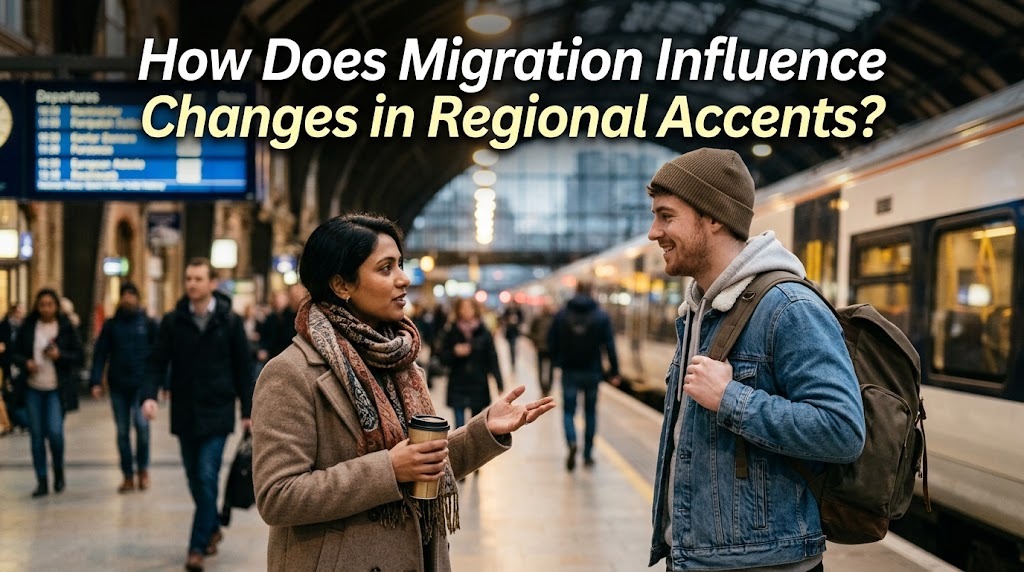
Migration plays an important role in changing regional accents because it brings people from different linguistic and cultural backgrounds into contact. When people move to another city, region, or country, they encounter new pronunciation patterns and communication styles that may gradually influence the way they speak. Some people maintain their original accents, while others adapt their pronunciation to fit their new environment. These changes can occur over several years or across generations. Understanding how migration influences regional accents helps explain how language evolves as communities become more diverse and interconnected.
MIGRATION BRINGS DIFFERENT ACCENTS INTO CONTACT
One of the main ways migration influences regional accents is by bringing speakers from different areas together. When people move to a new location for education, employment, family, or other reasons, they interact with individuals who may pronounce the same words differently. Through everyday conversations, they become familiar with new speech sounds, rhythms, and intonation patterns. Repeated exposure can influence how people pronounce certain words, especially when they communicate regularly with local residents. Over time, these interactions may contribute to changes in the way people speak within a community.
For example, someone who moves from a rural area to a large city may encounter several regional accents at school or work. The person might gradually adopt some local pronunciation patterns while retaining other characteristics of their original accent. This process does not happen in the same way for everyone because people have different social experiences and language habits. Some speakers adapt quickly, while others maintain their original pronunciation for most of their lives. These differences demonstrate how migration creates opportunities for accents to influence one another.
MIGRANTS MAY ADAPT THEIR ACCENTS TO NEW ENVIRONMENTS
People who migrate sometimes adjust their accents to make communication easier in their new surroundings. They may change the pronunciation of certain words, modify their intonation, or use speech patterns that are more familiar to local listeners. These adjustments can help reduce misunderstandings, particularly when people communicate with speakers who are unfamiliar with their original accents. In linguistics, this behavior is often associated with speech accommodation, a process in which speakers modify aspects of their speech during social interaction. However, accent adaptation is not always intentional, and changes can develop naturally through repeated conversations.
Social relationships can also influence whether migrants change their accents. People who spend much of their time with local friends or colleagues may gradually adopt some of the speech characteristics they hear regularly. In contrast, individuals who mainly communicate with people from their original communities may retain more of their familiar pronunciation patterns. Age, length of residence, personal identity, and frequency of interaction can also affect the process. Therefore, migration may influence an individual's accent without necessarily replacing it completely.
MIGRATION CAN CREATE NEW REGIONAL ACCENTS
When people from different linguistic backgrounds settle in the same area, their speech patterns may influence one another over time. Children growing up in these communities are often exposed to several accents at home, at school, and in their neighborhoods. They may develop pronunciation patterns that differ from those of both their parents and the local population before migration. As these children interact with one another, shared speech characteristics can become more common. Over generations, these developments may contribute to the emergence of a distinctive local accent.
However, a new accent does not automatically develop whenever migration occurs. The process depends on factors such as the number of migrants, the frequency of interaction, community relationships, and the influence of existing language varieties. Some communities maintain several distinct accents, while others develop more shared pronunciation patterns. New accents may also emerge gradually rather than within a single generation. This shows that regional accents are dynamic features of language shaped by long-term social contact.
MIGRATION INFLUENCES ACCENTS IN MULTILINGUAL COUNTRIES
Migration can have a particularly noticeable influence in multilingual countries, where people regularly use different languages and regional varieties. When speakers move between communities, they may bring pronunciation patterns from their first language into the language they use in their new environment. These influences can affect vowels, consonants, rhythm, and intonation. The resulting speech may reflect a combination of linguistic experiences rather than belonging entirely to one regional variety. Such patterns are a normal outcome of language contact.
Indonesia provides a useful example because its population includes speakers of many regional languages. When people move between regions for work, education, or family reasons, they may use Indonesian as a shared language while retaining pronunciation characteristics influenced by their regional languages. For instance, a speaker who grows up using Javanese may pronounce Indonesian differently from someone whose first language is Sundanese or Batak. If people from different backgrounds live together for many years, their speech patterns may influence local communication habits. Nevertheless, these differences vary between individuals, and not every speaker of the same regional language has an identical accent.
URBANIZATION AND MIGRATION CHANGE YOUNGER GENERATIONS' SPEECH
Urbanization often brings migration and language contact together because cities attract people seeking education, employment, and better access to services. In these environments, children and teenagers regularly interact with classmates and friends from different regions. Their speech can be influenced by local pronunciation, peer-group language, and the communication styles they encounter in daily life. As a result, younger generations may develop accents that differ from those of their parents or grandparents. These changes reflect the changing social environments in which they grow up.
Schools, entertainment, and digital communication can strengthen these influences. Young people may hear a wide variety of accents through online videos, music, films, and social media, while their friends influence how they speak in person. However, exposure does not mean that everyone will adopt the same accent. Family language practices, community identity, and personal preferences continue to shape pronunciation. The interaction between these influences helps explain why regional accents can change over time, particularly in areas experiencing substantial migration.
MIGRATION CAN PRESERVE OR WEAKEN ORIGINAL ACCENTS
Although migration can change accents, it can also help preserve them. Migrants who maintain strong connections with their original communities may continue using familiar pronunciation patterns with family members and friends. Some communities establish cultural associations or maintain regular social gatherings where their language varieties remain part of everyday communication. These relationships allow people to pass speech habits from one generation to another. As a result, regional accents may survive even when speakers live far from their places of origin.
On the other hand, an original accent may become less noticeable when migrants spend many years in a new environment. Children who primarily use the local variety at school and with friends may develop pronunciation patterns that differ from those of their parents. In some cases, distinctive features of the family's original accent may become less common in later generations. This does not necessarily mean the family's cultural identity disappears, since identity can be expressed in many other ways. It simply shows that language use and pronunciation can change as social circumstances evolve.
SOCIAL IDENTITY AFFECTS HOW MIGRANTS USE ACCENTS
Regional accents can communicate social identity, so migrants may make different choices about how they speak in different situations. Some people preserve their original accents because these remind them of their hometowns, families, and cultural backgrounds. Others may adjust their pronunciation to feel more connected to their new community or to communicate more comfortably with local speakers. These choices can vary depending on the setting, relationships, and experiences of each individual. A person might use a stronger regional accent at home but speak differently in a formal workplace.
Social attitudes toward accents can also affect how migrants communicate. If a particular accent is unfairly associated with negative stereotypes, speakers may feel pressure to change their pronunciation to avoid discrimination. In other situations, people may proudly maintain their accents as an expression of cultural heritage. It is important to recognize that no accent is inherently better or more intelligent than another. Respecting different accents can help create inclusive communities where people can communicate without feeling that they must abandon their linguistic identity.
CONCLUSION
Migration influences changes in regional accents by bringing people from different linguistic backgrounds into contact and creating opportunities for speech patterns to spread, adapt, and develop. Migrants may adopt local pronunciation, retain their original accents, or develop new speech characteristics through long-term interaction with other communities. These changes are influenced by age, family relationships, social identity, education, and the languages people use every day. In multilingual countries such as Indonesia, migration can create particularly diverse patterns of pronunciation. Ultimately, regional accents continue to evolve because language reflects the movement, relationships, and experiences of the people who speak it.
Recent Posts

Bagaimana Sistem SKS pada Program Kuliah... 22.11.2026/54 View

How Does Technology Make Daily Evaluation... 21.11.2026/83 View

Apa Strategi Menghadapi Kesenjangan antara Kompetensi... 21.11.2026/82 View

Mengapa Inventaris Aset Penting bagi Kelancaran... 21.11.2026/78 View

When Should Musicians Join a Record... 21.11.2026/84 View
