

How Does Mind Mapping Help Connect Different Ideas?
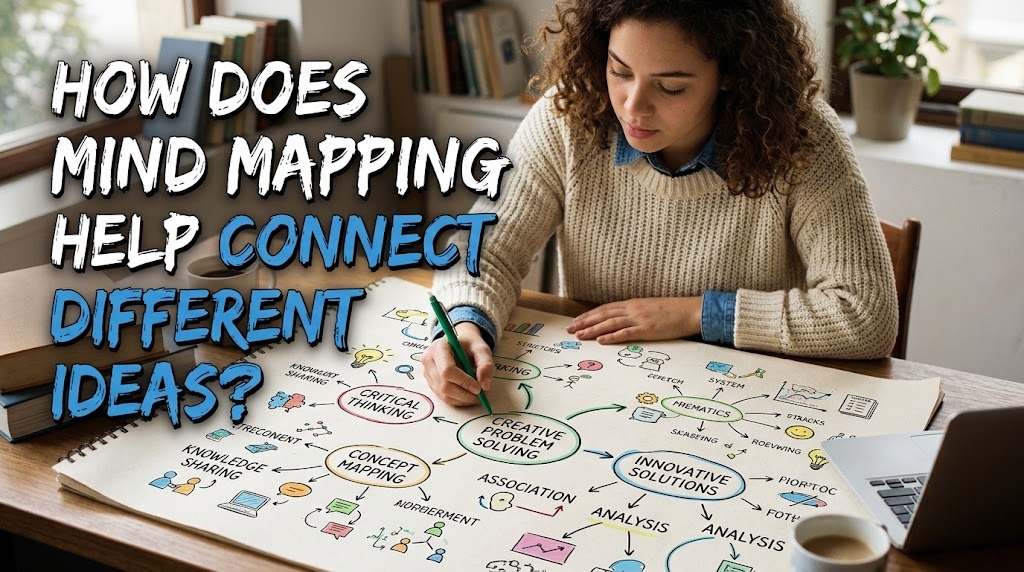
Students often learn topics that contain many concepts related to one another. When information is written separately, it can be difficult to understand how one idea connects with another. Mind mapping provides a visual structure that allows students to organize concepts and show their relationships. By using branches, keywords, and connections, students can see how different pieces of information fit together. This makes mind mapping a useful method for supporting organized and meaningful learning.
WHAT IS THE ROLE OF MIND MAPPING IN CONNECTING IDEAS?
Mind mapping is a visual learning technique that places a main idea at the center and connects related information through branches. Each branch can represent an important concept, while smaller branches provide additional details. This structure allows students to see several ideas on the same page and understand their relationships. Instead of studying each concept as an isolated piece of information, students can view the topic as a connected structure.
The visual format also makes it easier to identify similarities and differences between concepts. Students can use lines, arrows, keywords, or symbols to show relationships between different branches. For example, when studying business, students can connect marketing with customers, products, sales, and business strategies. These connections can help students understand that different concepts often work together. As a result, mind mapping can support a broader understanding of learning materials.
HOW DO BRANCHES HELP STUDENTS ORGANIZE RELATED IDEAS?
Branches are one of the most important elements of a mind map because they divide a large topic into smaller groups of information. The main branches represent major ideas, while secondary branches provide supporting details. This structure helps students determine which concepts belong to the same category. It also prevents information from becoming one large collection of unrelated notes.
For example, students learning about digital marketing can place Digital Marketing in the center. They can create branches for social media, content marketing, search engine optimization, advertising, and analytics. Each branch can then contain more specific concepts that are related to it. When students look at the complete map, they can understand how these areas contribute to the broader field. This makes the relationships between ideas easier to recognize.
HOW DO KEYWORDS MAKE CONNECTIONS EASIER TO UNDERSTAND?
Keywords help students represent complex information using short and meaningful terms. Instead of writing complete paragraphs, students select words that capture the main point of an idea. These keywords can then be connected to other concepts through branches. This makes the structure of the information easier to read and remember.
Choosing keywords also requires students to think about the main meaning of the material. They need to decide which words are important enough to include and which details can be left out. This process can help students understand the difference between major concepts and supporting information. When related keywords appear close to each other, students can also recognize connections that may not be obvious in traditional notes.
HOW CAN STUDENTS SHOW RELATIONSHIPS BETWEEN DIFFERENT CONCEPTS?
Students can use lines, arrows, symbols, and additional branches to show relationships between ideas. A line can connect two related concepts, while an arrow can indicate a direction or sequence. For example, a mind map about a marketing campaign could connect audience research to content creation, promotion, and evaluation. These visual connections can help students understand how one stage relates to another.
Students should use connections only when they provide useful information. Too many lines can make a mind map confusing and difficult to read. The goal is to create a structure where the most important relationships are easy to recognize. A clear visual connection can help students understand causes, effects, categories, processes, and similarities between concepts.
HOW DOES CONNECTING IDEAS SUPPORT STUDENT UNDERSTANDING?
Connecting ideas can help students build a more complete understanding of a topic. When students recognize how concepts are related, they can understand not only what something means but also how it functions within a larger subject. This is particularly useful for topics that involve multiple stages, causes, effects, or categories. Instead of memorizing separate facts, students can use the connections to explain the topic in their own words.
Mind mapping can also help students identify missing information. If one branch seems disconnected from the others, students can review their learning materials and determine whether an important relationship has been overlooked. This makes the mind map a useful tool for checking understanding. Students can continue adding or changing connections as their knowledge develops.
CONCLUSION
Mind mapping helps connect different ideas by presenting information in a visual structure where concepts can be grouped and linked together. Main branches organize major topics, while smaller branches and keywords provide supporting information. Lines, arrows, and symbols can make important relationships easier to recognize. By connecting concepts, students can develop a more complete understanding instead of memorizing information separately. When used correctly, mind mapping can become an effective learning strategy for organizing ideas and understanding complex materials.
Recent Posts

Bagaimana Sistem SKS pada Program Kuliah... 22.11.2026/27 View

How Does Technology Make Daily Evaluation... 21.11.2026/65 View

Apa Strategi Menghadapi Kesenjangan antara Kompetensi... 21.11.2026/65 View

Mengapa Inventaris Aset Penting bagi Kelancaran... 21.11.2026/62 View

When Should Musicians Join a Record... 21.11.2026/63 View
