

How Does Mind Mapping Help Students Understand Learning Materials?
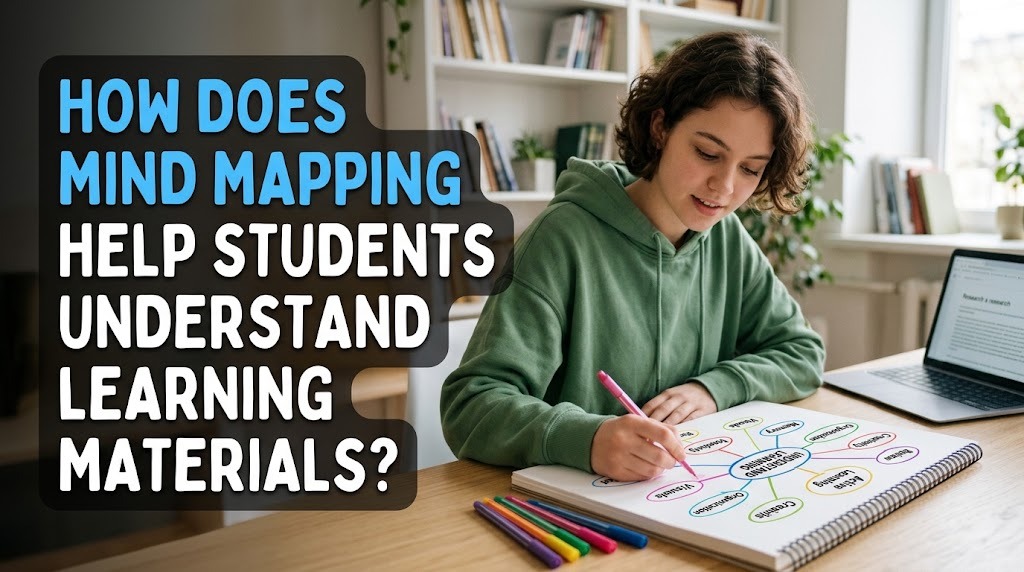
Learning materials can sometimes feel difficult when students have to understand many ideas at once. Long explanations, detailed notes, and large amounts of information may make the learning process less effective. One method that can make information easier to understand is mind mapping. This technique presents information in a visual structure that connects the main topic with related ideas. By organizing information clearly, students can understand, remember, and review learning materials more easily.
WHAT IS MIND MAPPING IN THE LEARNING PROCESS?
Mind mapping is a visual note-taking technique that organizes information around a central topic. The main topic is usually placed in the center, while related ideas are connected through branches. Students can use keywords, short phrases, symbols, colors, and simple images to represent important information. This structure helps students see the relationship between different parts of a lesson. Instead of reading separate lines of notes, students can view the information as one connected structure.
Mind mapping can be used for many subjects and learning activities. Students may create a mind map after reading a chapter, listening to a lecture, preparing an assignment, or reviewing for an examination. The method also allows students to choose a structure that matches their own understanding. Because students actively organize the information themselves, the process can encourage active learning rather than simple memorization. As a result, difficult materials may become more organized and easier to study.
HOW DOES MIND MAPPING ORGANIZE LEARNING MATERIALS?
One important advantage of mind mapping is its ability to organize information into clear categories. Students can place the main concept in the center and divide it into several important subtopics. Each subtopic can then contain smaller details that explain the idea further. This organization makes it easier to identify which information is important and which information supports the main idea. Students can also quickly see how one concept is related to another.
Traditional notes often appear as long paragraphs or lists, which may make important information difficult to find. A mind map provides a more visual structure, so students can identify the main points without reading every sentence. For example, when studying a topic about business, students can create branches for marketing, finance, management, customers, and sales. Each branch can contain several related keywords. This approach helps create a clear overview of learning materials.
HOW CAN MIND MAPPING HELP STUDENTS UNDERSTAND COMPLEX IDEAS?
Complex learning materials often contain several concepts that are connected to each other. Mind mapping can help students break large topics into smaller and more manageable parts. By separating a complex subject into branches, students can study one section at a time while still seeing its connection to the main topic. This can reduce confusion when a lesson contains many definitions, processes, or examples. Students can also rearrange their mind maps when they discover new connections between ideas.
Another useful feature is the use of keywords instead of long sentences. Choosing important words requires students to identify the main meaning of the information. This process can encourage students to process the material instead of simply copying notes. For example, a long explanation about the learning process can be represented through keywords such as goals, methods, practice, evaluation, and improvement. The result is a shorter but meaningful representation of the original material.
HOW DOES MIND MAPPING SUPPORT MEMORY AND INFORMATION RETENTION?
Mind mapping can support information retention by presenting learning materials in an organized visual form. Students may remember information more easily when important concepts are connected instead of presented as unrelated facts. Branches, keywords, symbols, and colors can also provide visual cues that help students recognize different parts of the material. However, mind mapping should not be considered a replacement for understanding and practice. Students still need to read, review, explain, and apply the information to strengthen their learning.
Mind maps can also make revision more efficient because students can review the main ideas without reading an entire page of notes. A well-organized map can show the central topic, supporting concepts, and important details in one place. Students can use the map to test themselves by covering certain branches and trying to recall the missing information. This kind of active recall can make study sessions more meaningful. Regular review can further help students maintain their understanding over time.
HOW CAN STUDENTS USE MIND MAPPING EFFECTIVELY?
Students can begin by writing the main topic in the center of the page. They can then create several branches for the most important ideas and add smaller branches for supporting details. It is better to use short keywords rather than copying complete paragraphs from textbooks or lecture materials. Students may also use simple colors or symbols to distinguish categories, but the design should remain easy to read. The most important goal is to make the relationship between ideas clear.
Mind mapping can be used before, during, and after studying. Before studying, students can create a basic map based on what they already know about a topic. During learning, they can add new information and correct ideas that they previously misunderstood. After studying, the completed mind map can become a study guide for review and exam preparation. Students should also explain the connections in their own words because creating a map alone does not guarantee complete understanding.
CONCLUSION
Mind mapping can help students understand learning materials by organizing information into a clear visual structure. It connects the main topic with related ideas, making complex information easier to break down and review. The use of keywords, branches, symbols, and visual connections can support active learning and information retention. Students can also use mind maps to summarize lessons, prepare for exams, organize assignments, and review important concepts. When combined with reading, practice, discussion, and active recall, mind mapping can become a useful learning strategy for improving understanding and study organization.
Recent Posts

Bagaimana Sistem SKS pada Program Kuliah... 22.11.2026/25 View

How Does Technology Make Daily Evaluation... 21.11.2026/64 View

Apa Strategi Menghadapi Kesenjangan antara Kompetensi... 21.11.2026/65 View

Mengapa Inventaris Aset Penting bagi Kelancaran... 21.11.2026/62 View

When Should Musicians Join a Record... 21.11.2026/61 View
