

How Does Mobile Samsat Improve Public Service Access?
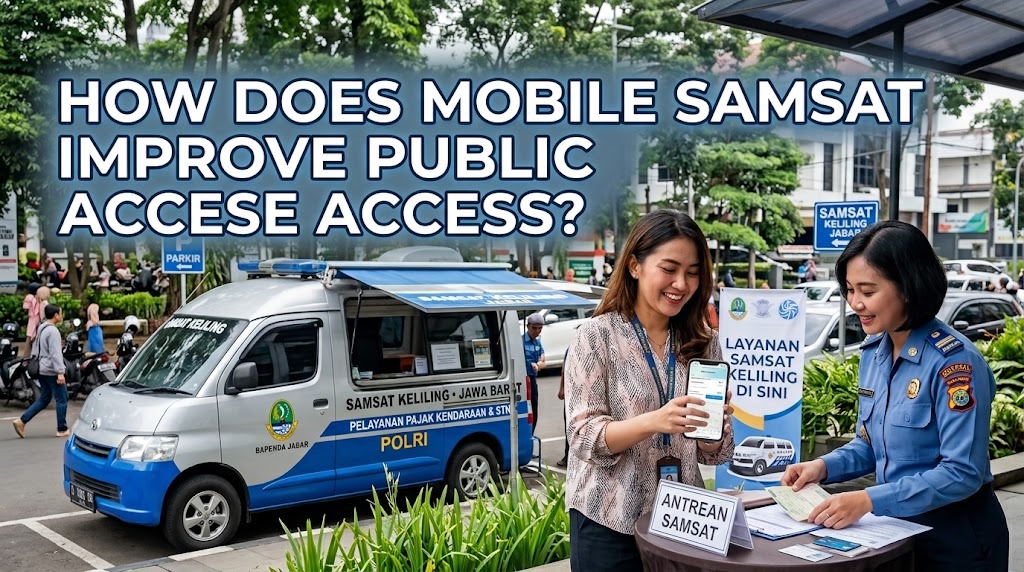
Public services play an important role in helping citizens fulfill their administrative responsibilities efficiently. In Indonesia, vehicle owners must complete certain registration and tax obligations according to applicable regulations. However, visiting a permanent Samsat office can be challenging for people who live far away, have limited transportation options, or need to balance work with personal responsibilities. Mobile Samsat helps address these challenges by bringing selected vehicle administration services closer to communities.
BRINGING SERVICES CLOSER TO COMMUNITIES
One of the main ways Mobile Samsat improves public service access is by operating at designated locations outside permanent Samsat offices. These locations may include public parking areas, community centers, and other accessible places selected by regional authorities. Residents can use these service points when they are available in their area.
Bringing services closer to communities can reduce the distance people need to travel to complete routine vehicle tax transactions. This arrangement is particularly helpful for residents who live far from major administrative centers. By making selected services more accessible, Mobile Samsat helps people manage their obligations with less travel.
REDUCING TRANSPORTATION BARRIERS
Transportation costs and limited mobility can prevent some residents from accessing public services conveniently. Traveling to a permanent Samsat office may require fuel, public transportation fares, parking expenses, or assistance from other people. Mobile Samsat can reduce these barriers when a service unit operates near a person's home or workplace.
This convenience can benefit workers, older residents, small business owners, and people who have limited access to transportation. However, the level of benefit depends on the availability of mobile units and the distance between service locations. Regional authorities need to consider community needs when planning service routes.
SAVING TIME FOR VEHICLE OWNERS
Accessing public services often involves travel, waiting, and completing administrative procedures. Mobile Samsat provides an alternative location for eligible annual vehicle tax payments and related services, potentially reducing the time required to complete these tasks.
For example, a resident may be able to visit a mobile service point in a nearby area instead of traveling to a central office. Shorter travel distances can make it easier to fit administrative responsibilities into a busy schedule. Nevertheless, waiting times still depend on the number of visitors, staffing, and service capacity.
SUPPORTING TIMELY VEHICLE TAX PAYMENTS
Convenient access to vehicle tax services can help residents complete their annual payment obligations before the due date. When service locations are easier to reach, vehicle owners may find it more practical to prepare their documents and make payments without postponing the process.
Timely payment helps residents keep their vehicle tax obligations up to date. Mobile Samsat can support this goal by providing another service option outside permanent offices. However, vehicle owners remain responsible for monitoring their own deadlines because mobile service schedules may not always match every payment date.
MAKING PUBLIC SERVICES MORE INCLUSIVE
Public service accessibility involves more than simply providing an office. Authorities also need to consider differences in income, transportation access, work schedules, and distance from administrative centers. Mobile Samsat can help address some of these differences by extending selected services to different neighborhoods and communities.
Residents who face difficulties traveling to a permanent office may benefit when a mobile unit visits a nearby location. To improve inclusiveness further, authorities can publish clear schedules, provide understandable instructions, and ensure that service locations are accessible to people with different mobility needs.
IMPROVING GOVERNMENT SERVICE EFFICIENCY
Mobile Samsat can help regional authorities distribute selected public services across multiple locations. Rather than requiring every customer to visit the same permanent office, mobile units can serve residents in designated areas according to an organized schedule.
This approach may help reduce pressure on central service locations and make routine transactions more convenient. However, its effectiveness depends on adequate staffing, reliable equipment, accurate administrative systems, and coordination between relevant agencies. Regular evaluation can help authorities identify which locations require additional service coverage.
PROVIDING CLEARER ADMINISTRATIVE INFORMATION
Public services become easier to use when residents understand the required documents, payment procedures, and eligibility conditions. Mobile Samsat officers can provide information about the services available at their locations and guide customers through eligible transactions.
Regional authorities can improve access further by publishing updated service schedules through official websites, verified social media accounts, and local announcements. Clear information helps residents prepare before traveling and reduces the likelihood of arriving at a location where the required service is unavailable.
COMPLEMENTING DIGITAL PUBLIC SERVICES
Mobile Samsat is part of a broader effort to make vehicle administration more accessible. Digital services provide another option for eligible residents who prefer to complete certain transactions online rather than visiting a physical service point.
In Indonesia, the SIGNAL application provides digital services for eligible annual vehicle tax payments and annual STNK validation. Residents can consult the official SIGNAL website to understand the available services and requirements. Combining in-person mobile services with digital options gives residents more flexibility, although some procedures still require attendance at a permanent Samsat office.
ADDRESSING SERVICE LIMITATIONS
Although Mobile Samsat improves access to selected services, it does not necessarily handle every vehicle administration procedure. Mobile units generally focus on routine annual vehicle tax payments and related annual STNK services, while five-year registration renewal, physical vehicle inspections, ownership transfers, and certain registration corrections may require a permanent office.
Operating schedules can also vary between regions and may change because of holidays or operational arrangements. Authorities can improve public access by communicating these limitations clearly and directing residents to the correct service location when their needs fall outside the mobile unit's scope.
CONCLUSION
Mobile Samsat improves public service access by bringing selected vehicle tax services closer to communities, reducing travel barriers, and providing more convenient options for routine administrative transactions. It can also support timely tax payments, distribute service demand, and complement digital public services. To achieve these benefits, regional authorities need reliable schedules, clear public information, adequate staffing, and accessible service locations. With effective planning, Mobile Samsat can help make vehicle administration more convenient and responsive to community needs.
Recent Posts

Bagaimana Sistem SKS pada Program Kuliah... 22.11.2026/56 View

How Does Technology Make Daily Evaluation... 21.11.2026/86 View

Apa Strategi Menghadapi Kesenjangan antara Kompetensi... 21.11.2026/84 View

Mengapa Inventaris Aset Penting bagi Kelancaran... 21.11.2026/82 View

When Should Musicians Join a Record... 21.11.2026/86 View
