

How Does Musical Intelligence Help Students Learn More Effectively?
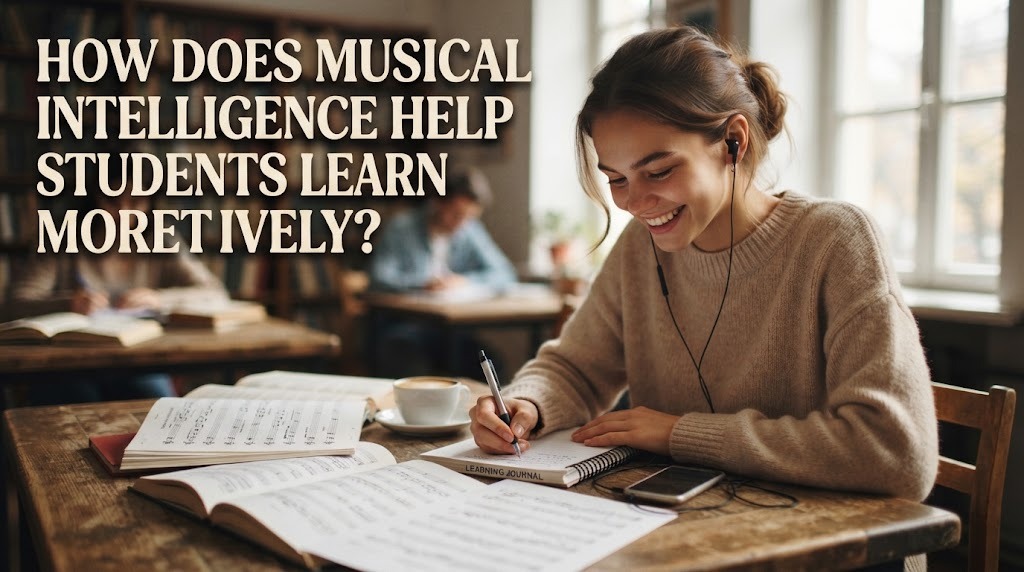
Every student has a different way of understanding information, remembering lessons, and developing new skills. Some students learn more comfortably through visual materials, while others benefit from discussion, hands-on activities, or listening. Musical intelligence is one ability that can support the learning process by helping students recognize rhythms, melodies, sound patterns, and changes in tone. These abilities can be used in educational activities to make certain lessons more engaging and easier to remember.
Musical intelligence is not limited to students who can sing well or play musical instruments. It also includes the ability to listen carefully, recognize sound patterns, and understand how musical elements relate to one another. When teachers and students use music appropriately, it can provide another way to explore information, practice skills, and express ideas. Understanding how musical intelligence supports learning can help students discover useful learning strategies while developing creativity and confidence.
WHAT IS MUSICAL INTELLIGENCE IN LEARNING?
Musical intelligence is the ability to recognize, understand, remember, and create patterns involving sound, rhythm, and melody. In learning, this ability can help students notice patterns in spoken language, remember sequences, and respond to information presented through sound. For example, students may use songs to practice pronunciation, learn new vocabulary, or remember the order of certain concepts. These activities connect learning materials with auditory experiences that may make the information more memorable for some learners.
Students with musical intelligence may also enjoy learning through singing, rhythmic repetition, listening exercises, or creating simple melodies. However, students do not need to have advanced musical skills to benefit from these methods. Musical activities can be used as learning tools even when the main subject is mathematics, language, science, or history. The important factor is whether the activity supports the learning objective and helps students understand the material rather than distracting them from it.
HOW DOES MUSICAL INTELLIGENCE HELP STUDENTS REMEMBER INFORMATION?
Musical intelligence can support memory by connecting information with rhythm, melody, and repetition. A familiar tune can provide a structure that helps students recall words or sequences when they need them. For instance, students may use a short song to remember vocabulary, scientific terms, or the steps in a process. Repeating the same material through a song can also give students additional opportunities to review information in an engaging way.
However, music does not improve memory in every situation. The usefulness of a song depends on how well it matches the material, how much information it contains, and whether students can focus on the lesson. Music with complicated lyrics may compete with the information students are trying to learn, particularly when they are reading or processing unfamiliar concepts. To make musical learning more effective, students should keep learning songs simple, repeat important information, and test themselves afterward to check what they actually remember.
HOW CAN MUSICAL INTELLIGENCE MAKE LEARNING MORE ENGAGING?
Musical intelligence can make learning more engaging by introducing variety into classroom activities. Instead of relying entirely on textbooks and written exercises, teachers can use songs, rhythm games, listening tasks, and simple musical performances to explain selected concepts. For example, language teachers can use songs to introduce vocabulary and pronunciation, while elementary mathematics lessons may use rhythmic counting to practice number sequences. These activities can encourage students to participate actively and approach learning materials in a different way.
Engagement is important because students who participate actively have more opportunities to practice and receive feedback. Creating a song about a lesson, developing a rhythm to represent a sequence, or identifying sound patterns can encourage students to process information rather than simply repeat it. Nevertheless, an enjoyable activity does not automatically guarantee better understanding. Teachers should connect each musical activity to a clear educational purpose and provide follow-up questions or exercises that help students apply what they have learned.
HOW DOES MUSICAL INTELLIGENCE SUPPORT CREATIVITY AND PROBLEM SOLVING?
Musical intelligence gives students opportunities to explore ideas, recognize patterns, and experiment with different ways of expressing information. When students compose a simple melody, change a rhythm, or create lyrics related to a lesson, they must make decisions about how to organize their ideas. This process can encourage flexible thinking and help students approach a topic from a different perspective. These experiences may also inspire students to explore connections between music and subjects such as language, science, history, or mathematics.
Musical activities can also introduce students to the importance of practice, feedback, and revision. For example, a student creating a song for a classroom project may need to adjust the lyrics so that they communicate the intended meaning clearly. Working through these changes encourages the student to evaluate ideas and improve the final result. Although musical intelligence does not automatically make someone a better problem solver in every subject, creative musical tasks can provide valuable opportunities to practice planning, experimentation, and reflection.
HOW CAN TEACHERS USE MUSICAL INTELLIGENCE IN THE CLASSROOM?
Teachers can support musical intelligence by including appropriate sound-based activities in their lessons. In language classes, students can listen to songs, identify rhyming words, practice pronunciation, or write short lyrics using new vocabulary. In mathematics, rhythmic counting and musical patterns can help students explore sequences and repetition. In history or cultural studies, traditional songs can introduce students to the experiences, customs, and artistic expressions of different communities.
Teachers should also recognize that students have different preferences and levels of musical experience. Some may enjoy singing or performing, while others may prefer listening, analyzing rhythms, or working on written tasks. Offering different ways to participate helps make classroom activities more inclusive and reduces the pressure on students who feel uncomfortable performing in front of others. Teachers should assess students based on the learning objectives rather than their singing ability or musical talent, ensuring that music supports understanding instead of becoming a separate barrier to learning.
HOW CAN STUDENTS DEVELOP MUSICAL INTELLIGENCE TO IMPROVE LEARNING?
Students can develop musical intelligence by practicing listening skills and exploring different forms of music. They can begin by identifying changes in rhythm, recognizing repeated melodies, clapping along to a beat, or listening for differences between instruments. Students can also use simple songs to review selected learning materials, particularly vocabulary, definitions, or information that benefits from repetition. These activities do not require expensive equipment or professional musical training, making them accessible to many learners.
To use musical intelligence effectively, students should connect musical activities with clear study goals. For example, they can create a short rhyme to remember several key terms, listen to a song to practice a foreign language, or use rhythmic repetition to review a sequence of steps. Afterward, they should close their notes and recall the information independently to check their understanding. Combining music with active recall, regular review, adequate rest, and focused study sessions can create a more balanced learning routine. Students should also recognize when silence is more helpful, especially when reading complex texts or solving challenging problems.
CONCLUSION
Musical intelligence can help students learn more effectively by providing additional ways to remember information, participate in lessons, explore creativity, and practice important skills. Songs, rhythm, and listening activities can make selected learning materials more engaging when they are connected to clear educational goals. Musical activities may be particularly useful for language practice, repeated information, and lessons involving sound patterns.
However, musical intelligence is only one of many abilities that can support learning, and music does not work equally well for every student or subject. Students should explore different strategies, evaluate their learning progress, and choose methods that help them understand and remember information. With appropriate guidance and regular practice, musical intelligence can become a useful part of a flexible and effective learning experience.
Recent Posts

Bagaimana Sistem SKS pada Program Kuliah... 22.11.2026/27 View

How Does Technology Make Daily Evaluation... 21.11.2026/65 View

Apa Strategi Menghadapi Kesenjangan antara Kompetensi... 21.11.2026/65 View

Mengapa Inventaris Aset Penting bagi Kelancaran... 21.11.2026/62 View

When Should Musicians Join a Record... 21.11.2026/63 View
