

How Does Musical Intelligence Support the Learning Process?
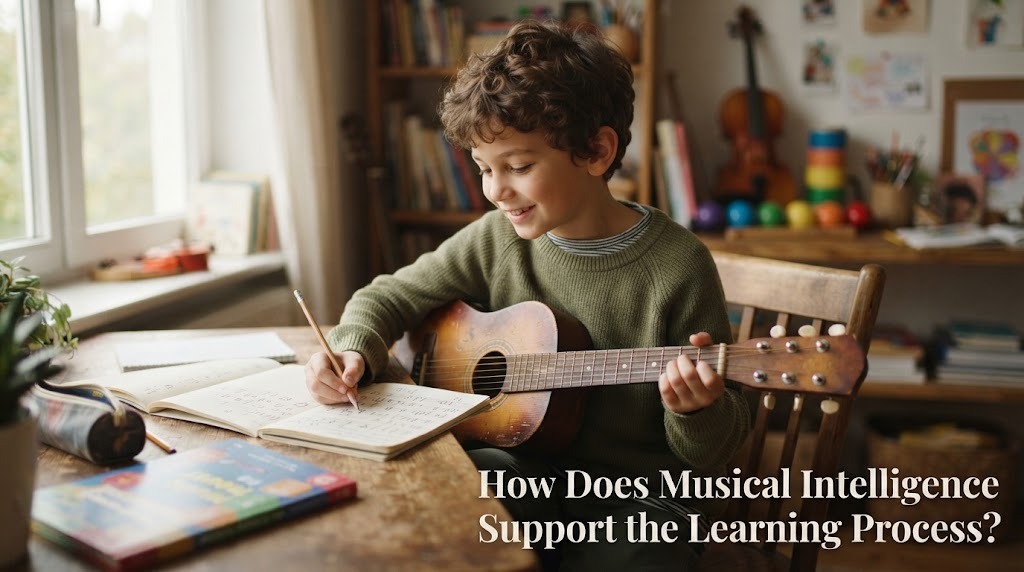
Musical intelligence is the ability to recognize, understand, create, and respond to musical patterns, sounds, rhythms, and melodies. It is one of the abilities described in Howard Gardner’s theory of multiple intelligences. People with strong musical intelligence may find it easier to recognize sound patterns, remember melodies, or learn through rhythm and music. In education, these abilities can be used to make learning activities more engaging and meaningful.
Musical intelligence can support the learning process in several ways, including helping students remember information, recognize patterns, express emotions, and participate actively in lessons. Teachers can use songs, rhythmic activities, and musical exercises to explain certain concepts. However, music does not automatically improve every student's learning performance. Its effectiveness depends on the subject, the learning activity, and each student's needs and preferences.
HELPING STUDENTS REMEMBER INFORMATION
Music can help students remember information by connecting words and ideas with melodies, rhythm, and repetition. For example, students may learn vocabulary, multiplication tables, or scientific terms through short educational songs. The melody and rhythm provide additional cues that can help students recall the information later. Repeating a song can also give students more opportunities to review important concepts without relying entirely on traditional memorization methods.
However, music is not equally helpful for every type of information. Complex explanations may require careful reading, discussion, and practice rather than simply listening to a song. Students should understand the meaning of the material instead of memorizing lyrics without context. When music is combined with clear explanations and regular review, it can become a useful tool for supporting memory and learning.
MAKING LEARNING MORE ENGAGING
Musical activities can make classroom learning more interesting by introducing variety into lessons. Teachers can use songs, clapping exercises, rhythm games, or simple musical performances to encourage students to participate. These activities may help students feel more involved, especially when lessons include repetitive or difficult material. An engaging learning environment can also encourage students to pay attention and maintain their interest in a subject.
For example, a teacher may introduce a language lesson through a song that includes common expressions or new vocabulary. Students can sing along, identify unfamiliar words, and discuss their meanings. This approach combines listening, speaking, and repetition in one activity. Nevertheless, teachers should choose music that supports the lesson rather than distracts students from the main learning objectives.
SUPPORTING LANGUAGE AND LISTENING SKILLS
Musical intelligence can support language learning because music encourages students to pay attention to sounds, rhythm, pronunciation, and patterns. Listening to songs in a new language may help learners become more familiar with how words sound and how sentences flow. Singing can also provide opportunities to practice pronunciation, vocabulary, and speaking rhythm. These activities can be particularly useful when students combine them with reading, conversation, and explicit language instruction.
Music can also help students develop active listening skills. When identifying changes in melody, rhythm, or pitch, learners practice noticing differences between sounds. Similar attention to sound patterns can support certain aspects of phonological awareness, which is important in learning to read and pronounce words. However, musical activities alone are not enough to develop complete language proficiency, so students still need structured practice in reading, writing, speaking, and comprehension.
ENCOURAGING CREATIVITY AND CRITICAL THINKING
Musical activities provide opportunities for students to explore ideas and express themselves creatively. For example, students can compose a short song about a historical event, create a rhythm to represent a mathematical pattern, or develop a musical presentation about a science topic. These tasks encourage learners to organize information and consider how ideas can be communicated in different ways. They may also require students to make decisions, solve problems, and revise their work.
Music can also encourage critical thinking when students analyze lyrics, compare musical styles, or discuss the meaning of a composition. They can identify patterns, explain their interpretations, and support their opinions with evidence from what they hear. Such activities connect creative expression with analytical skills. To make the learning meaningful, teachers should provide clear objectives and ask students to explain the knowledge behind their musical work.
SUPPORTING EMOTIONAL EXPRESSION AND COLLABORATION
Music provides a way for students to express feelings and communicate ideas beyond ordinary conversation. Singing, playing instruments, or listening to music can help learners explore different emotions and reflect on their experiences. When used appropriately, musical activities may contribute to a comfortable classroom atmosphere and encourage students to engage with learning. However, music affects individuals differently, so teachers should respect students who prefer quieter or non-musical activities.
Group music activities can also encourage teamwork and communication. Students may need to coordinate their rhythm, listen to one another, share responsibilities, and practice until they perform together. These experiences can develop cooperation, patience, and respect for different contributions. Such skills are valuable in classroom projects and other learning situations, although teachers should ensure that every student has an accessible way to participate.
USING MUSICAL INTELLIGENCE IN THE CLASSROOM
Teachers can support musical intelligence by including suitable musical activities in their lesson plans. For younger students, songs and rhythmic games can introduce letters, numbers, vocabulary, and basic concepts. Older students can create presentations, analyze song lyrics, or use music to organize information about a topic. These activities should match the students' ages, abilities, interests, and curriculum goals.
Teachers should also remember that students have different learning preferences and needs. Some may benefit from music, while others may concentrate better in a quiet environment. Background music can sometimes interfere with reading comprehension or tasks that require substantial concentration, particularly when the music contains lyrics. Therefore, educators should evaluate whether music improves understanding and adjust their teaching methods accordingly.
Students can also use musical intelligence independently by creating short songs to review key concepts, listening carefully to educational recordings, or using rhythm to organize information. They should combine these strategies with other effective methods, such as practice questions, summaries, discussions, and spaced repetition. The goal is not to use music in every lesson but to select methods that help students understand and remember information.
CONCLUSION
Musical intelligence can support the learning process by helping students remember information, improve listening skills, explore language, express creativity, and collaborate with others. Music can make lessons more engaging when it is connected to clear learning objectives and appropriate activities. It can also provide an alternative way to explore information beyond reading and listening to explanations alone.
However, musical intelligence does not guarantee better academic performance, and music is not suitable for every task or learner. Teachers and students should choose musical strategies based on the subject, individual needs, and learning goals. By combining music with other learning methods, students can explore different ways to understand information and develop their abilities more effectively.
Recent Posts

Bagaimana Sistem SKS pada Program Kuliah... 22.11.2026/25 View

How Does Technology Make Daily Evaluation... 21.11.2026/64 View

Apa Strategi Menghadapi Kesenjangan antara Kompetensi... 21.11.2026/65 View

Mengapa Inventaris Aset Penting bagi Kelancaran... 21.11.2026/62 View

When Should Musicians Join a Record... 21.11.2026/61 View
