

How Does Nonverbal Communication Affect Social Relationships?
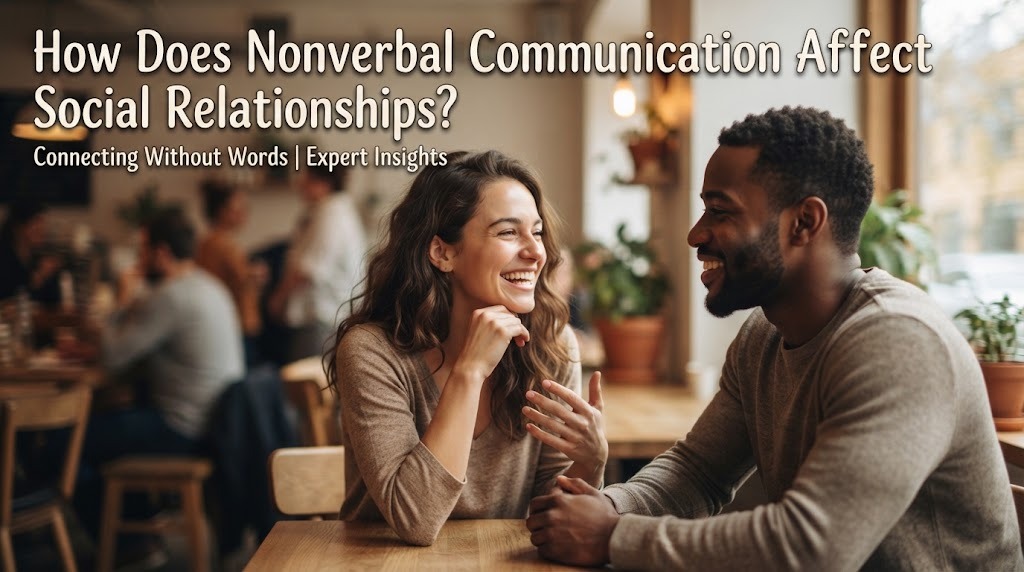
Nonverbal communication plays an important role in social relationships because people communicate through more than just spoken words. Facial expressions, eye contact, gestures, posture, tone of voice, and physical distance can influence how people understand and respond to each other. These signals can show emotions, attitudes, interest, and respect during everyday interactions.
Social relationships can become stronger when nonverbal signals support positive communication. A friendly smile can create warmth, while attentive eye contact can show interest in another person's thoughts. Understanding nonverbal communication can therefore help people create more comfortable, respectful, and meaningful relationships.
BUILDS TRUST AND COMFORT
Nonverbal communication can help people feel comfortable around each other. An open posture, natural eye contact, and a friendly facial expression can make an interaction feel more welcoming. When people consistently receive positive signals from someone, they may become more comfortable communicating with that person.
Trust can also develop through consistent nonverbal behavior. For example, listening attentively and responding with appropriate expressions can show that a person values the conversation. Over time, these small behaviors can contribute to stronger relationships because people may feel respected and understood.
EXPRESSES EMOTIONS
People often use nonverbal communication to express feelings that may be difficult to explain with words. A smile can show happiness, while a serious expression may communicate concern. Changes in tone of voice, posture, and gestures can also provide clues about someone's emotional state.
Recognizing these signals can help people respond more appropriately. If a friend appears worried or uncomfortable, another person may offer support instead of continuing with a sensitive topic. In this way, nonverbal communication can improve emotional understanding and empathy in social relationships.
STRENGTHENS SOCIAL CONNECTIONS
Positive nonverbal communication can create a stronger sense of connection between people. Smiling, maintaining appropriate eye contact, listening attentively, and using natural gestures can show that someone is interested in interacting. These behaviors can make conversations feel more personal and engaging.
Small nonverbal signals can be especially meaningful in close relationships. A supportive expression or a warm tone may communicate care without requiring a long explanation. Regular positive interactions can help maintain a sense of closeness between friends, family members, classmates, and coworkers.
REDUCES MISUNDERSTANDINGS
Nonverbal communication can provide additional information when spoken words are unclear. For example, a person's facial expression may show that they are confused even if they say that they understand. Noticing this signal gives the other person an opportunity to explain the information more clearly.
However, nonverbal signals can also cause misunderstandings if they are interpreted incorrectly. A person who avoids eye contact may appear uninterested, but they could simply feel nervous or shy. Therefore, people should consider context, personality, culture, and other communication signals before making assumptions.
INFLUENCES FIRST IMPRESSIONS
Nonverbal communication can strongly influence how people form first impressions. When meeting someone for the first time, posture, facial expressions, eye contact, and tone can affect whether the person appears friendly, confident, respectful, or approachable. These impressions can influence how comfortable people feel when starting a new relationship.
First impressions are not always accurate because people may behave differently when they are nervous or unfamiliar with a situation. Therefore, it is important not to judge someone only from their first nonverbal signals. Giving relationships time to develop allows people to understand each other's communication styles more accurately.
SUPPORTS HEALTHY COMMUNICATION
Healthy social relationships require people to listen, respond, and respect each other's boundaries. Nonverbal communication can support these behaviors through attentive body language and appropriate personal space. Showing that someone is listening can encourage more open and honest conversations.
People can improve their social relationships by becoming more aware of their own nonverbal behavior. Maintaining a relaxed posture, using appropriate facial expressions, and paying attention to others can make communication more effective. Natural and respectful nonverbal communication can help create relationships based on understanding and mutual respect.
CONCLUSION
Nonverbal communication affects social relationships by building trust, expressing emotions, strengthening connections, reducing misunderstandings, and influencing first impressions. It provides important information that spoken words may not communicate completely. By using and interpreting nonverbal signals carefully, people can create healthier and more positive social interactions.
Recent Posts

Bagaimana Sistem SKS pada Program Kuliah... 22.11.2026/40 View

How Does Technology Make Daily Evaluation... 21.11.2026/71 View

Apa Strategi Menghadapi Kesenjangan antara Kompetensi... 21.11.2026/73 View

Mengapa Inventaris Aset Penting bagi Kelancaran... 21.11.2026/69 View

When Should Musicians Join a Record... 21.11.2026/73 View
