

How Does Personality Develop in an Individual?
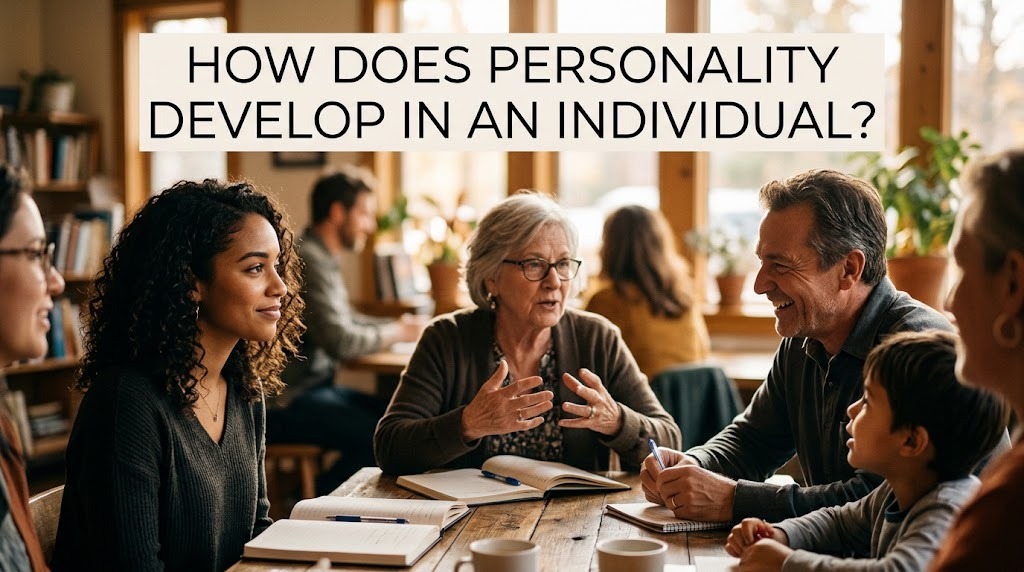
Personality is an important part of human identity because it influences how people think, feel, behave, and interact with others. Every individual has a unique personality that develops through various experiences and influences throughout life. Some people are naturally confident and sociable, while others tend to be quiet, careful, or more comfortable spending time alone. These differences are not formed instantly but develop through a combination of biological factors, family relationships, education, social environments, and personal experiences.
Understanding how personality develops can help individuals recognize their strengths, improve their behavior, and build healthier relationships. Personality development is also a continuous process, meaning that people can learn new habits, adjust their attitudes, and develop positive characteristics as they grow older. By understanding the factors behind this process, individuals can become more aware of themselves and make better decisions in everyday life.
WHAT IS PERSONALITY DEVELOPMENT?
Personality development is the process through which an individual's patterns of thinking, emotional responses, attitudes, and behavior are formed and gradually change over time. It determines how someone responds to different situations, communicates with other people, handles challenges, and makes decisions. Personality also influences personal preferences, social interactions, and the way individuals understand themselves and the world around them.
Personality is influenced by both inherited characteristics and environmental experiences. For example, someone may naturally have a calm temperament, but their family environment and social experiences can influence how they express their emotions. Similarly, an individual who is initially shy may gradually become more confident through positive social interactions and repeated practice. This shows that personality is not entirely fixed and can continue developing throughout different stages of life.
THE ROLE OF GENETIC FACTORS IN PERSONALITY DEVELOPMENT
Genetic factors play an important role in shaping personality because individuals inherit certain biological characteristics from their parents. These characteristics can influence temperament, emotional sensitivity, activity levels, and natural responses to different situations. For example, some children may naturally be more active, while others tend to be calmer or more cautious when facing unfamiliar environments.
However, genetics does not determine a person's entire personality. Inherited characteristics interact with environmental influences, personal experiences, and learning processes. A child who naturally tends to be shy can still develop strong communication skills when given opportunities to interact with others. Therefore, genetic factors provide an initial foundation, while experiences throughout life help shape how personality develops.
HOW FAMILY ENVIRONMENT SHAPES PERSONALITY
Family is one of the first environments that influences personality development. From childhood, individuals learn how to communicate, express emotions, understand rules, and interact with other people through their relationships with parents and family members. The way parents provide attention, affection, discipline, and guidance can significantly influence a child's emotional development and behavior.
A supportive family environment can help children develop confidence, independence, empathy, and a sense of responsibility. On the other hand, an environment characterized by excessive pressure, inconsistent parenting, or a lack of emotional support may create difficulties in developing healthy relationships and emotional regulation. This does not mean that family circumstances determine someone's future personality completely, because individuals can continue learning and growing through experiences outside the home.
THE INFLUENCE OF SOCIAL ENVIRONMENT AND FRIENDSHIPS
Social environments have a significant influence on personality because people constantly interact with individuals who have different attitudes, values, and behaviors. Friendships, school communities, workplaces, and social groups provide opportunities to learn communication skills, cooperation, empathy, and respect for different perspectives. Through these interactions, individuals gradually understand how their behavior affects other people.
Friendships can also influence personal habits and attitudes. For example, someone who spends time with supportive and motivated friends may become more confident and develop a positive outlook on life. In contrast, negative social environments can encourage unhealthy habits or behaviors. Therefore, choosing positive relationships and learning to establish healthy social boundaries are important parts of developing a balanced personality.
THE ROLE OF EDUCATION IN PERSONALITY DEVELOPMENT
Education contributes to personality development by providing knowledge, discipline, and opportunities for personal growth. Schools and universities do more than teach academic subjects because they also encourage students to develop responsibility, critical thinking, cooperation, and problem-solving abilities. Through classroom activities, group assignments, presentations, and extracurricular programs, students learn how to express their ideas and work with different people.
Teachers also play an important role by providing guidance, encouragement, and constructive feedback. When students receive opportunities to participate and express their opinions, they can gradually develop confidence and independence. Education can also help individuals become more open-minded because they are exposed to different ideas, cultures, and perspectives. These experiences contribute to the development of positive attitudes and responsible behavior.
HOW LIFE EXPERIENCES CHANGE PERSONALITY
Life experiences are another important factor that influences personality development. Positive experiences, such as achieving personal goals, receiving encouragement, and building meaningful relationships, can strengthen confidence and motivation. Meanwhile, difficult experiences, including failure, disappointment, and unexpected challenges, can teach individuals how to become more patient, resilient, and emotionally mature.
The way people interpret and respond to these experiences also matters. Two individuals may experience the same situation but develop different attitudes because they have different backgrounds, emotional responses, and coping strategies. For example, one person may view failure as a reason to stop trying, while another may use it as motivation to improve. Over time, these repeated responses can influence personality patterns and personal beliefs.
THE IMPORTANCE OF SELF AWARENESS AND PERSONAL HABITS
Self-awareness helps individuals understand their emotions, strengths, weaknesses, values, and behavioral patterns. When people become more aware of themselves, they can recognize which habits support their development and which behaviors need improvement. For example, someone who realizes that they often react emotionally during disagreements can learn to pause, think carefully, and communicate more calmly.
Daily habits also contribute to personality development because repeated actions gradually become part of an individual's behavior. Practicing discipline, managing time effectively, listening to others, and keeping promises can strengthen positive personal characteristics. Although these changes may take time, consistent effort can help individuals develop healthier attitudes and more responsible behavior. Self-awareness combined with positive habits allows people to take an active role in shaping their personalities.
CAN PERSONALITY CHANGE AS A PERSON GROWS OLDER?
Personality can change throughout life as individuals experience new responsibilities, relationships, challenges, and opportunities. Childhood, adolescence, adulthood, and older age each involve different developmental experiences that may influence how people think and behave. For example, teenagers may still be exploring their identities, while adults often develop greater emotional control and responsibility through work, family life, and personal experiences.
Research in personality psychology suggests that certain personality characteristics can become more stable with age, but they are not completely unchangeable. Individuals may become more organized, emotionally balanced, or socially confident as they gain experience. Major life events and intentional personal development can also contribute to personality changes. Therefore, growing older does not simply mean maintaining the same personality but can involve continuous learning and adjustment.
CONCLUSION
Personality development is a lifelong process influenced by genetic characteristics, family relationships, social environments, education, life experiences, and personal habits. Each factor contributes to how individuals think, feel, behave, and interact with others. Although some personality characteristics may be influenced by inherited traits, environmental experiences and personal choices also play important roles in shaping individual behavior.
Understanding personality development allows people to become more aware of themselves and recognize opportunities for improvement. By building positive habits, maintaining healthy relationships, learning from experiences, and developing emotional awareness, individuals can gradually strengthen their personalities. Ultimately, personality is not simply something people are born with but also something that continues to grow through learning, experience, and personal development.
Recent Posts

Bagaimana Sistem SKS pada Program Kuliah... 22.11.2026/46 View

How Does Technology Make Daily Evaluation... 21.11.2026/73 View

Apa Strategi Menghadapi Kesenjangan antara Kompetensi... 21.11.2026/75 View

Mengapa Inventaris Aset Penting bagi Kelancaran... 21.11.2026/71 View

When Should Musicians Join a Record... 21.11.2026/75 View
