

How Does Political Literacy Help People Understand Politics?
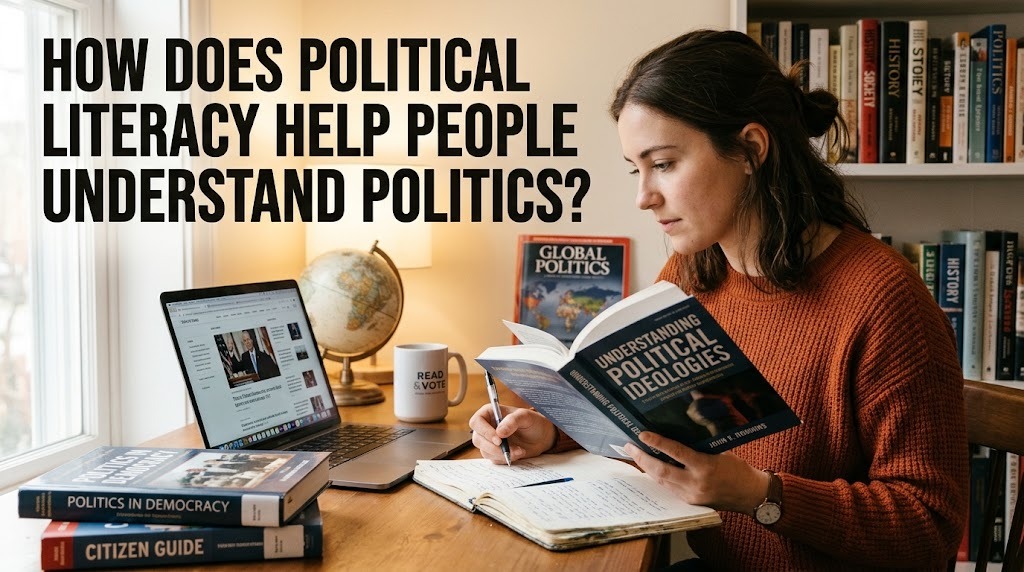
Political literacy helps people develop the knowledge and skills needed to understand political issues, public institutions, government decisions, and civic participation. Politics can involve complex policies, laws, institutions, and competing viewpoints, so having basic knowledge can make political information easier to understand.
In everyday life, people may encounter political information through news websites, social media, television, conversations, and community activities. Developing political literacy skills can help individuals examine this information carefully and understand how political decisions may affect society.
HELPING PEOPLE UNDERSTAND BASIC POLITICAL CONCEPTS
One way political literacy helps people understand politics is by providing knowledge about basic political concepts. These can include government institutions, elections, public policies, laws, political participation, and citizens' rights and responsibilities.
Without basic knowledge, political discussions can be difficult to follow because they often use specific terms and refer to complicated processes. Learning these concepts can provide a foundation for understanding information about public affairs.
Understanding political concepts also helps people distinguish between different roles within government and society. This can make it easier to identify who is responsible for particular decisions and where to find relevant information.
HELPING PEOPLE UNDERSTAND PUBLIC POLICIES
Government decisions and public policies can influence many aspects of daily life, including education, transportation, employment, healthcare, taxation, and public services. Political literacy can help people understand why these policies exist and how they may affect different groups.
People can examine the objectives of a policy, the institutions involved, and the possible effects described by reliable sources. Looking at these elements can provide a broader understanding than relying only on short statements or headlines.
Political literacy does not require people to agree with every policy. Instead, it can help them understand the information surrounding a policy and develop their own informed opinions based on relevant evidence.
IMPROVING THE ABILITY TO EVALUATE POLITICAL INFORMATION
The digital environment gives people access to a large amount of political information. However, information found online can differ in accuracy, context, and reliability.
Political literacy can encourage people to check where a claim comes from, examine supporting evidence, compare it with other credible sources, and distinguish factual statements from opinions or interpretations. UNESCO's media and information literacy framework emphasizes the importance of accessing, evaluating, and using information effectively.
These habits can be especially useful when political content spreads quickly through social media. Taking time to verify information before accepting or sharing it can help people develop a more careful understanding of political issues.
ENCOURAGING PEOPLE TO CONSIDER DIFFERENT PERSPECTIVES
Political issues can affect different groups in different ways. Political literacy can help people recognize that a public issue may involve several perspectives and competing interests.
Considering different viewpoints does not mean accepting every argument as equally supported. Instead, individuals can examine the evidence behind each claim and identify the reasons different groups may hold particular positions.
Respectful discussion can also improve understanding. Listening to other perspectives, asking questions, and explaining ideas clearly can help people learn more about complex political issues without turning every disagreement into a personal conflict.
CONNECTING POLITICS WITH EVERYDAY LIFE
Political literacy can help people recognize how politics affects daily life. Decisions made by public institutions can influence public transportation, education, infrastructure, environmental regulations, employment policies, and other areas of community life.
Understanding these connections can encourage people to pay attention to issues that are relevant to their communities. They can also learn which institutions are responsible for particular matters and where to seek additional information.
Ultimately, political literacy is not about telling people what political opinions to hold. It provides knowledge and analytical skills that can help individuals understand political developments and make their own informed judgments.
CONCLUSION
Political literacy helps people understand politics by providing knowledge of political concepts, public policies, institutions, and civic processes. It also supports the ability to evaluate political information and consider different perspectives.
By developing political literacy skills, people can better connect political decisions with everyday life and participate in civic discussions more thoughtfully. The goal is to support informed understanding while allowing individuals to form their own political views.
Recent Posts

Bagaimana Sistem SKS pada Program Kuliah... 22.11.2026/33 View

How Does Technology Make Daily Evaluation... 21.11.2026/67 View

Apa Strategi Menghadapi Kesenjangan antara Kompetensi... 21.11.2026/67 View

Mengapa Inventaris Aset Penting bagi Kelancaran... 21.11.2026/65 View

When Should Musicians Join a Record... 21.11.2026/66 View
