

How Does Population Density Affect Housing and Public Facilities?
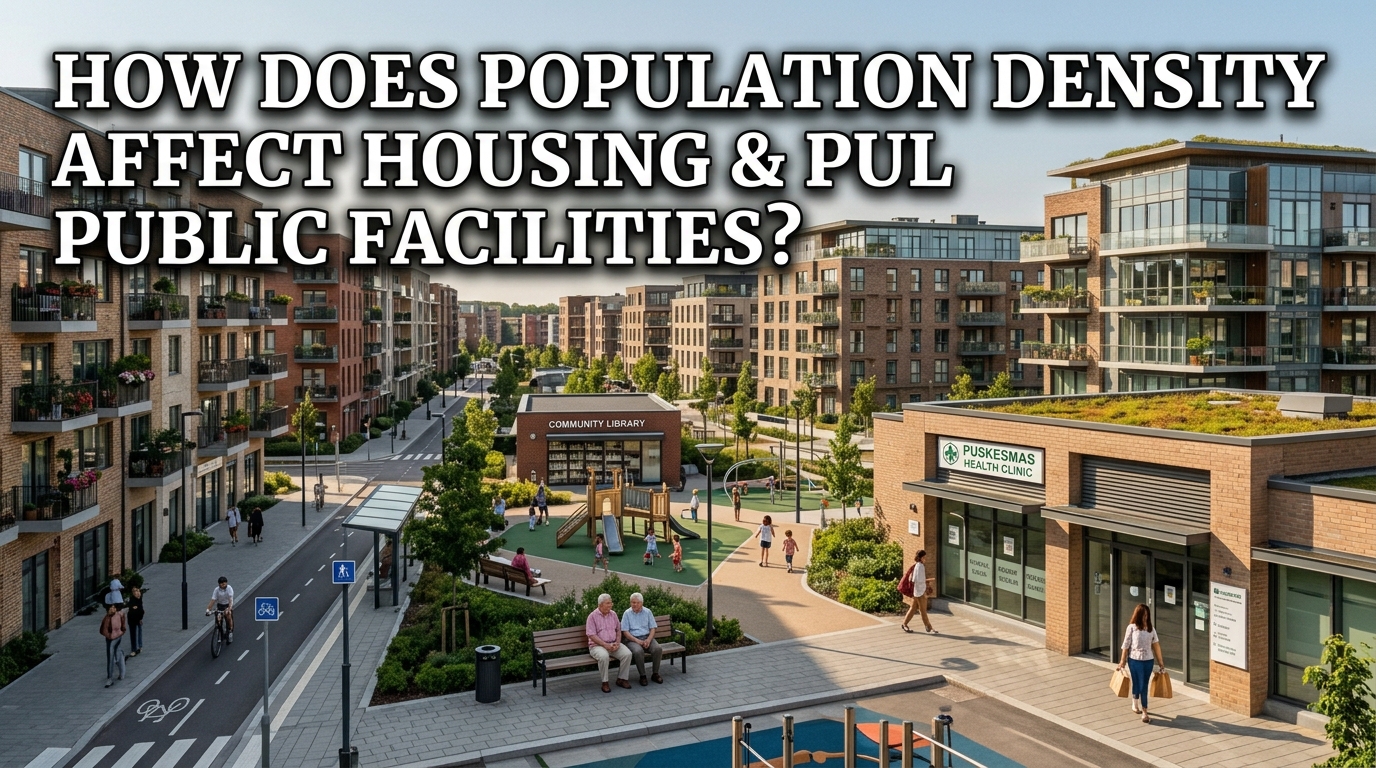
Population density plays an important role in determining how housing and public facilities are developed and distributed within a region. When a large number of people live in a relatively small geographical area, the demand for homes, schools, hospitals, transportation, and other essential services increases. If the available infrastructure cannot accommodate this growing demand, communities may experience housing shortages, overcrowded facilities, and declining living conditions.
The relationship between population density, housing availability, and public facilities is especially noticeable in major cities and rapidly developing urban areas. High population density can encourage investment in residential buildings and public infrastructure. However, it can also create challenges such as rising property prices, traffic congestion, and pressure on essential services. Understanding these effects is important for creating well-planned cities and ensuring that residents have access to comfortable housing and adequate public facilities.
UNDERSTANDING POPULATION DENSITY AND ITS RELATIONSHIP WITH HOUSING
Population density refers to the number of people living within a specific unit of land area, usually measured in people per square kilometer. Areas with high population density have more residents concentrated within limited geographical spaces. This condition commonly occurs in cities where employment opportunities, educational institutions, business centers, and healthcare services attract people from different regions.
As population density increases, the demand for residential properties also tends to grow. More people need houses, apartments, rental rooms, and other forms of accommodation. If housing development cannot keep pace with population growth, the available residential supply may become insufficient. Consequently, densely populated areas often face greater pressure on land availability, housing affordability, and residential infrastructure.
HOW HIGH POPULATION DENSITY AFFECTS HOUSING AVAILABILITY
One of the most significant effects of high population density is increased demand for housing. As more people settle in a particular area, the need for residential buildings rises. Developers may respond by constructing apartment buildings, residential complexes, and high-rise housing to accommodate more residents within limited land areas. However, housing construction requires proper planning, sufficient investment, and access to essential infrastructure.
When the supply of housing grows more slowly than demand, housing shortages can occur. Low-income families and young workers may find it increasingly difficult to purchase or rent suitable homes. Some residents may be forced to live in overcrowded houses or informal settlements with inadequate facilities. This situation can create problems involving sanitation, safety, ventilation, and access to clean water.
THE IMPACT OF POPULATION DENSITY ON HOUSING PRICES
High population density can influence property prices and rental costs because of increasing competition for limited residential land. In popular urban areas, many people want to live close to workplaces, schools, hospitals, and transportation facilities. When demand exceeds the available housing supply, property owners and developers may increase selling prices or rental rates. As a result, housing becomes less affordable for households with limited incomes.
Rising housing costs can also encourage residential expansion toward suburban and rural areas. People may choose to live farther from city centers because accommodation is more affordable outside major business districts. However, this can increase commuting distances, transportation expenses, and pressure on suburban infrastructure. Affordable housing policies and balanced residential development are important for ensuring that people from different income groups can access suitable accommodation.
HOW POPULATION DENSITY AFFECTS EDUCATIONAL FACILITIES
High population density increases the demand for schools, universities, and other educational facilities. When the number of children and young people grows in a particular area, existing educational institutions may struggle to accommodate all students. This can result in overcrowded classrooms, limited learning spaces, and greater competition for school enrollment. Teachers may also face difficulties providing individual attention when class sizes become too large.
To address these challenges, governments need to expand educational infrastructure according to population needs. Building additional schools, improving classroom facilities, recruiting qualified teachers, and providing adequate learning materials are important steps. Access to educational facilities should also be distributed fairly across different neighborhoods. Proper planning helps ensure that population growth does not reduce the quality of education available to local communities.
THE EFFECT OF POPULATION DENSITY ON HEALTHCARE FACILITIES
Densely populated areas generally experience higher demand for healthcare services because more residents require medical consultations, emergency treatment, vaccinations, and other forms of healthcare. Hospitals, clinics, community health centers, and pharmacies must serve larger numbers of people. If healthcare infrastructure does not expand alongside population growth, patients may experience longer waiting times and limited access to medical services.
High population density can also increase pressure on medical personnel and available equipment. Hospitals may become overcrowded, particularly during disease outbreaks or public health emergencies. Governments therefore need to improve healthcare facilities, recruit medical professionals, and strengthen preventive healthcare programs. Accessible and well-equipped healthcare services are essential for protecting public health in densely populated communities.
THE IMPACT ON TRANSPORTATION AND OTHER PUBLIC INFRASTRUCTURE
Population density has a direct influence on the demand for roads, public transportation, drainage systems, electricity, and clean water. As more people live in one area, daily transportation needs increase because residents travel to workplaces, schools, shopping centers, and public facilities. Without sufficient transportation infrastructure, traffic congestion and longer commuting times can become common problems. Public transportation systems may also become overcrowded during peak hours.
Other infrastructure systems face similar challenges. Water supply networks must provide enough clean water for households and businesses, while drainage systems need sufficient capacity to manage wastewater and rainwater. Electricity networks must also accommodate increasing residential and commercial consumption. Infrastructure development must grow alongside population needs to prevent service disruptions and maintain comfortable living conditions.
ENVIRONMENTAL AND SOCIAL PROBLEMS CAUSED BY OVERCROWDING
When population density becomes difficult to manage, housing and public facility problems can contribute to wider environmental and social challenges. Overcrowded settlements may generate large amounts of household waste and wastewater. If sanitation systems and waste collection services are inadequate, pollution can affect rivers, soil, and surrounding neighborhoods. Limited green spaces can also reduce environmental comfort and increase urban temperatures.
Social inequality may become more visible when access to housing and public facilities differs between income groups. Wealthier residents may afford better homes and private healthcare or education, while disadvantaged families may depend on overcrowded public facilities. Limited access to essential services can reduce people's quality of life and increase social tension. Therefore, fair access to housing and public services is an important part of sustainable urban development.
STRATEGIES TO IMPROVE HOUSING AND PUBLIC FACILITIES
Managing the effects of high population density requires effective urban planning and cooperation between governments, private developers, and local communities. One important strategy is developing affordable housing programs that provide safe and suitable accommodation for different income groups. Governments can support the construction of public housing, improve residential infrastructure, and encourage responsible private investment. Proper land-use planning can also help prevent uncontrolled settlement expansion.
Another important strategy is improving the capacity and distribution of public facilities. Governments need to build additional schools, healthcare centers, transportation networks, and sanitation systems in areas experiencing rapid population growth. Developing smaller cities and surrounding regions can also reduce excessive concentration in major metropolitan areas. Furthermore, maintaining green spaces and improving waste management can create healthier urban environments. These measures help ensure that housing and public services remain accessible as communities grow.
CONCLUSION
Population density significantly affects housing availability and the development of public facilities. As more people live within a limited geographical area, demand for residential properties, schools, hospitals, transportation, clean water, and sanitation increases. When infrastructure cannot keep pace with population growth, communities may experience housing shortages, rising property prices, overcrowded public facilities, and environmental problems.
However, high population density does not always result in poor living conditions. With effective urban planning, affordable housing, adequate public infrastructure, and fair distribution of essential services, densely populated areas can support large communities successfully. Governments and communities must work together to ensure that residential development and public facilities grow according to population needs. This approach can create more sustainable, inclusive, and comfortable living environments for everyone.
Recent Posts

Bagaimana Sistem SKS pada Program Kuliah... 22.11.2026/31 View

How Does Technology Make Daily Evaluation... 21.11.2026/67 View

Apa Strategi Menghadapi Kesenjangan antara Kompetensi... 21.11.2026/66 View

Mengapa Inventaris Aset Penting bagi Kelancaran... 21.11.2026/64 View

When Should Musicians Join a Record... 21.11.2026/65 View
