

How Does Population Density Affect Regional Economic Growth?
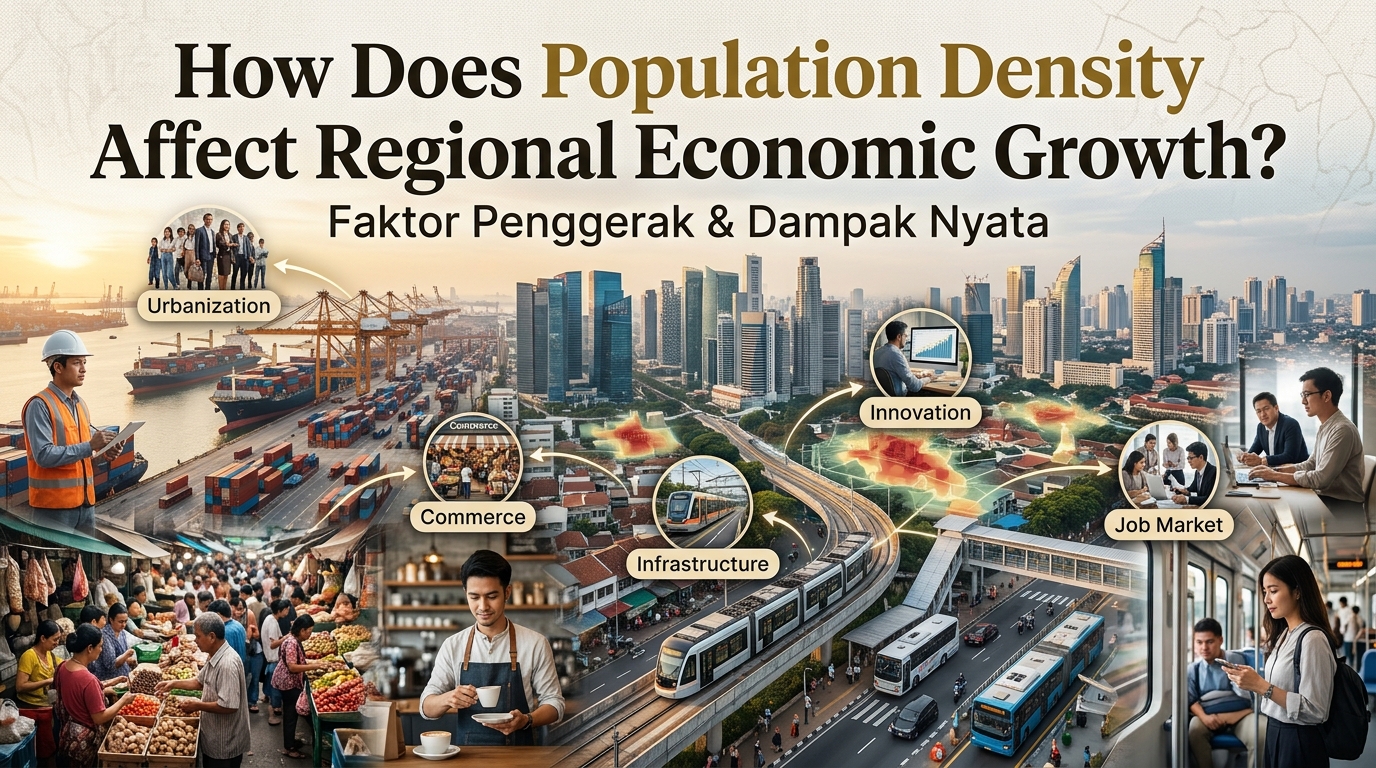
Population density plays an important role in shaping the economic development of a region. Areas with large populations often have more workers, consumers, businesses, and economic activities. This concentration can encourage productivity, attract investment, and create new employment opportunities. However, high population density can also create challenges, such as traffic congestion, rising housing costs, unemployment, and pressure on public infrastructure. Therefore, understanding how population density affects regional economic growth is essential for developing balanced and sustainable economies.
WHAT IS THE RELATIONSHIP BETWEEN POPULATION DENSITY AND ECONOMIC GROWTH?
Population density refers to the average number of people living within a specific unit of land area, usually measured in people per square kilometer. Regional economic growth describes an increase in the production of goods and services within a particular area over time. Both concepts are connected because population distribution influences the availability of workers, consumer demand, and business activities. Regions with higher population concentrations may have greater opportunities to develop economic activities.
However, high population density does not automatically guarantee strong economic growth. A region needs sufficient infrastructure, education, employment opportunities, and access to resources to support its population. Without proper development, a large population may increase competition for jobs and public facilities. Therefore, the relationship between population density and economic growth depends on how effectively a region manages its human and economic resources.
HOW POPULATION DENSITY INCREASES LABOR AVAILABILITY
One important advantage of high population density is the availability of a larger labor force. Regions with more residents may have more people available to work in manufacturing, agriculture, trade, technology, education, and service industries. Businesses can recruit employees with different educational backgrounds and professional skills. This can help companies expand their operations and improve productivity.
A concentrated workforce can also encourage the development of specialized industries. For example, technology companies may benefit from being located near universities and skilled professionals. Workers can exchange knowledge, develop new ideas, and collaborate more easily. However, employment opportunities must grow alongside the labor supply to prevent unemployment and underemployment.
THE EFFECT OF POPULATION DENSITY ON BUSINESS DEVELOPMENT
High population density can create attractive conditions for business development because businesses have access to larger consumer markets. Restaurants, retail stores, transportation services, and other companies can reach more potential customers within a relatively small area. This concentration may reduce certain distribution and operating costs. As a result, densely populated regions can become attractive locations for entrepreneurs and investors.
The presence of many businesses can also encourage competition and innovation. Companies may improve their products, services, and customer experiences to attract consumers. In addition, the growth of large businesses can create opportunities for small enterprises that provide supporting services. However, businesses still need suitable infrastructure, purchasing power, and a stable economic environment to succeed.
THE ROLE OF POPULATION DENSITY IN ATTRACTING INVESTMENT
Investment is an important factor in regional economic growth, and population density can influence where investors choose to establish their businesses. Regions with large populations may offer access to workers, consumers, suppliers, and transportation networks. These advantages can make certain urban areas attractive for factories, shopping centers, offices, and commercial developments. Investors may also prefer locations with established economic activities because they can reduce some business risks.
However, investment is not determined by population density alone. Investors also consider political stability, infrastructure quality, land availability, regulations, market potential, and production costs. A region with a smaller population can still attract significant investment if it has valuable natural resources or strong economic potential. Therefore, improving the business environment is essential for encouraging investment across different regions.
HOW POPULATION DENSITY AFFECTS CONSUMER DEMAND
A larger population can increase consumer demand for products and services. People need food, clothing, housing, transportation, healthcare, education, and various household goods. When many consumers live in the same region, businesses may have greater opportunities to sell their products. This demand can encourage the growth of retail stores, restaurants, markets, and service industries.
Increasing consumer demand can also support local production and create new employment opportunities. For example, growing demand for food may encourage agricultural suppliers, distributors, and food-processing businesses to expand. However, higher demand can also increase prices when the supply of goods and services cannot keep up. Maintaining a balance between supply and demand is therefore important for regional economic stability.
THE IMPACT OF POPULATION DENSITY ON INFRASTRUCTURE AND PRODUCTIVITY
Infrastructure is essential for supporting economic activities in densely populated regions. Roads, bridges, public transportation, electricity, internet networks, and water facilities help workers and businesses operate efficiently. When these facilities are properly developed, companies can distribute products, communicate with customers, and transport employees more easily. This can improve regional productivity and support economic expansion.
On the other hand, rapid population growth can place excessive pressure on existing infrastructure. Traffic congestion, unreliable public transportation, housing shortages, and inadequate sanitation may increase business costs and reduce worker productivity. Governments need to expand infrastructure according to population growth and economic needs. Effective planning can help ensure that population concentration becomes an economic advantage rather than a development obstacle.
THE NEGATIVE EFFECTS OF HIGH POPULATION DENSITY ON REGIONAL ECONOMIES
Although high population density can support economic growth, it may also create several challenges. When the number of workers increases faster than available jobs, unemployment and competition for employment can become serious problems. High housing demand can also increase property prices and living expenses. These conditions may make it difficult for low-income residents to maintain a comfortable standard of living.
Environmental pressure is another concern in densely populated regions. Air pollution, waste accumulation, traffic congestion, and excessive resource consumption can affect public health and economic productivity. Businesses may face higher operating costs because of transportation delays, expensive land, and limited resources. Without proper management, these problems can reduce the long-term economic benefits of population concentration.
WHY LOW POPULATION DENSITY CAN ALSO AFFECT ECONOMIC GROWTH
Regions with low population density may face different economic challenges. A smaller workforce can make it difficult for businesses to recruit enough employees, particularly in specialized industries. Limited consumer markets may also reduce business opportunities and discourage certain types of investment. In addition, residents may need to travel long distances to access education, healthcare, and commercial facilities.
However, low population density does not always prevent economic development. Regions with agricultural potential, tourism attractions, fisheries, energy resources, or mining activities can develop strong local economies. With better transportation, digital connectivity, education, and investment support, less populated areas can improve their economic performance. The key is to develop industries that match local resources and regional strengths.
STRATEGIES TO BALANCE POPULATION DENSITY AND ECONOMIC DEVELOPMENT
Governments need effective regional planning to ensure that population density supports economic growth. One important strategy is to distribute investment and employment opportunities across different cities and regions. Developing industrial centers, educational facilities, transportation networks, and public services outside major urban areas can encourage more balanced economic activities. This can also reduce excessive dependence on a small number of large cities.
Improving education and workforce skills is equally important. Training programs, vocational education, and digital skills development can help residents participate in productive economic activities. Governments should also support small businesses, improve access to financing, and encourage innovation. Through these efforts, regions with different population densities can develop their economic potential more effectively.
CONCLUSION
Population density affects regional economic growth by influencing labor availability, consumer demand, business development, investment, and infrastructure needs. High population density can create economic advantages because workers, businesses, and consumers are concentrated within relatively small areas. However, it can also produce challenges such as unemployment, expensive housing, congestion, and environmental pressure when development is not properly managed.
Meanwhile, regions with lower population density can still achieve economic progress by developing their local resources, improving infrastructure, and attracting suitable investments. The most important factor is not simply the number of people living in an area but how effectively their potential is supported. With balanced regional development, quality education, and sustainable economic policies, population density can contribute positively to long-term regional prosperity.
Recent Posts

Bagaimana Sistem SKS pada Program Kuliah... 22.11.2026/33 View

How Does Technology Make Daily Evaluation... 21.11.2026/67 View

Apa Strategi Menghadapi Kesenjangan antara Kompetensi... 21.11.2026/67 View

Mengapa Inventaris Aset Penting bagi Kelancaran... 21.11.2026/65 View

When Should Musicians Join a Record... 21.11.2026/66 View
