

How Does Public Oversight Help Improve the Performance of the Election Commission?
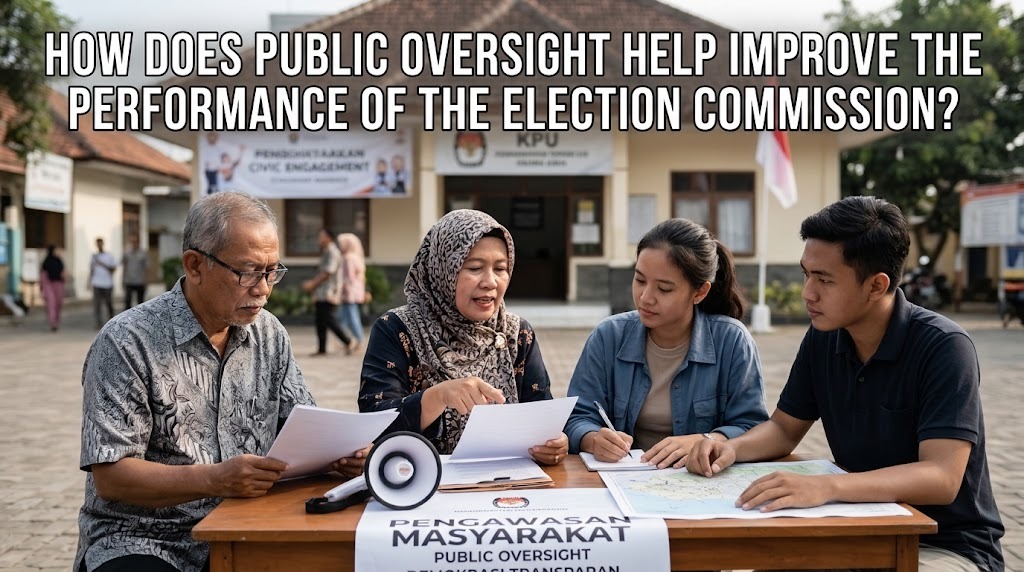
Public oversight plays an important role in maintaining the quality and accountability of democratic elections. In Indonesia, the General Elections Commission (KPU) is responsible for organizing elections according to applicable laws and regulations. However, the success of election management does not depend solely on the institution itself. Public participation is also necessary to monitor election activities, identify potential problems, and encourage professional performance.
Through public oversight, citizens can help ensure that election procedures are conducted fairly, transparently, and responsibly. Communities, journalists, civil society organizations, and election observers can monitor different stages of the electoral process. Their involvement encourages the KPU to maintain high standards of performance and provide accurate information. Strong public participation can ultimately strengthen democratic institutions and increase public confidence in election results.
UNDERSTANDING PUBLIC OVERSIGHT IN THE ELECTION PROCESS
Public oversight refers to the involvement of citizens and community organizations in monitoring the implementation of election activities. This participation helps ensure that election organizers follow established procedures and perform their responsibilities properly. Public oversight can take various forms, including observing voting activities, checking election information, reporting suspected irregularities, and participating in public discussions.
In Indonesia, public oversight complements the formal supervision carried out by the Election Supervisory Agency (Bawaslu). While Bawaslu has specific legal authority to supervise elections and handle violations, citizens can contribute by providing information and reporting suspected problems through appropriate channels. This cooperation creates a broader monitoring environment and encourages election organizers to remain accountable to the public.
IMPROVING TRANSPARENCY AND ACCOUNTABILITY
One of the main benefits of public oversight is improving transparency in election management. When citizens actively monitor election activities, the KPU is encouraged to provide clear information about regulations, schedules, voter registration, and election results. Accessible information allows the public to understand how decisions are made and how election procedures are implemented.
Public oversight also strengthens institutional accountability. The KPU must be able to explain its policies and demonstrate that its activities follow applicable regulations. When administrative problems or inconsistencies are identified, public feedback can encourage the institution to evaluate its procedures and make necessary improvements. This process helps create a more open relationship between election organizers and the communities they serve.
IDENTIFYING AND REPORTING ELECTION IRREGULARITIES
Public participation can help identify potential problems that might otherwise remain unnoticed during the election process. Citizens who observe activities in their communities may recognize issues such as suspected vote-buying, campaign violations, intimidation, or irregularities at polling stations. Reporting these findings through appropriate channels can help authorized institutions investigate and respond to possible violations.
Accurate reporting is important because not every unusual situation automatically constitutes an election violation. Reports should include relevant information, such as the location, time, available evidence, and description of the incident. Citizens should avoid spreading unverified accusations through social media because this can create confusion and damage the reputation of others. Responsible reporting supports effective supervision and helps protect the integrity of elections.
ENCOURAGING BETTER PERFORMANCE FROM ELECTION ORGANIZERS
Public oversight encourages the KPU and its regional offices to perform their responsibilities more professionally. When election activities receive public attention, organizers have stronger incentives to maintain accurate administrative records, follow established schedules, and provide reliable services. This external monitoring can help identify weaknesses that require institutional improvement.
Public feedback can also provide valuable information about difficulties experienced by voters. For example, citizens may report problems involving voter registration, inaccessible polling stations, unclear election information, or delays in receiving public services. The KPU can use this feedback to evaluate its performance and improve future election preparations. Continuous evaluation helps create an election management system that is more responsive to community needs.
STRENGTHENING PUBLIC PARTICIPATION AND DEMOCRATIC AWARENESS
Public oversight does more than monitor election organizers because it also encourages citizens to become more active in democratic activities. People who understand election procedures are more likely to recognize their rights and responsibilities as voters. Participation in monitoring activities can also increase public awareness of the importance of honest elections and responsible political behavior.
Educational institutions, community organizations, journalists, and civil society groups can support this process by providing election education and encouraging informed participation. Young people can also contribute through volunteer activities, election observation programs, and responsible digital communication. These activities help build a society that is more aware of democratic values and willing to protect the integrity of electoral processes.
BUILDING PUBLIC TRUST IN THE ELECTION COMMISSION
Public trust is an important foundation for the successful implementation of democratic elections. When citizens can observe election activities and obtain reliable information, they are more likely to understand and trust the procedures carried out by the KPU. Transparency and accountability help reduce unnecessary suspicion and prevent misunderstandings about election management.
The KPU can strengthen public confidence by responding to complaints, explaining its decisions, and providing accessible election information. It must also maintain professionalism and apply regulations consistently across different regions. Meanwhile, public oversight should be conducted responsibly and based on accurate evidence. Cooperation between the KPU, Bawaslu, and the community can create a stronger electoral environment in which public trust is supported by transparent procedures and institutional accountability.
CONCLUSION
Public oversight helps improve the performance of the General Elections Commission by strengthening transparency, accountability, supervision, and public participation. Through community involvement, potential irregularities can be identified, election information can be monitored, and institutional weaknesses can receive greater attention.
Public oversight also encourages citizens to understand their democratic rights and responsibilities. However, effective monitoring requires accurate information, responsible reporting, and cooperation with authorized election institutions. By strengthening collaboration between the KPU, Bawaslu, and the public, Indonesia can develop a more professional, transparent, and trustworthy election system.
Recent Posts

Bagaimana Sistem SKS pada Program Kuliah... 22.11.2026/46 View

How Does Technology Make Daily Evaluation... 21.11.2026/74 View

Apa Strategi Menghadapi Kesenjangan antara Kompetensi... 21.11.2026/75 View

Mengapa Inventaris Aset Penting bagi Kelancaran... 21.11.2026/72 View

When Should Musicians Join a Record... 21.11.2026/75 View
