

How Does Scientific Literacy Help Young People Prepare for the Future?
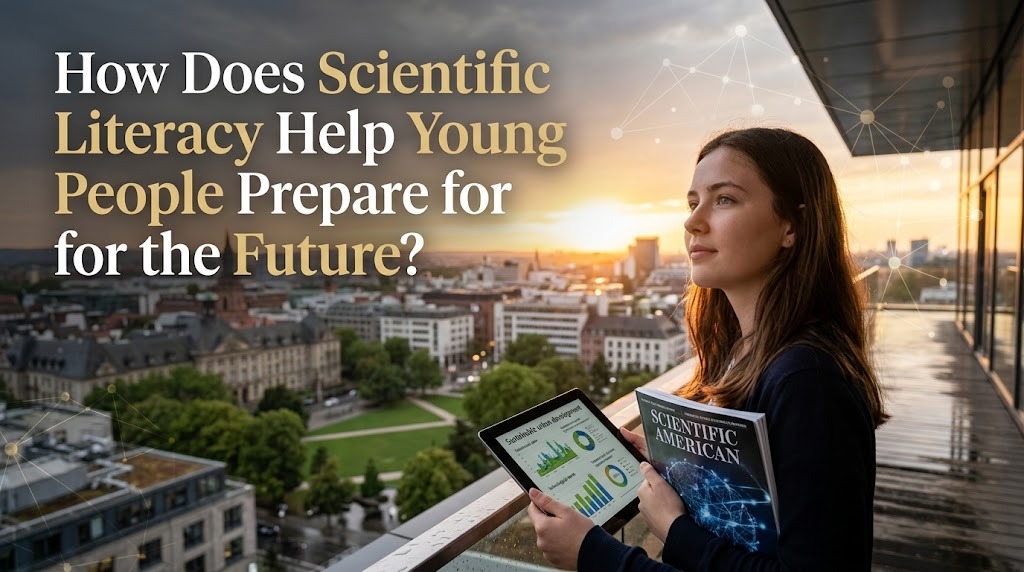
UNDERSTANDING SCIENTIFIC LITERACY FOR YOUNG PEOPLE
Scientific literacy is the ability to understand scientific information, evaluate evidence, and apply scientific knowledge to real situations. For young people, this ability is increasingly important because the future will involve continuous changes in technology, science, education, and the workplace. Young people need more than academic knowledge to understand these changes. They also need to know how to evaluate information and use evidence when facing new situations. Scientific literacy can provide a foundation for developing these abilities.
Scientific literacy is not limited to learning formulas or memorizing scientific facts. It includes asking questions, analyzing information, interpreting evidence, and developing reasonable conclusions. These skills can help young people become more independent learners. They can also make it easier to understand unfamiliar scientific and technological developments. With regular practice, scientific thinking can become a useful skill for education and everyday life.
PREPARING FOR TECHNOLOGICAL DEVELOPMENT
Technology continues to influence how people learn, communicate, work, and solve problems. Scientific literacy helps young people understand the basic ideas behind new technologies and scientific developments. They can learn to consider how a technology works, what benefits it provides, and what limitations may exist. This knowledge can make it easier to adapt when new technologies become part of everyday life. It can also encourage responsible and thoughtful technology use.
Young people may encounter developments involving artificial intelligence, renewable energy, biotechnology, automation, and digital systems. They do not need to become experts in every field, but a basic scientific understanding can help them interpret important information. Scientific literacy allows them to ask relevant questions and examine evidence when learning about new developments. This can support continuous learning as technology changes over time.
DEVELOPING CRITICAL THINKING AND PROBLEM SOLVING
The future will present problems that may not have simple solutions. Critical thinking and problem solving can help young people analyze these challenges systematically. Scientific literacy encourages them to identify a problem, collect relevant information, evaluate evidence, and consider possible solutions. These steps can help them avoid making conclusions based only on assumptions. They can also learn from results and improve their approach when a solution does not work.
Problem solving skills are useful in both education and future workplaces. Young people may need to understand information, identify patterns, and make decisions based on available evidence. Scientific literacy can support these abilities by encouraging logical reasoning and evidence based thinking. It also teaches students that mistakes and unexpected results can provide useful information for further investigation.
EVALUATING INFORMATION IN THE DIGITAL ERA
Young people receive a large amount of information through websites, social media, videos, and other digital platforms. Scientific literacy helps them evaluate whether scientific information is reliable and supported by evidence. They can check the source, author, publication date, references, and context of a claim. Comparing several credible sources can also help them develop a more complete understanding. These habits are important because misleading information can spread quickly online.
Scientific literacy also helps young people recognize the difference between scientific findings and personal opinions. Online content may use scientific terms or statistics without explaining their meaning accurately. By applying critical evaluation, young people can question unsupported claims and avoid sharing information without checking it first. This can make them more responsible users of digital media.
SUPPORTING FUTURE EDUCATION AND CAREERS
Scientific literacy can provide useful skills for future education and employment. Many careers increasingly involve technology, data, research, health, engineering, environmental issues, and digital systems. Even young people who do not choose science related careers may need to understand scientific information in their workplaces. Scientific literacy can support their ability to learn new concepts and adapt to changing professional requirements.
Scientific literacy also encourages curiosity and lifelong learning. The knowledge needed for a future career may change as industries develop and new technologies emerge. Young people who are comfortable asking questions and evaluating information can continue developing their skills. This ability to learn and adapt can be valuable when facing new educational or professional challenges.
BUILDING RESPONSIBLE FUTURE CITIZENS
Young people will eventually make decisions that affect their communities and the wider society. Scientific literacy can help them understand important issues involving health, climate, energy, environment, and technology. They can examine scientific evidence and understand different aspects of complex issues before forming their own conclusions. This encourages informed participation in discussions about topics that affect everyday life. It also helps young people understand why reliable information matters.
Scientific literacy can encourage a responsible attitude toward knowledge. Young people can learn to check information, recognize uncertainty, respect evidence, and remain open to new findings. These habits can help them respond thoughtfully to challenges rather than reacting only to incomplete information. By developing scientific literacy from an early age, young people can build skills that remain useful as society continues to change.
CONCLUSION
Scientific literacy helps young people prepare for the future by developing their ability to understand scientific information, evaluate evidence, solve problems, and adapt to technological changes. It can support their future education and careers while helping them navigate the large amount of information available in the digital era. Scientific literacy also strengthens critical thinking, curiosity, digital awareness, and lifelong learning. These skills can help young people understand complex challenges and respond to them more thoughtfully. Therefore, developing scientific literacy can be an important part of preparing young people for a changing and increasingly technology driven future.
Recent Posts

Bagaimana Sistem SKS pada Program Kuliah... 22.11.2026/33 View

How Does Technology Make Daily Evaluation... 21.11.2026/67 View

Apa Strategi Menghadapi Kesenjangan antara Kompetensi... 21.11.2026/67 View

Mengapa Inventaris Aset Penting bagi Kelancaran... 21.11.2026/65 View

When Should Musicians Join a Record... 21.11.2026/66 View
