

How Does Semester Evaluation Measure Student Performance?
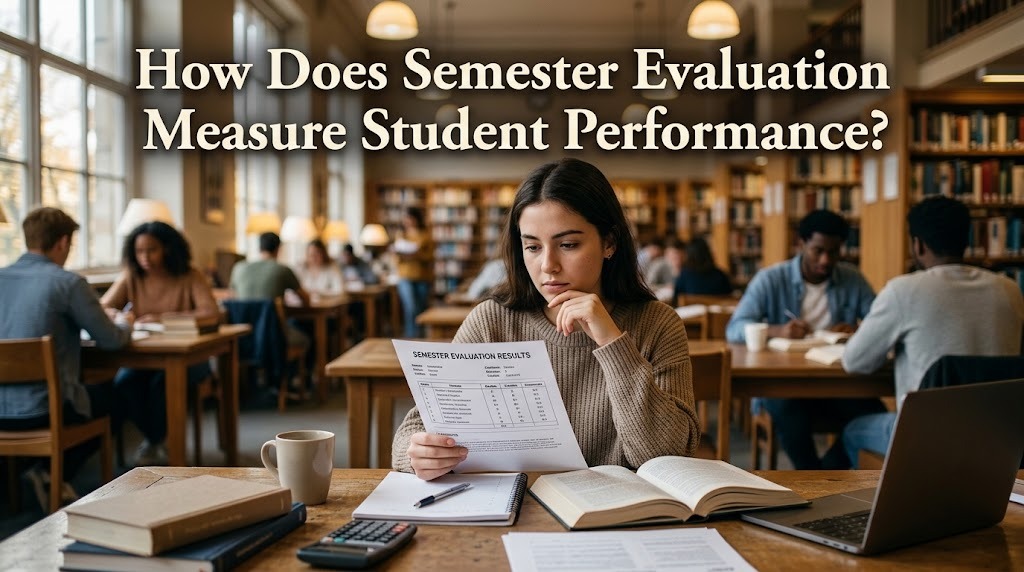
Semester evaluation is an important educational process that helps teachers measure student performance over a specific learning period. It provides information about students' understanding of lessons, academic progress, and ability to apply the knowledge they have gained. Through examinations, assignments, projects, and other assessments, teachers can identify students' strengths and areas that need improvement. Semester evaluation also helps students understand their learning progress and prepare for future academic challenges.
ASSESSING STUDENTS' UNDERSTANDING OF LEARNING MATERIAL
Semester evaluation measures student performance by examining how well students understand the subjects they have studied. Teachers use questions, written examinations, and practical activities to determine whether students have achieved the expected learning objectives. These assessments may cover essential concepts, factual knowledge, analytical thinking, and the ability to explain information clearly. The results help teachers identify whether students have understood the material or need additional instruction.
Understanding is different from simply memorizing information. Students may be asked to explain concepts in their own words, compare different ideas, or apply knowledge to real situations. These tasks help teachers evaluate whether students can use what they have learned effectively. By assessing different levels of understanding, semester evaluation provides a more meaningful picture of academic achievement.
MEASURING ACADEMIC ACHIEVEMENT THROUGH EXAMINATIONS
Examinations are one of the common methods used to measure student performance during a semester. They allow teachers to assess students' knowledge through multiple-choice questions, short answers, essays, calculations, or subject-specific problems. Each question can measure different abilities, depending on the learning objectives and examination design. The results provide evidence of how well students have mastered the material covered in class.
However, examination scores should not be the only measure of student ability. A single test may not fully represent a student's knowledge, especially when anxiety, health problems, or other circumstances affect performance. Teachers can combine examination results with other assessments to gain a more balanced understanding. This approach makes academic evaluation more comprehensive and helps reduce dependence on one assessment method.
EVALUATING ASSIGNMENTS AND CLASSROOM PARTICIPATION
Assignments provide additional information about students' learning progress throughout the semester. Homework, written reports, presentations, and individual projects can demonstrate how students research information, solve problems, and organize their ideas. These activities also allow teachers to evaluate consistency and effort over a longer period rather than relying only on examination results. When clear assessment criteria are provided, students can better understand how their work is evaluated.
Classroom participation can also contribute to the evaluation process when it aligns with learning objectives. Asking relevant questions, joining discussions, explaining ideas, and cooperating during group activities may demonstrate students' engagement with the subject. Nevertheless, participation should be assessed fairly and should not depend solely on how frequently a student speaks. Teachers need to consider different communication styles and provide appropriate opportunities for every student to demonstrate understanding.
IDENTIFYING STUDENTS' STRENGTHS AND WEAKNESSES
One important purpose of semester evaluation is to identify the areas where students perform well and the topics they find difficult. Teachers can review scores from different subjects, question types, and assignments to recognize patterns in student performance. For example, a student may demonstrate strong reading comprehension but struggle with mathematical problem-solving. Identifying these differences helps teachers determine which skills require further practice.
Students can also use evaluation results to understand their own learning needs. Instead of focusing only on the final grade, they should examine which questions they answered incorrectly and why those mistakes occurred. They can then develop a study plan that gives more attention to challenging topics. This process encourages students to take responsibility for their learning and make steady improvements.
MEASURING PROGRESS TOWARD LEARNING OBJECTIVES
Semester evaluation helps teachers determine whether students have achieved the learning objectives established for a particular subject or grade level. These objectives may include understanding concepts, applying procedures, developing practical skills, and demonstrating critical thinking. Teachers compare students' assessment results with the expected standards to determine their level of achievement. This comparison provides a clearer basis for evaluating progress than relying on general impressions alone.
Student performance can also be examined by comparing results from earlier assessments with later ones. Improvements in scores, accuracy, or the quality of assignments may indicate that students are developing their knowledge and skills. However, progress should be interpreted carefully because assessments may differ in difficulty and content. Teachers should use consistent criteria whenever possible to make comparisons more meaningful.
PROVIDING FEEDBACK FOR LEARNING IMPROVEMENT
Feedback is an essential part of semester evaluation because it explains what students have done well and what they need to improve. A useful evaluation provides more than a numerical score or letter grade. Teachers can explain common mistakes, recommend learning resources, and suggest practical ways to strengthen specific skills. Clear feedback helps students understand the reasons behind their results and identify their next learning goals.
Students should use this feedback to improve their study strategies and correct misunderstandings. For example, a student who struggles with written answers may need to practice organizing ideas and supporting arguments with evidence. A student who frequently makes calculation errors may benefit from reviewing basic concepts and completing additional exercises. When feedback leads to specific actions, semester evaluation becomes a tool for continuous learning rather than simply a way to assign grades.
USING DIFFERENT ASSESSMENT METHODS FOR FAIR RESULTS
Student performance is best measured through a combination of assessment methods that reflect the learning objectives. Written examinations can measure knowledge and reasoning, while projects and practical tasks can demonstrate how students apply what they have learned. Presentations, portfolios, and classroom activities may provide additional evidence of communication, creativity, and problem-solving abilities. Using several methods gives teachers a broader view of student achievement.
Fair evaluation also requires clear criteria, appropriate questions, and consistent scoring procedures. Teachers should ensure that assessment tasks match the material taught and provide reasonable opportunities for students to demonstrate their abilities. Students with different learning needs may also require appropriate accommodations in accordance with school policies. These practices help make evaluation more accurate, transparent, and useful for educational decisions.
SUPPORTING TEACHERS IN PLANNING FUTURE INSTRUCTION
Semester evaluation provides teachers with information that can guide future classroom instruction. When many students struggle with the same topic, the results may indicate that the material needs to be explained differently or practiced more thoroughly. Teachers can use this information to adjust teaching methods, prepare additional exercises, or provide targeted support. This makes evaluation useful not only for measuring student achievement but also for improving the learning process.
Teachers can also use assessment results to identify students who may need enrichment activities or additional assistance. Students who have mastered the material can receive more challenging tasks, while those experiencing difficulties can receive structured guidance. Decisions should consider several sources of evidence rather than relying on one score alone. By connecting evaluation results with instructional planning, schools can create learning experiences that better meet students' needs.
CONCLUSION
Semester evaluation measures student performance by examining subject knowledge, academic achievement, practical skills, learning progress, and the ability to apply concepts. Examinations, assignments, classroom activities, and teacher feedback provide complementary information about students' strengths and weaknesses. When assessments use clear criteria and appropriate methods, the results can support fairer evaluation and more effective teaching. Ultimately, semester evaluation should help students recognize their progress, improve their learning strategies, and achieve their academic goals.
Recent Posts

Bagaimana Sistem SKS pada Program Kuliah... 22.11.2026/60 View

How Does Technology Make Daily Evaluation... 21.11.2026/87 View

Apa Strategi Menghadapi Kesenjangan antara Kompetensi... 21.11.2026/85 View

Mengapa Inventaris Aset Penting bagi Kelancaran... 21.11.2026/83 View

When Should Musicians Join a Record... 21.11.2026/87 View
