

How Does Social Media Affect Political Literacy?
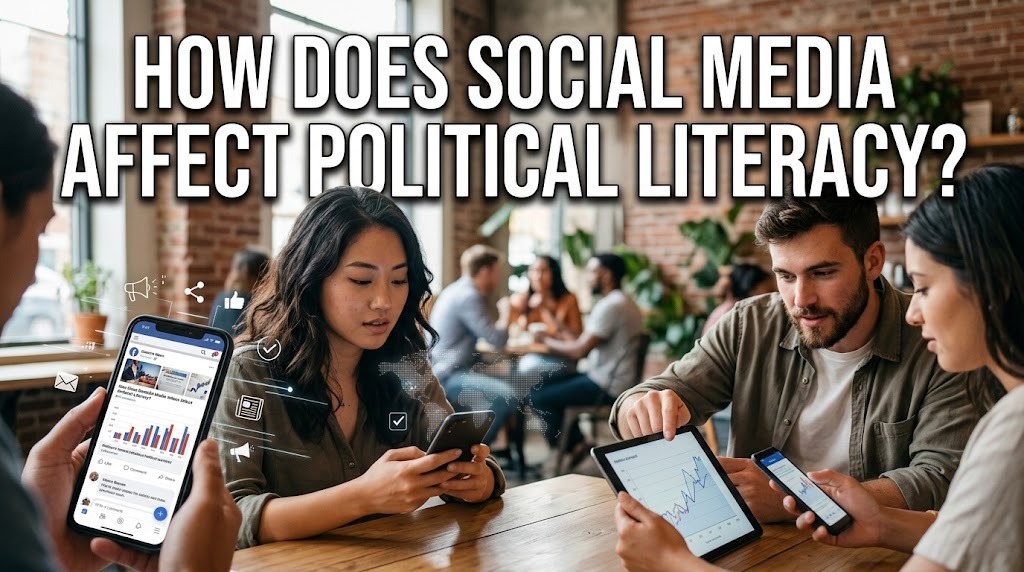
Social media has become one of the places where people encounter political information, public discussions, news, and different opinions. Platforms can make political content easier to access and share, especially among people who regularly use digital media.
The relationship between social media and political literacy can have different effects. Social media can provide opportunities to learn about public issues and discover different perspectives, but it can also expose users to inaccurate information, incomplete context, or misleading political claims. For this reason, the ability to evaluate information remains important.
MAKING POLITICAL INFORMATION EASIER TO ACCESS
One important effect of social media on political literacy is that it can make political information more accessible. Users can encounter information about public policies, government activities, elections, social issues, and community concerns without relying only on traditional media.
Social media can also allow people to follow public institutions, journalists, researchers, community organizations, and other sources that discuss political issues. This can provide opportunities for users to learn about topics they may not encounter in their immediate surroundings.
However, easy access does not automatically mean that information is accurate. Users still need to consider the source, date, evidence, and context of the content they encounter.
PROVIDING DIFFERENT POLITICAL PERSPECTIVES
Social media can expose users to different political perspectives. People may encounter opinions from individuals and organizations with different experiences, interests, and interpretations of public issues.
Exposure to different perspectives can provide an opportunity to compare arguments and learn why people may disagree about a particular issue. This can support political learning when users approach the information critically.
At the same time, users may mainly encounter content that matches their existing interests. Therefore, seeing multiple opinions on social media does not necessarily mean that a person has received a complete picture of an issue.
INCREASING EXPOSURE TO MISINFORMATION
A major challenge in the relationship between social media and political literacy is the spread of misinformation and disinformation. Political content can be shared quickly, sometimes before its accuracy or context has been properly checked.
UNESCO emphasizes the importance of media and information literacy for helping people access, evaluate, and use information effectively. Its resources also address misinformation and disinformation as important challenges in the digital information environment.
Users can reduce the risk of accepting inaccurate political information by checking the original source, comparing claims with reliable references, examining evidence, and paying attention to publication dates and context.
ENCOURAGING POLITICAL DISCUSSION AND PARTICIPATION
Social media can provide spaces for political discussion and civic engagement. Users can comment on public issues, discuss policies, share information, and follow developments in their communities.
These activities can provide opportunities to practice communication and learn about different viewpoints. However, online discussions can also become difficult when conversations involve personal attacks, misleading claims, or highly emotional responses.
Developing political literacy skills can help users participate more thoughtfully. Listening to different perspectives, checking information, and communicating respectfully can make online political discussions more constructive.
BUILDING CRITICAL DIGITAL LITERACY
The effects of social media on political literacy depend partly on how users interact with information. Simply consuming a large amount of political content does not necessarily result in better political understanding.
Users can strengthen their critical thinking by asking who created a piece of content, what evidence supports it, whether important context is missing, and whether credible sources provide additional information.
Political literacy therefore works together with digital and information literacy. Social media can become a useful source of political learning when users have the skills to evaluate content carefully and understand that online information can include facts, opinions, interpretations, and inaccurate claims.
CONCLUSION
Social media affects political literacy by making political information more accessible, exposing users to different perspectives, encouraging discussion, and creating opportunities for civic participation. At the same time, it can increase exposure to misinformation and content presented without sufficient context.
Developing political literacy and critical digital literacy can help users navigate these opportunities and challenges. By checking sources, evaluating evidence, considering different perspectives, and communicating responsibly, people can use social media as one source of political information without treating every online claim as automatically reliable.
Recent Posts

Bagaimana Sistem SKS pada Program Kuliah... 22.11.2026/33 View

How Does Technology Make Daily Evaluation... 21.11.2026/67 View

Apa Strategi Menghadapi Kesenjangan antara Kompetensi... 21.11.2026/67 View

Mengapa Inventaris Aset Penting bagi Kelancaran... 21.11.2026/65 View

When Should Musicians Join a Record... 21.11.2026/66 View
