

How Does Social Media Influence Standard Language Usage?
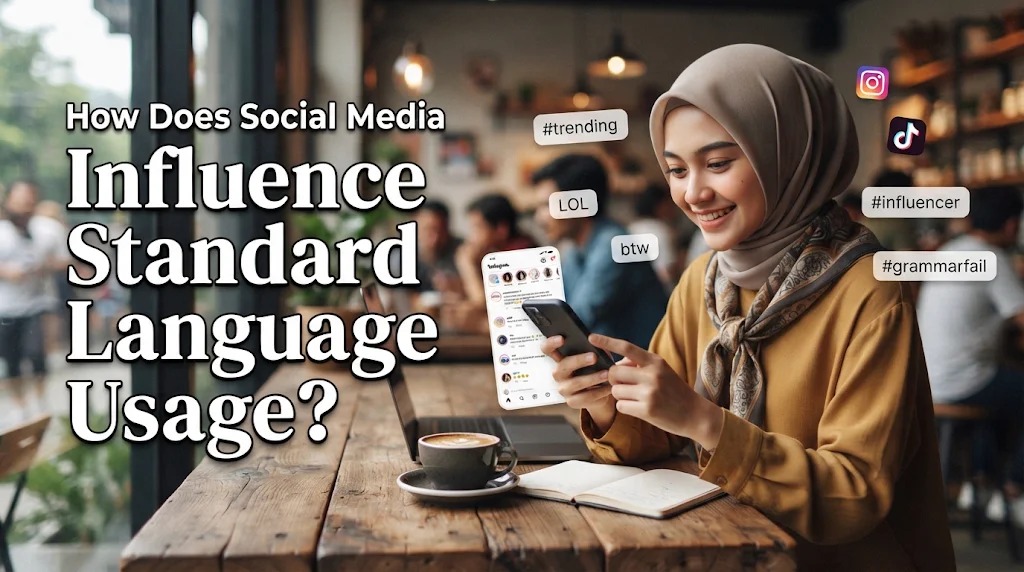
Social media has become an important part of everyday communication. Platforms such as Instagram, TikTok, Facebook, and WhatsApp allow people to exchange information, share opinions, and interact with others quickly. However, the language used on these platforms often differs from the language expected in formal communication.
Online conversations frequently include abbreviations, slang, shortened sentences, and creative expressions. These habits can influence how people write and speak in other situations, including academic and professional environments. Although social media can introduce users to new vocabulary and communication styles, it also creates challenges in maintaining consistent standard language usage.
ENCOURAGES THE USE OF INFORMAL EXPRESSIONS
Social media encourages quick and relaxed communication. Users often choose informal words, abbreviations, and slang because they are familiar and convenient for everyday interactions.
Repeated exposure to these expressions can make informal language feel natural. As a result, some users may unintentionally carry casual expressions into school assignments, official messages, or workplace communication. Understanding the difference between online conversations and formal writing helps prevent inappropriate language choices.
SPREADS NEW SLANG AND POPULAR VOCABULARY
Social media allows new words and expressions to spread rapidly across communities. A phrase that becomes popular in one online group can quickly be adopted by users in different regions and age groups.
This process can introduce people to creative ways of expressing emotions and ideas. However, some slang terms may have limited meanings or become outdated quickly. Users need to understand their context before including these expressions in formal communication.
INFLUENCES SPELLING AND ABBREVIATION HABITS
Many social media users shorten words to save time and make messages easier to type. Common examples include abbreviations, omitted letters, and shortened sentence structures.
Although these forms are convenient in casual conversations, they may create problems when users apply them to academic or professional writing. Standard spelling and complete sentence structures remain important when preparing essays, reports, and official documents.
CHANGES EVERYDAY WRITING HABITS
Frequent online communication can influence how individuals organize sentences and express their thoughts. Short messages, emojis, hashtags, and fragmented expressions are common features of social media interactions.
These communication habits are not necessarily harmful, but they may become unsuitable when used in situations that require detailed explanations. Developing the ability to adjust writing styles helps users communicate appropriately across different platforms and audiences.
EXPANDS VOCABULARY THROUGH DIGITAL CONTENT
Social media also provides opportunities to discover unfamiliar words and expressions. Educational accounts, language-learning communities, and informative content can introduce users to new vocabulary and standard language conventions.
People can learn how words are used by reading discussions, watching educational videos, and following reliable sources. When users verify unfamiliar expressions through dictionaries or trusted language references, social media can become a useful tool for vocabulary development.
AFFECTS FORMAL COMMUNICATION SKILLS
The language habits developed online may influence communication in schools and workplaces. Users who frequently rely on slang and abbreviations may sometimes struggle to adjust their language when writing formal emails, preparing presentations, or completing academic assignments.
This challenge can be addressed by practicing different communication styles. Using standard language in educational and professional activities helps individuals maintain clarity while still enjoying informal conversations online.
INCREASES EXPOSURE TO REGIONAL AND CULTURAL LANGUAGE
Social media connects people from different regions and cultural backgrounds. Through online interactions, users encounter regional expressions, local dialects, and vocabulary from various communities.
This exposure can increase awareness of linguistic diversity and encourage cultural appreciation. However, expressions that are widely understood within one community may be unfamiliar to others. Standard language provides a shared communication reference when addressing a broader audience.
CREATES CHALLENGES IN MAINTAINING LANGUAGE ACCURACY
The speed of social media communication can encourage users to publish messages without checking spelling, grammar, or word choices. As a result, incorrect forms may be repeated and become familiar among certain online communities.
This does not mean that every informal expression is a language error. Rather, users should recognize that online communication often follows different conventions from formal writing. Checking reliable references and reviewing important messages can help maintain language accuracy.
PROMOTES DIGITAL LANGUAGE AWARENESS
Understanding how language works on social media is an important part of digital literacy. Users need to recognize that communication styles should change according to the audience, purpose, and platform.
For example, a casual caption may use relaxed expressions, while an educational announcement or business statement should use clearer and more standard language. Developing this awareness allows people to communicate naturally without ignoring appropriate language conventions.
CONCLUSION
Social media influences standard language usage by spreading informal expressions, introducing new vocabulary, and changing everyday writing habits. It can create challenges related to spelling accuracy and formal communication, but it also provides opportunities to learn about different languages and cultures. By understanding the differences between online and formal communication, users can enjoy social media while maintaining appropriate standard language skills.
Recent Posts
How Much Influence Does a Vice... 28.11.2026/123 View
Syarat Mengikuti Program Kuliah Cepat di... 17.11.2026/14 View
Bagaimana Media Sosial Memengaruhi Penggunaan Bahasa... 16.11.2026/47 View

Bagaimana Sistem Logistik Bisnis Membantu Meningkatkan... 16.11.2026/47 View
Mana yang Lebih Menentukan Kesuksesan Karier,... 16.11.2026/51 View
