

How Does Social Media Influence the Use of Regional Languages?
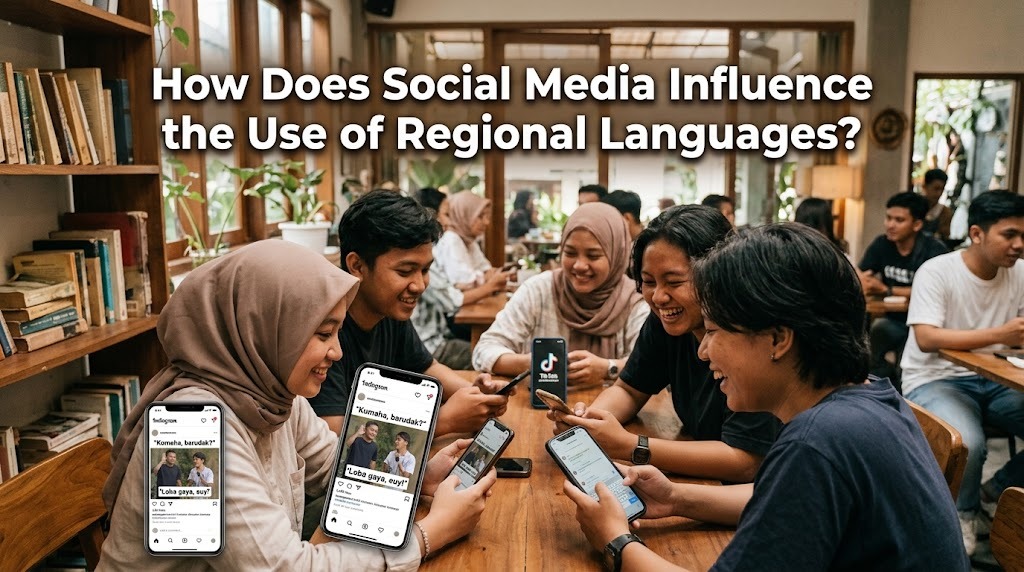
Social media has changed how people communicate, share information, and express their identities. Platforms such as Instagram, TikTok, YouTube, and Facebook allow users to communicate with people from different regions and cultural backgrounds. These platforms also create opportunities for regional languages to appear in videos, captions, comments, and online discussions. However, social media can encourage the use of widely spoken languages while making some local languages less visible. Social media can both support the preservation of regional languages and create challenges for their continued use. Its influence depends on how people use digital platforms and whether they actively promote their linguistic heritage.
PROMOTING REGIONAL LANGUAGES THROUGH DIGITAL CONTENT
Social media allows users to introduce regional languages to audiences far beyond their local communities. Content creators can share traditional expressions, daily conversations, folk stories, jokes, and educational videos using their regional languages. This content can help viewers learn new words and understand how local expressions are used naturally. Short videos are particularly useful because they combine spoken language, subtitles, images, and cultural context. Creative digital content can make regional languages more visible and interesting to younger audiences.
Regional language content can also reach people who have moved away from their hometowns. Through online videos and community pages, they can reconnect with familiar expressions and cultural traditions. People who rarely hear their regional language in everyday life may find opportunities to practice it online. Creators can also explain the meanings of local words to audiences who speak different languages. These activities help regional languages remain part of modern communication rather than limiting them to traditional settings.
ENCOURAGING YOUNG PEOPLE TO USE REGIONAL LANGUAGES
Young people are among the most active users of many social media platforms. When they see regional languages used in entertaining and relatable content, they may become more interested in learning and speaking them. Online challenges, humorous videos, music, and storytelling can introduce local vocabulary in an enjoyable way. Young creators can also combine regional languages with contemporary topics such as education, fashion, entertainment, and daily experiences. Social media can help younger generations see regional languages as relevant to modern life.
Online participation may also encourage young people to communicate with friends and relatives using their regional languages. For example, they might use local expressions in comments, captions, group chats, or short videos. These small interactions can help maintain familiarity with vocabulary and pronunciation. However, interest in online content does not automatically lead to fluent language use. Families, schools, and communities still need to provide opportunities for regular conversations and meaningful practice.
SPREADING LOCAL CULTURE AND CULTURAL IDENTITY
Regional languages carry cultural meanings that are often closely connected to local customs, traditions, and community identity. Social media gives users opportunities to share traditional songs, regional poetry, cultural ceremonies, and stories from their communities. These posts can introduce audiences to traditions they might not encounter in their daily lives. Regional language content can also help people express pride in their cultural backgrounds. Using a regional language online can strengthen cultural identity and encourage appreciation of local heritage.
Social media can connect communities that share a language but live in different locations. Users can exchange stories, discuss cultural practices, and share knowledge about traditional expressions. These interactions may help younger people learn about their heritage from older speakers and community experts. Nevertheless, cultural content should be presented accurately and respectfully, especially when it involves sacred traditions or sensitive community knowledge. By combining language with meaningful cultural information, social media can support a deeper understanding of regional identity.
THE RISK OF DOMINANT LANGUAGES REPLACING REGIONAL LANGUAGES
Although social media creates opportunities for regional languages, widely used languages often dominate online communication. Many platforms contain large amounts of content in Indonesian and international languages because creators want to reach broader audiences. As a result, users may choose these languages instead of their regional languages when posting or interacting online. Some people may also believe that using a dominant language makes their content more professional or widely understood. If regional languages are rarely used online, their presence in younger generations' daily communication may gradually weaken.
This challenge becomes more serious when online language preferences reflect communication habits at home and among friends. Children who mostly encounter Indonesian or other dominant languages may have fewer opportunities to develop regional vocabulary. Some regional languages may also lack sufficient digital learning resources, subtitles, fonts, or reliable online dictionaries. These limitations can make it harder for speakers to create and understand regional language content. Promoting regional languages online therefore requires both individual participation and the development of useful digital resources.
CREATING REGIONAL LANGUAGE COMMUNITIES ONLINE
Social media can bring together native speakers, language learners, teachers, researchers, and people interested in cultural preservation. Online groups provide spaces where members can ask questions, exchange vocabulary, discuss grammar, and share learning materials. More experienced speakers can help beginners understand pronunciation, sentence patterns, and appropriate expressions. These communities are particularly valuable for people who live far from regions where their languages are commonly spoken. Online language communities can provide support and learning opportunities that are difficult to access in person.
Successful communities benefit from active participation and respectful communication. Members should understand that regional languages may have different dialects and vocabulary across locations. Instead of treating every variation as incorrect, participants can explain the local context in which particular expressions are used. Community moderators can also encourage accurate information and prevent misleading language explanations from spreading. With consistent contributions, online groups can become valuable spaces for language practice, documentation, and cultural exchange.
USING SOCIAL MEDIA TO PRESERVE REGIONAL LANGUAGES
Social media can become a practical tool for language preservation when users create content specifically designed to document and teach regional languages. Examples include vocabulary videos, digital storytelling projects, pronunciation guides, interviews with native speakers, and recordings of traditional songs. Schools and cultural organizations can encourage students to produce content about their local languages as part of educational projects. These activities can preserve language examples while helping students develop communication and digital skills. Consistent and accurate content creation can help regional languages remain accessible to future generations.
Preservation projects should involve native speakers and respect community ownership of cultural knowledge. Creators should ask permission before recording or publishing interviews and traditional materials. They should also check translations and pronunciation with knowledgeable speakers whenever possible. Online content can be supported by digital dictionaries, educational websites, and community archives so that useful materials remain available beyond individual posts. By combining social media with responsible documentation and everyday language use, communities can strengthen the long-term survival of regional languages.
CONCLUSION
Social media influences regional languages by increasing their visibility, encouraging young people to use them, spreading cultural knowledge, and connecting speakers through online communities. At the same time, the dominance of widely used languages can reduce opportunities for regional languages to appear in digital communication. The impact of social media depends on whether users actively create spaces for regional languages and use them consistently. Families, schools, content creators, and cultural organizations can work together to produce accurate and engaging content. With regular practice and responsible digital participation, social media can become an important tool for preserving regional languages and cultural identity.
Recent Posts

Bagaimana Sistem SKS pada Program Kuliah... 22.11.2026/49 View

How Does Technology Make Daily Evaluation... 21.11.2026/77 View

Apa Strategi Menghadapi Kesenjangan antara Kompetensi... 21.11.2026/78 View

Mengapa Inventaris Aset Penting bagi Kelancaran... 21.11.2026/74 View

When Should Musicians Join a Record... 21.11.2026/79 View
