

How Does Speed Training Improve Athletic Performance?
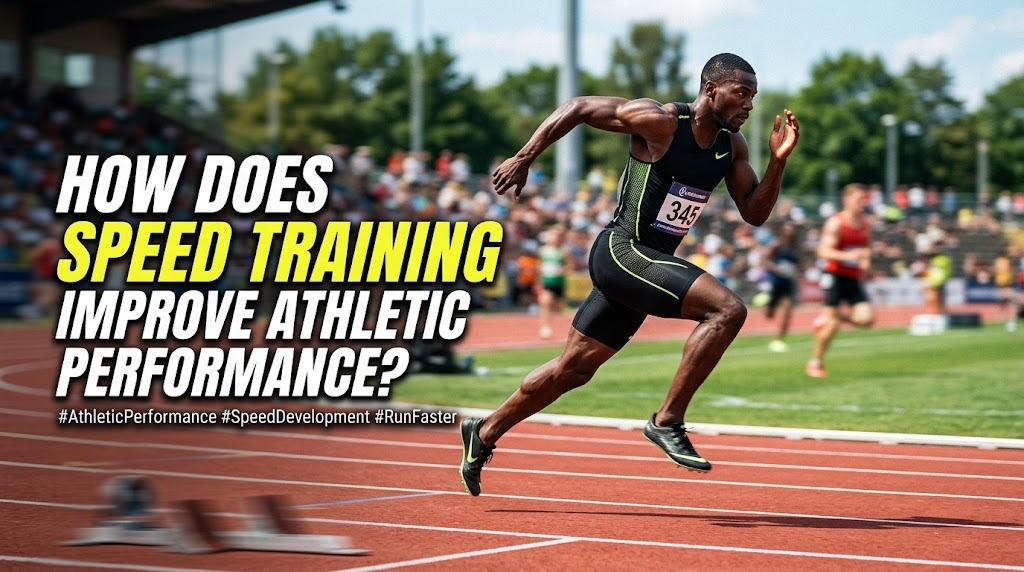
Speed is an important physical ability in many sports, including athletics, football, basketball, badminton, and tennis. Athletes often need to accelerate quickly, react to changing situations, and move efficiently to gain an advantage during competition. Speed training helps develop these abilities through specific exercises that improve movement, coordination, and power. When combined with proper technique and recovery, this training can help athletes perform more effectively and confidently.
UNDERSTANDING SPEED TRAINING
Speed training is a structured exercise approach designed to improve how quickly an athlete can move over a particular distance or respond to a movement demand. It may include short sprints, acceleration drills, agility exercises, and reaction-time activities. The exact training methods depend on the sport and the athlete’s current ability. Consistent practice helps athletes develop faster movements while maintaining control and efficient technique.
IMPROVING ACCELERATION
Acceleration is the ability to increase speed from a stationary position or while moving slowly. It is particularly important in sports that require sudden bursts of movement, such as sprinting, football, and basketball. Acceleration drills teach athletes to produce force against the ground and coordinate their body movements during the initial stages of running. Improved acceleration can help athletes reach useful speeds more quickly during training and competition.
DEVELOPING MAXIMUM RUNNING SPEED
Maximum speed refers to the highest running velocity an athlete can achieve. Speed training can improve this ability through short, high-intensity sprints performed with sufficient recovery. Athletes also work on posture, stride mechanics, and coordinated arm movements to make their running more efficient. These improvements can help sprinters reduce their race times and allow athletes in other sports to move quickly when opportunities arise.
INCREASING MUSCULAR POWER
Muscular power is the ability to produce force rapidly. It supports explosive movements such as sprint starts, jumps, rapid changes of direction, and quick accelerations. Speed training may be combined with strength exercises and appropriate plyometric drills to develop this quality. Stronger and more powerful muscles can help athletes generate the force needed for fast movements, provided the exercises are performed with correct technique and suitable progression.
IMPROVING REACTION TIME
Reaction time is the interval between recognizing a signal and beginning a response. In competitive sports, athletes may need to react to a starting signal, an opponent’s movement, or the direction of a ball. Reaction drills can help athletes practice responding to visual or auditory cues while maintaining focus. Although training can improve responses to familiar situations, reaction time also depends on factors such as attention, anticipation, and decision-making.
ENHANCING AGILITY AND COORDINATION
Agility is the ability to change direction or body position efficiently in response to movement demands. Many sports require athletes to accelerate, stop, turn, and move again within a short period. Exercises involving controlled direction changes can improve coordination, balance, and movement control. These abilities help athletes respond more effectively during competition, particularly when they must adjust their movements to opponents or changing situations.
SUPPORTING SPORT-SPECIFIC PERFORMANCE
Different sports require different forms of speed. Sprinters focus on acceleration and maximum running velocity, while football players need repeated bursts of speed and the ability to change direction. Basketball players benefit from quick movements over short distances, whereas badminton players require rapid footwork and efficient recovery between shots. Tailoring speed training to the demands of a particular sport helps athletes practice movements that are relevant to their performance.
IMPROVING SPEED ENDURANCE
Some sports require athletes to perform fast movements repeatedly rather than just once. Speed endurance is the ability to maintain high-speed performance or repeat intense efforts despite increasing fatigue. Training may include carefully planned sprint intervals and sport-specific repetitions. Developing this ability can help athletes maintain movement quality during demanding sessions and competitions, although the appropriate workload depends on the sport, distance, and athlete’s fitness level.
REDUCING INJURY RISKS THROUGH PROPER PREPARATION
Well-designed speed training can help athletes develop strength, coordination, and control during fast movements. However, speed exercises also place substantial demands on muscles, tendons, and joints. Athletes should warm up properly, learn correct techniques, increase training intensity gradually, and allow enough recovery between demanding sessions. These practices can help manage injury risk, although no training program can eliminate injuries completely.
BUILDING CONFIDENCE AND DISCIPLINE
Regular speed training can help athletes recognize improvements in their performance and develop greater confidence in their physical abilities. Tracking sprint times, movement quality, and training progress provides useful feedback. Athletes also learn discipline by following structured sessions and respecting recovery periods. This combination of physical development and consistent practice can support a more focused approach to competition.
CONCLUSION
Speed training improves athletic performance by developing acceleration, maximum speed, muscular power, reaction ability, coordination, and speed endurance. These physical qualities help athletes move more effectively and respond to the demands of their sports. The greatest benefits come from training that matches the athlete’s goals, uses proper technique, and includes sufficient recovery. With consistent and appropriate practice, athletes can improve their movement efficiency and become better prepared for competition.
Recent Posts

Bagaimana Sistem SKS pada Program Kuliah... 22.11.2026/50 View

How Does Technology Make Daily Evaluation... 21.11.2026/80 View

Apa Strategi Menghadapi Kesenjangan antara Kompetensi... 21.11.2026/79 View

Mengapa Inventaris Aset Penting bagi Kelancaran... 21.11.2026/75 View

When Should Musicians Join a Record... 21.11.2026/80 View
