

How Does Sports Week Build Teamwork and Unity Among Participants?
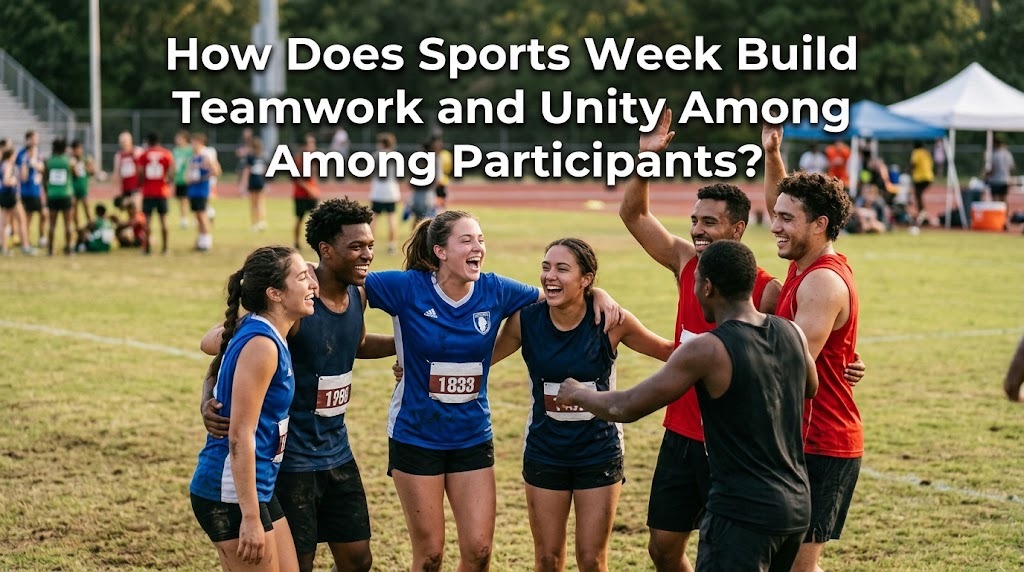
Sports Week is more than a series of sports competitions because it creates opportunities for people to work together, develop friendships, and strengthen relationships. Through activities such as football, basketball, volleyball, and relay races, participants learn to cooperate toward shared goals. They also discover the importance of communication, trust, discipline, and mutual respect. These values help participants understand that success often depends on collective effort rather than individual ability alone. By bringing people together in a positive environment, Sports Week can strengthen teamwork and unity in schools, universities, and local communities.
UNDERSTANDING TEAMWORK IN SPORTS WEEK
Teamwork is the ability of individuals to cooperate, share responsibilities, and support one another to achieve a common objective. During Sports Week, participants experience teamwork through activities that require coordination, communication, and collective decision-making. For example, football players must understand their teammates' movements, while relay runners must coordinate their timing to complete a race successfully. These experiences teach participants that every team member has an important role, regardless of their individual skill level. When participants appreciate one another's contributions, they become more willing to collaborate and solve problems together. The lessons learned through sports can also be applied to group assignments, workplace projects, and community activities.
IMPROVING COMMUNICATION AND COOPERATION
Effective communication is essential for successful teamwork, especially during competitive sporting activities. Participants must share information, listen to instructions, discuss strategies, and respond quickly to changing situations. Sports Week gives them opportunities to practice these skills in an active and engaging environment. When misunderstandings occur, team members can learn to resolve them through respectful discussion rather than blame or conflict. Cooperation also encourages participants to recognize different strengths and use them to improve the team's overall performance. Over time, these experiences can help build better communication habits that support stronger relationships beyond the sporting event.
BUILDING TRUST AMONG PARTICIPANTS
Trust is a fundamental part of teamwork because participants need to believe that their teammates will fulfill their responsibilities. In team sports, players depend on one another to defend, attack, follow strategies, and respond to unexpected situations. Sports Week allows participants to develop this trust through shared practice, competition, and problem-solving. When teammates consistently support one another, they become more confident in their collective abilities. Trust also encourages individuals to admit mistakes and ask for help without excessive fear of criticism. This supportive atmosphere can strengthen relationships and make participants feel that they belong to a team with shared responsibilities.
PROMOTING UNITY THROUGH SHARED GOALS
Sports Week promotes unity by bringing participants together to pursue common goals, such as completing a competition, representing their school, or supporting their community. Working toward the same objective helps individuals recognize that their differences do not prevent them from cooperating effectively. Participants may come from different backgrounds, have different abilities, or hold different opinions, but shared activities create opportunities to understand one another. Celebrating achievements together can strengthen their sense of belonging and encourage mutual support. Even when teams compete against one another, participants can maintain positive relationships by respecting the rules and appreciating everyone's efforts. This combination of friendly competition and shared experiences helps create a stronger sense of unity.
TEACHING RESPECT AND SPORTSMANSHIP
Respect is an important value that helps maintain positive relationships during Sports Week. Participants learn to respect teammates, opponents, referees, coaches, and event organizers by following rules and accepting decisions fairly. They also learn that people have different abilities, strengths, and approaches to competition. Good sportsmanship encourages participants to congratulate winners, support those who lose, and avoid behavior that humiliates or discriminates against others. These practices help prevent unnecessary conflicts and create a welcoming environment for everyone. When respect becomes part of the sporting experience, participants can build stronger relationships based on fairness, empathy, and understanding.
DEVELOPING LEADERSHIP AND SHARED RESPONSIBILITY
Sports Week provides opportunities for participants to develop leadership skills and understand the importance of shared responsibility. Team captains may organize strategies, motivate teammates, and help resolve disagreements during competitions. Other participants contribute by following instructions, encouraging their teammates, and completing their assigned roles. These experiences demonstrate that leadership is not limited to giving orders but also involves listening, setting a positive example, and supporting others. Participants can also learn to take responsibility for their mistakes and focus on solutions instead of blaming their teammates. By practicing these behaviors, they develop skills that are valuable in education, employment, and community life.
ENCOURAGING INCLUSION AND FRIENDSHIP
Inclusive sporting activities help ensure that participants feel welcomed and valued, regardless of their physical abilities, experience, or social background. Sports Week can encourage friendship by creating opportunities for people to interact outside their usual social groups. Organizers can support inclusion by offering different types of competitions, recreational games, mixed-ability activities, and suitable facilities for participants with disabilities. These opportunities help individuals appreciate different perspectives and recognize the contributions of others. Working together in a friendly setting can also reduce social barriers and help participants form lasting friendships. When everyone has a meaningful opportunity to participate, teamwork and unity become stronger because people feel respected and included.
STRENGTHENING TEAMWORK AND UNITY BEYOND SPORTS WEEK
The positive lessons gained during Sports Week can continue to influence participants after the event ends. Communication, cooperation, trust, and respect can help students work more effectively on school projects and enable community members to collaborate on local initiatives. Participants who develop strong relationships through sports may also become more willing to support one another in everyday situations. Schools and organizers can reinforce these lessons by arranging follow-up activities, encouraging regular exercise, and recognizing teamwork alongside individual achievements. Evaluating the event can help identify ways to make future activities more inclusive and engaging. When these values are practiced consistently, Sports Week can contribute to a more cooperative environment and stronger community relationships.
CONCLUSION
Sports Week builds teamwork and unity by encouraging participants to communicate effectively, trust one another, share responsibilities, and work toward common goals. It also teaches respect, sportsmanship, leadership, and inclusion through practical experiences. These values help participants form friendships, appreciate differences, and manage disagreements in positive ways. The benefits can extend beyond sports into education, workplaces, and community life. With inclusive activities and supportive organization, Sports Week can become an effective way to strengthen cooperation and create lasting unity among participants.
Recent Posts

Bagaimana Sistem SKS pada Program Kuliah... 22.11.2026/54 View

How Does Technology Make Daily Evaluation... 21.11.2026/83 View

Apa Strategi Menghadapi Kesenjangan antara Kompetensi... 21.11.2026/82 View

Mengapa Inventaris Aset Penting bagi Kelancaran... 21.11.2026/78 View

When Should Musicians Join a Record... 21.11.2026/84 View
