

How Does Technology Based Learning Improve Scientific Literacy?
UNDERSTANDING TECHNOLOGY BASED LEARNING
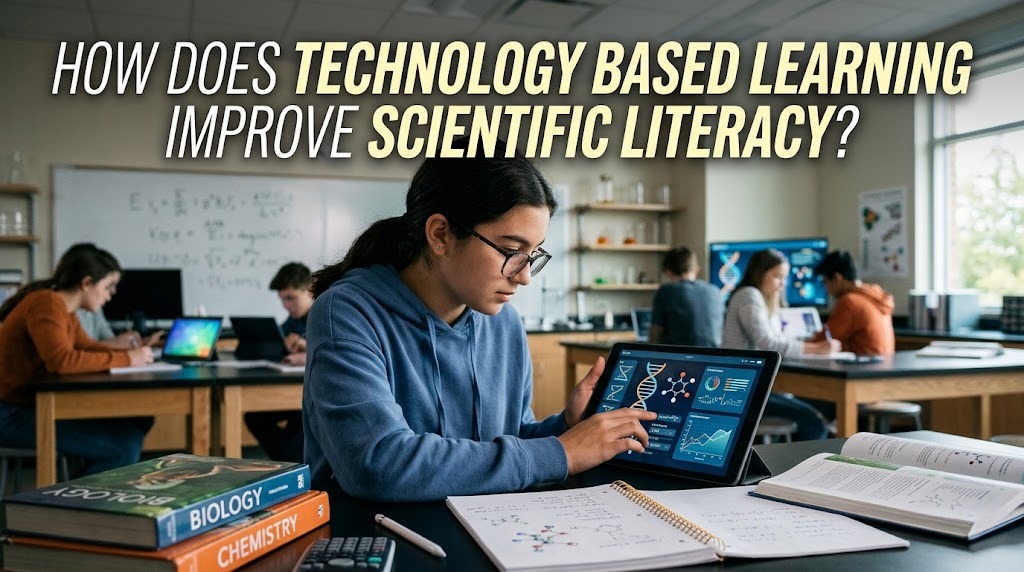
Technology based learning uses digital tools and resources to support the learning process. In science education, technology can provide students with access to videos, simulations, digital books, virtual laboratories, and interactive learning platforms. These resources can help students understand scientific concepts that may be difficult to observe directly. Technology also allows students to explore information beyond traditional classroom materials. When used appropriately, it can make science learning more active and engaging.
Technology based learning is not simply about replacing textbooks with digital devices. Its main purpose is to provide learning experiences that encourage students to explore, analyze, investigate, and communicate information. Students can use technology to find scientific resources, conduct virtual investigations, and present their findings. Teachers can guide students in choosing suitable resources and using digital tools responsibly. This combination can support the development of scientific literacy.
PROVIDING ACCESS TO SCIENTIFIC INFORMATION
Digital technology gives students easier access to a wide range of scientific information. They can explore educational websites, digital libraries, research publications, and online learning materials from different sources. This allows students to study scientific topics in greater depth and discover information that may not be available in a single textbook. Access to different resources can also help students compare explanations and develop a broader understanding. However, students still need to evaluate whether the sources they use are reliable.
Technology based learning can also present scientific information through different formats. Graphs, diagrams, animations, videos, and interactive presentations can make complex concepts easier to understand. For example, an animation can demonstrate how a scientific process occurs over time. Interactive graphs can help students observe changes in data and identify patterns. These visual and interactive resources can complement explanations provided by teachers.
USING SIMULATIONS AND VIRTUAL EXPERIMENTS
Scientific concepts can sometimes be difficult to understand through text alone. Digital simulations allow students to observe processes and change variables in a virtual environment. They can test different conditions and observe how the results change. This gives students an opportunity to explore cause and effect relationships. Simulations can also complement physical experiments when laboratory equipment or materials are limited.
Virtual experiments can encourage students to practice important scientific skills. Students can make predictions, collect virtual data, compare results, and develop conclusions. They can repeat activities and examine different outcomes without changing the physical classroom environment. Teachers can then ask students to explain what they observed and why the results occurred. Such activities can strengthen scientific reasoning and make learning more interactive.
DEVELOPING CRITICAL THINKING AND DIGITAL LITERACY
The large amount of information available online makes critical thinking an important part of technology based learning. Students need to understand that not every scientific claim on the internet is accurate. They can learn to check the source, author, publication date, references, and evidence behind an online claim. Comparing information from several credible sources can also help them identify unreliable content. These practices support both scientific literacy and digital literacy.
Teachers can create assignments that require students to evaluate online scientific information. Students may compare different sources and determine whether their claims are supported by relevant and credible evidence. They can also identify misleading headlines, unsupported conclusions, or information presented without enough context. Through these activities, students learn that accessing information is only the first step. Understanding and evaluating information are equally important.
ENCOURAGING COLLABORATION AND SCIENTIFIC INQUIRY
Technology based learning can support collaboration between students and teachers. Students can use digital documents, online discussion platforms, presentations, and other tools to share ideas, analyze information, and communicate findings. Collaborative projects allow students to learn from different perspectives and practice explaining scientific concepts. They can also work together to investigate questions and solve problems. This makes science learning more social and interactive.
Technology can also support the stages of scientific inquiry. Students can use digital tools to ask questions, search for information, collect data, organize findings, and present conclusions. For example, they can create digital charts to display research results or prepare multimedia presentations to explain a scientific investigation. These activities give students opportunities to apply scientific concepts rather than simply memorize them. As a result, technology can become a practical tool for developing scientific literacy.
CONCLUSION
Technology based learning can improve scientific literacy by providing access to scientific information, interactive resources, simulations, and opportunities for collaboration. Digital tools can help students understand complex concepts through visualizations, virtual experiments, graphs, and multimedia content. At the same time, students need critical thinking and digital literacy skills to evaluate the reliability of information they encounter online. Technology can also support scientific inquiry by giving students opportunities to investigate questions, analyze data, and communicate their findings. When combined with effective teaching, technology based learning can help students develop stronger scientific understanding and evidence based reasoning.
Recent Posts

Bagaimana Sistem SKS pada Program Kuliah... 22.11.2026/33 View

How Does Technology Make Daily Evaluation... 21.11.2026/67 View

Apa Strategi Menghadapi Kesenjangan antara Kompetensi... 21.11.2026/67 View

Mengapa Inventaris Aset Penting bagi Kelancaran... 21.11.2026/65 View

When Should Musicians Join a Record... 21.11.2026/66 View
