

How Does Technology Help Detect Fake Identities?
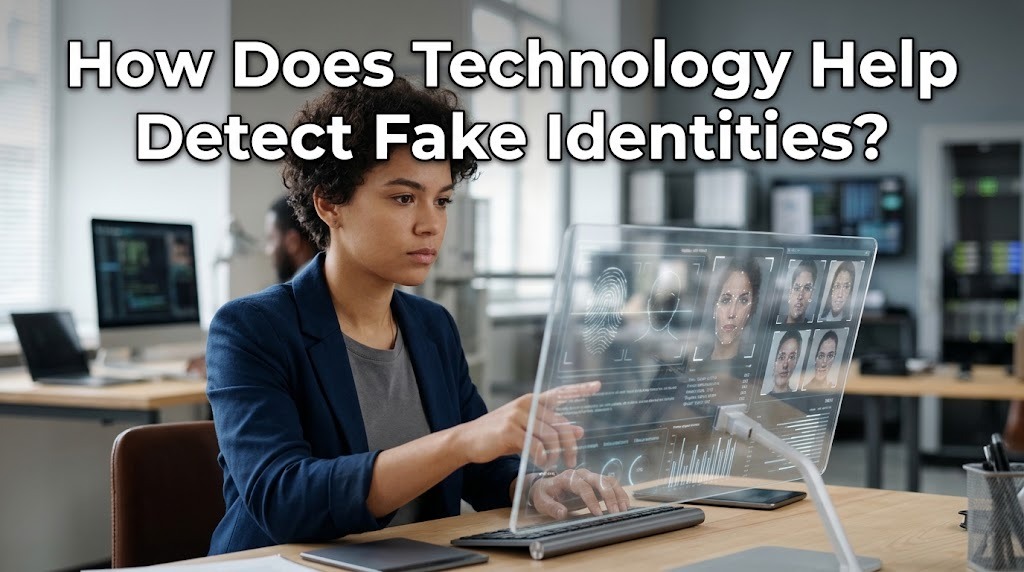
Technology plays an important role in detecting fake identities by helping organizations verify whether personal information belongs to a real and legitimate individual. As digital activities continue to increase, criminals have more opportunities to create false accounts, manipulate personal information, and impersonate other people. Traditional identity verification methods may not always be sufficient to identify these activities, especially when criminals use convincing documents or stolen personal data. Modern technologies provide additional tools to examine identity information and recognize suspicious patterns. These tools are widely used by banks, government institutions, online platforms, and digital service providers.
Technology makes identity verification faster and more accurate by combining different security methods. For example, digital systems can compare identification documents with facial images, examine personal information, and detect unusual account activities. Some systems also use artificial intelligence to identify patterns that may indicate identity fraud. However, technology does not guarantee that every fake identity will be detected. Human supervision and reliable verification procedures are still necessary to reduce mistakes and prevent misuse.
THE USE OF ARTIFICIAL INTELLIGENCE TO IDENTIFY FAKE IDENTITIES
Artificial intelligence helps detect fake identities by analyzing large amounts of information and identifying unusual patterns. AI-powered systems can examine account details, user behavior, transaction histories, and other available data to identify activities that appear suspicious. For example, a system may detect several accounts using similar information or recognize unusual registration patterns. This technology can help organizations identify potential fraud more quickly than manual checks alone. It is particularly useful for digital platforms that process large numbers of new accounts every day.
Machine learning is another technology that supports identity fraud detection. It allows computer systems to learn from patterns found in previous fraudulent activities and improve their ability to recognize similar behavior. When a new account displays characteristics associated with known fraud patterns, the system may flag it for additional verification. Nevertheless, AI systems can sometimes produce false alerts or fail to recognize new fraud techniques. Therefore, suspicious results should be reviewed carefully before an account or individual is considered fraudulent.
FACIAL RECOGNITION AND BIOMETRIC VERIFICATION
Facial recognition is a technology that helps verify identities by analyzing specific characteristics of a person's face. The system compares a facial image captured during verification with a photograph stored in an identification document or an authorized database. If the images do not match sufficiently, the system may request additional verification. This method can help prevent someone from using another person's photograph to create a false account. Facial recognition is commonly used in banking applications, digital identification services, and other platforms that require identity verification.
Biometric verification also includes other characteristics, such as fingerprints, voice patterns, and iris recognition. These features can provide additional evidence that someone is the legitimate owner of an identity. Some digital services also use liveness detection to check whether a person is physically present during verification rather than presenting a photograph, video, or other artificial representation. However, biometric systems are not completely free from errors or manipulation. Organizations must protect biometric information carefully because this type of data is highly sensitive and cannot easily be replaced if compromised.
DOCUMENT VERIFICATION AND DIGITAL IDENTITY CHECKS
Technology helps detect fake identities by examining official documents and checking whether the information appears authentic. Digital document verification systems can analyze identification cards, passports, and other identity documents to identify inconsistencies, altered details, or suspicious visual characteristics. Some systems use optical character recognition to read information from documents and compare it with the details entered by users. This process can reduce manual errors and make identity checks more efficient. It also helps organizations identify documents that require further examination.
Digital identity checks may also involve comparing information with trusted databases or authorized verification services. For example, an organization may check whether a person's identification details match available official records. Some systems can also examine document expiration dates and detect information that does not follow expected formats. These methods make it more difficult for criminals to use manipulated documents or invented personal information. However, organizations must use reliable data sources and follow applicable privacy regulations when processing identity information.
BEHAVIORAL ANALYSIS AND FRAUD DETECTION SYSTEMS
Behavioral analysis helps identify fake identities by examining how individuals interact with digital services. Technology can monitor certain activity patterns, such as login frequency, device information, transaction behavior, and unusual changes in account access. For example, a system may flag an account when it suddenly shows unusual login activity from unfamiliar devices or locations. These signals do not automatically prove identity fraud, but they can indicate that additional security checks are necessary. This approach helps organizations detect suspicious activities that may not be visible through document verification alone.
Fraud detection systems can combine behavioral analysis with artificial intelligence, biometric checks, and document verification. By examining several types of information, organizations can develop a more complete understanding of potential identity risks. For instance, an account may appear legitimate based on its documents but display unusual behavior during financial transactions. Combining different security methods can help identify inconsistencies that a single verification method might miss. Nevertheless, these systems should be designed to protect user privacy and avoid unfairly flagging legitimate individuals.
CONCLUSION
Technology helps detect fake identities through artificial intelligence, facial recognition, biometric verification, document analysis, and behavioral monitoring. These methods allow organizations to identify suspicious information, recognize unusual activities, and improve digital identity verification. Although modern technology can make fraud detection faster and more effective, it cannot eliminate every identity-related threat. Human supervision, secure data management, and responsible technology use remain important parts of the process. By combining reliable verification methods, organizations can strengthen digital security and reduce the risk of fake identity fraud.
Recent Posts

Bagaimana Sistem SKS pada Program Kuliah... 22.11.2026/37 View

How Does Technology Make Daily Evaluation... 21.11.2026/70 View

Apa Strategi Menghadapi Kesenjangan antara Kompetensi... 21.11.2026/73 View

Mengapa Inventaris Aset Penting bagi Kelancaran... 21.11.2026/68 View

When Should Musicians Join a Record... 21.11.2026/71 View
