

How Does Technology Improve the Organization of Modern Sports Week Events?
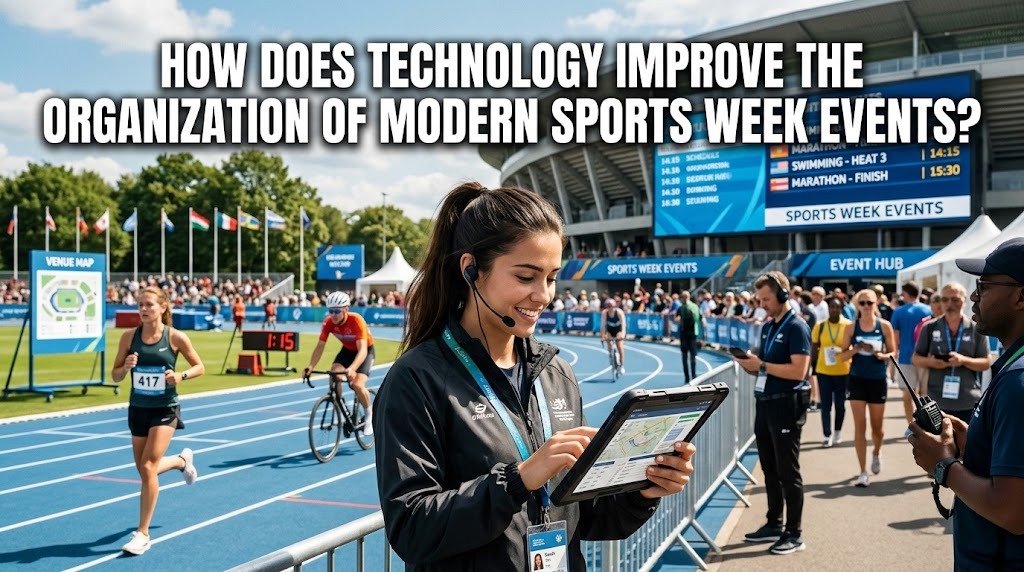
Technology plays an important role in improving the organization of modern Sports Week events. These activities often involve various competitions, teams, participants, coaches, and committees that must work together to ensure everything runs smoothly. Without proper planning, organizers may face problems such as schedule conflicts, delayed matches, and difficulties communicating important information. Digital tools help simplify these responsibilities by making event planning more organized and efficient. With the right technology, organizers can manage activities more accurately, reduce administrative workloads, and provide participants with a better sporting experience.
DIGITAL SYSTEMS FOR COMPETITION SCHEDULING
One of the main benefits of technology in Sports Week events is the ability to create and manage competition schedules digitally. Organizers can use digital calendars, spreadsheets, and event management applications to arrange match times, venues, and participant assignments. These tools make it easier to identify scheduling conflicts before competitions begin. When unexpected changes occur, such as bad weather or equipment problems, schedules can be updated quickly and shared with everyone involved. Digital scheduling also helps participants prepare for their matches because they can access the latest information without depending entirely on printed announcements.
IMPROVING COMMUNICATION AMONG ORGANIZERS AND PARTICIPANTS
Effective communication is essential for successful Sports Week events because organizers must coordinate with athletes, referees, volunteers, and spectators. Messaging applications, email, and group communication platforms allow committees to distribute announcements and instructions quickly. Participants can receive updates about match schedules, venue changes, competition rules, and important deadlines. These communication tools also help prevent misunderstandings by ensuring that everyone receives consistent information. As a result, technology strengthens teamwork, improves coordination, and reduces the possibility of confusion during busy sporting activities.
ONLINE REGISTRATION AND PARTICIPANT DATA MANAGEMENT
Online registration systems simplify the process of collecting participant information and organizing competition entries. Instead of handling numerous paper forms, organizers can use digital forms to record names, teams, age groups, and selected sports. The collected information can be stored in spreadsheets or databases, making it easier to check participant eligibility and prepare competition lists. Digital records also help committees monitor registration progress and identify missing information before the event begins. However, organizers must protect personal data by limiting access to authorized personnel and using secure storage systems.
USING DIGITAL SCOREBOARDS AND LIVE RESULTS
Digital scoreboards and electronic result systems make Sports Week competitions more transparent and engaging. Organizers can display scores, match progress, rankings, and final results on screens or compatible online platforms. This allows athletes, coaches, and spectators to follow competitions without waiting for manual announcements. Digital scoring can also reduce calculation errors when the system is configured correctly and operated by trained personnel. Nevertheless, important results should be checked by authorized officials to ensure fairness, especially in competitions where scoring mistakes could affect the final standings.
TECHNOLOGY FOR EVENT PROMOTION AND AUDIENCE ENGAGEMENT
Social media platforms, school websites, and digital posters help organizers promote Sports Week events to a wider audience. They can publish competition schedules, event rules, team introductions, and photographs to encourage participation and build excitement. Digital announcements also make it easier for students, parents, and community members to learn about upcoming activities. During the event, organizers can share highlights, live updates, and competition results to maintain audience interest. To make promotions effective, the information should be accurate, easy to understand, and published through official communication channels.
ENHANCING SAFETY AND EVALUATING EVENT PERFORMANCE
Technology can support safety management by helping organizers monitor schedules, coordinate emergency responses, and communicate important safety instructions. Digital checklists can be used to inspect sports equipment, confirm venue readiness, and record first aid arrangements before competitions begin. Weather applications may also help committees prepare for outdoor activities by providing forecasts that support timely decisions. After the event, digital surveys and spreadsheets can collect feedback from participants, volunteers, and spectators. By reviewing attendance figures, competition results, budget records, and participant feedback, organizers can identify weaknesses and improve future Sports Week events.
CONCLUSION
Technology improves the organization of modern Sports Week events by making planning, communication, registration, scoring, promotion, and safety management more efficient. Digital tools help organizers coordinate multiple activities, distribute accurate information, and respond more quickly to unexpected changes. They also provide participants and spectators with easier access to schedules and competition results. However, technology works best when supported by clear procedures, responsible data management, and trained event staff. By combining digital solutions with effective teamwork and careful preparation, organizers can create Sports Week events that are more organized, enjoyable, safe, and successful.
Recent Posts

Bagaimana Sistem SKS pada Program Kuliah... 22.11.2026/52 View

How Does Technology Make Daily Evaluation... 21.11.2026/81 View

Apa Strategi Menghadapi Kesenjangan antara Kompetensi... 21.11.2026/81 View

Mengapa Inventaris Aset Penting bagi Kelancaran... 21.11.2026/77 View

When Should Musicians Join a Record... 21.11.2026/82 View
