

How Does Technology Support Modern Semester Evaluation?
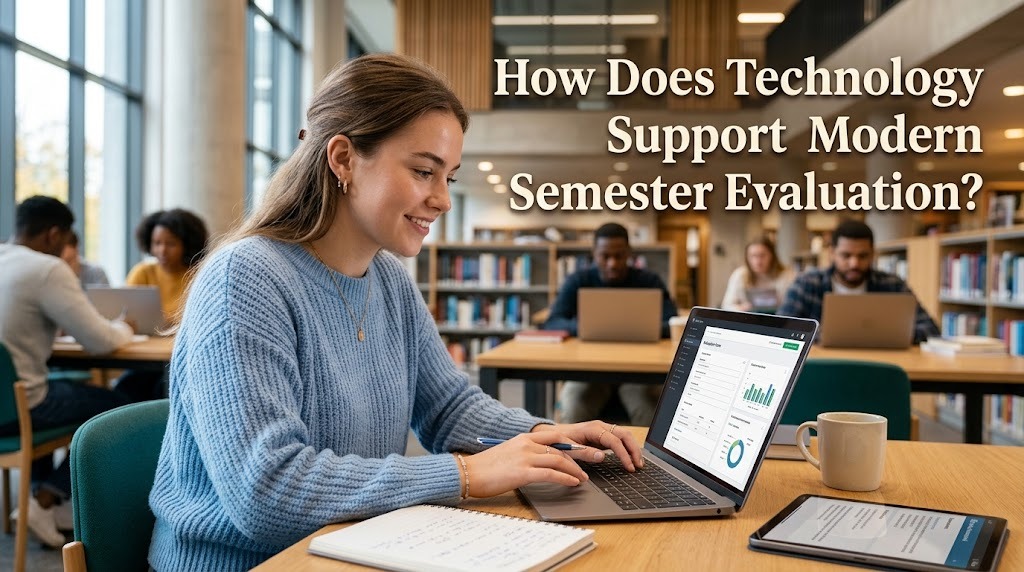
Technology has transformed the way schools conduct semester evaluation by making assessments more flexible, efficient, and accessible. Digital platforms, online examinations, and automated grading systems help teachers measure student performance while reducing administrative tasks. Technology also allows students to receive feedback more quickly and understand which subjects require additional attention. When used appropriately, these tools can improve the accuracy of assessment, support different learning needs, and make the evaluation process more effective.
MAKING EXAMINATIONS MORE ACCESSIBLE THROUGH DIGITAL PLATFORMS
Digital learning platforms allow schools to conduct semester evaluations through computers, laptops, tablets, and other compatible devices. Students can access examination questions, submit answers, and complete assessments through systems provided by their schools. Depending on the platform, examinations may include multiple-choice questions, written responses, interactive exercises, and other assessment formats. This flexibility can make the evaluation process more convenient for schools and students.
Digital platforms can also support students who need to access learning materials remotely. Teachers may distribute instructions, examination schedules, and preparation resources through the same system. However, successful implementation requires reliable internet access, compatible devices, and clear instructions. Schools should provide suitable alternatives or assistance for students who face technical or accessibility challenges.
IMPROVING GRADING EFFICIENCY WITH AUTOMATED SYSTEMS
Automated grading tools can help teachers evaluate certain types of examination answers more quickly. For example, digital systems can automatically score multiple-choice questions, matching exercises, and other questions with predetermined answers. This reduces repetitive administrative work and allows teachers to spend more time reviewing student progress and planning lessons. Students may also receive their scores soon after completing an assessment, depending on the system.
However, automated grading is not appropriate for every type of answer. Essays, creative projects, and complex explanations often require human judgment to evaluate reasoning, clarity, originality, and depth of understanding. Even when artificial intelligence supports grading, teachers should review important decisions and check for errors or unfair outcomes. Combining automated tools with professional judgment helps maintain the quality of semester evaluation.
PROVIDING FASTER FEEDBACK TO STUDENTS
Technology allows teachers to provide feedback more efficiently through digital learning management systems and assessment applications. After completing an examination, students may be able to review their scores, correct answers, comments, and areas requiring improvement. Quick feedback helps students understand their mistakes while the learning material is still familiar. It also allows them to make adjustments before the next assessment.
Teachers can use digital tools to provide personalized recommendations based on students' performance. For example, students who struggle with a particular mathematics topic may receive additional practice exercises, while students who have mastered the topic can work on more challenging problems. This approach encourages continuous learning instead of focusing only on final grades. Nevertheless, feedback should be clear, constructive, and appropriate to each student's learning needs.
TRACKING STUDENT PERFORMANCE WITH LEARNING ANALYTICS
Learning analytics uses assessment data to help teachers understand student progress and learning patterns. Digital platforms can organize information such as examination scores, assignment completion, quiz results, and progress across different subjects. By reviewing these records, teachers can identify areas where students consistently perform well or experience difficulties. This information supports more informed decisions about teaching strategies and additional learning support.
For example, if many students receive low scores on the same topic, a teacher may need to explain the material again or introduce different learning activities. Students can also use performance reports to recognize their strengths and set realistic improvement goals. However, assessment data should be interpreted carefully because a low score does not always indicate a lack of understanding. Teachers should consider classroom participation, individual circumstances, and other evidence before making decisions.
SUPPORTING DIFFERENT LEARNING NEEDS
Technology can make semester evaluation more accessible to students with different learning needs. Depending on the software and school policies, digital assessments may support screen readers, adjustable text sizes, keyboard navigation, captions, and other accessibility features. These tools can help students interact with examination materials more independently. Appropriate accommodations allow students to demonstrate their knowledge without unnecessary barriers.
Digital assessment platforms can also offer different question formats to measure a wider range of skills. Students may demonstrate understanding through written responses, diagrams, presentations, or interactive activities when these formats match the learning objectives. However, technology alone does not guarantee equal opportunities for every student. Schools must select accessible tools, provide appropriate support, and ensure that assessment requirements remain fair and consistent.
STRENGTHENING EXAMINATION SECURITY AND ACADEMIC INTEGRITY
Technology can help schools protect examination materials and maintain academic integrity. Secure platforms may use individual student accounts, access permissions, question randomization, time limits, and activity records to reduce opportunities for unauthorized access. These features can make it easier to manage examinations and identify unusual activity. Schools can also use digital systems to organize examination schedules and control when assessment materials become available.
Despite these advantages, digital examinations still face security challenges. Students may encounter technical problems, unauthorized assistance, or attempts to access restricted materials. Remote proctoring tools may also raise privacy concerns, particularly when they collect video, audio, or device information. Schools should use proportionate security measures, explain their policies clearly, protect personal data, and provide fair procedures for reviewing suspected violations.
REDUCING ADMINISTRATIVE WORK FOR TEACHERS
Digital assessment systems can reduce the time teachers spend preparing, distributing, collecting, and organizing examination materials. Many platforms allow teachers to create question banks, reuse suitable questions, schedule assessments, and store results in organized digital records. These functions can simplify the evaluation process, especially when teachers manage several classes. Reduced administrative work can create more time for lesson planning and individual student support.
Technology can also help schools prepare reports that summarize class performance and identify learning trends. Teachers and school administrators can use these reports to monitor progress and evaluate whether learning objectives have been achieved. However, digital tools require proper training, maintenance, and technical support to work effectively. Schools should choose systems that match their needs rather than adopting complicated technology without a clear educational purpose.
ADDRESSING THE CHALLENGES OF DIGITAL EVALUATION
Although technology offers many benefits, digital semester evaluation can create challenges that schools need to address. Unreliable internet connections, limited access to devices, software errors, and power interruptions may prevent students from completing examinations smoothly. Differences in digital skills can also affect how comfortably students use assessment platforms. Schools should test their systems in advance, provide clear guidance, and establish backup procedures for technical problems.
Data privacy and responsible technology use are equally important. Schools should protect student records, restrict access to authorized personnel, and follow applicable data protection requirements. Teachers must also ensure that assessment questions measure the intended learning objectives rather than simply testing students' ability to use technology. By combining digital innovation with careful planning, human oversight, and fair assessment practices, schools can make semester evaluation more reliable and meaningful.
CONCLUSION
Technology supports modern semester evaluation by improving examination access, speeding up grading, providing timely feedback, and helping teachers track student performance. Digital platforms and learning analytics can also support personalized learning, accessibility, and more efficient school administration. However, successful implementation requires reliable infrastructure, data protection, academic integrity, and appropriate teacher supervision. When technology is combined with sound assessment practices, it can help schools measure student achievement more effectively and improve the overall learning experience.
Recent Posts

Bagaimana Sistem SKS pada Program Kuliah... 22.11.2026/60 View

How Does Technology Make Daily Evaluation... 21.11.2026/87 View

Apa Strategi Menghadapi Kesenjangan antara Kompetensi... 21.11.2026/85 View

Mengapa Inventaris Aset Penting bagi Kelancaran... 21.11.2026/83 View

When Should Musicians Join a Record... 21.11.2026/87 View
