

How Does Technology Support The Development Of Online Question Banks?
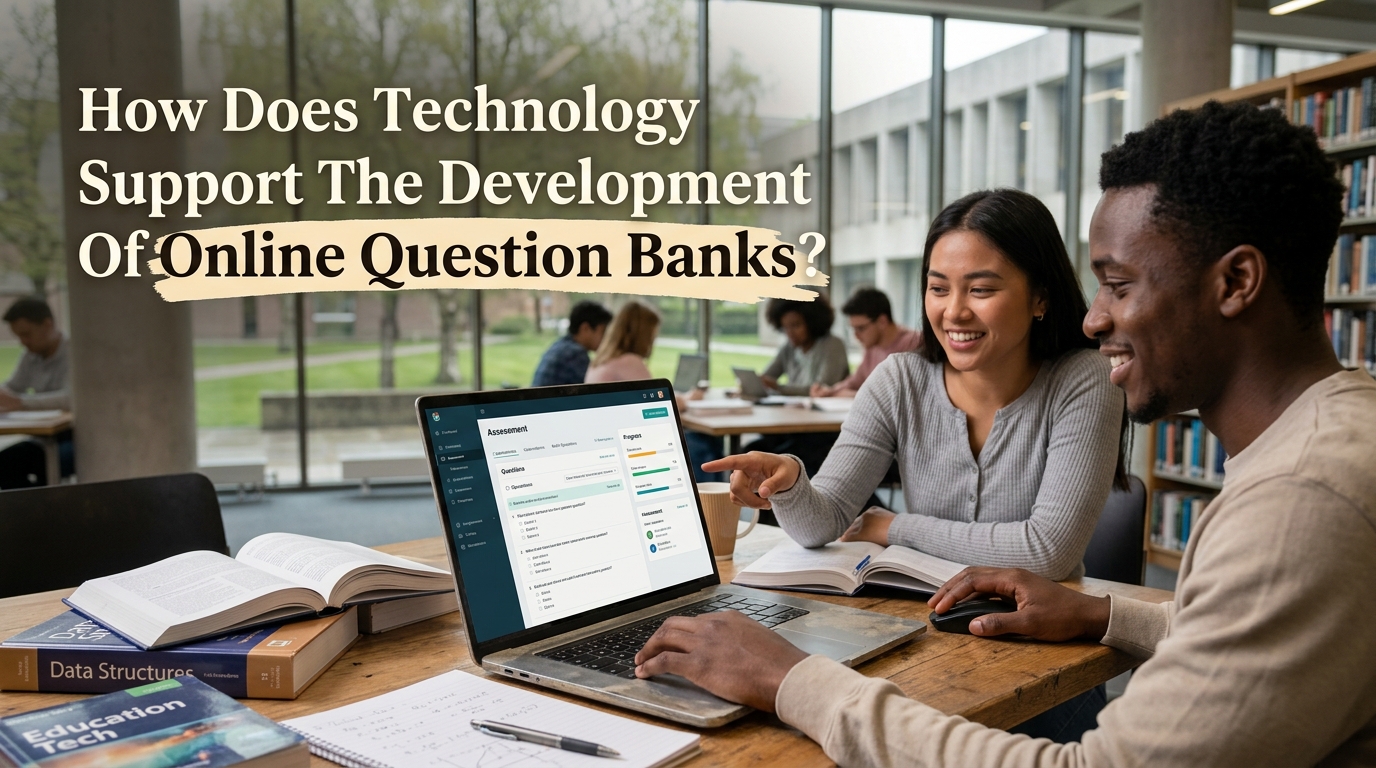
Technology has changed the way teachers create, manage, and distribute educational assessments. One important development is the online question bank, a digital collection of questions that can be used for quizzes, practice exercises, and examinations. With the help of modern technology, teachers can organize questions, update learning materials, and provide students with more flexible ways to practice. Online question banks can also offer features such as automatic scoring, instant feedback, and learning progress reports. When used appropriately, these technologies can make assessment more efficient and support better learning experiences for both teachers and students.
DIGITAL PLATFORMS MAKE QUESTION MANAGEMENT EASIER
Digital platforms provide a convenient way to create and organize online question banks. Teachers can store questions in databases or learning management systems instead of managing large collections of printed documents. Questions can be categorized by subject, topic, difficulty level, and learning objective, making them easier to find when preparing assessments. This organization helps teachers save time and maintain a more consistent collection of learning materials.
Many platforms also allow teachers to edit, replace, or remove questions whenever necessary. For example, a teacher can update an outdated science question without rebuilding the entire question bank. Search and filtering features can help educators locate specific questions quickly. These capabilities make digital question management more practical, especially when teachers need to maintain a large number of questions across several subjects.
AUTOMATIC SCORING IMPROVES ASSESSMENT EFFICIENCY
Automatic scoring is one of the most useful features supported by technology in online question banks. For question types with predetermined answers, such as multiple-choice and true-or-false questions, a digital system can compare students’ responses with an answer key and calculate scores automatically. This reduces repetitive marking tasks and allows teachers to review results more quickly. Students may also receive their scores immediately after submitting a quiz.
Faster scoring gives teachers more opportunities to focus on explaining difficult concepts and supporting students who need additional help. However, automatic scoring is not suitable for every assessment format. Essay questions and responses that require interpretation may still need to be evaluated by a teacher using clear marking criteria. Therefore, technology works best when automated features are combined with professional judgment.
ONLINE ACCESS SUPPORTS FLEXIBLE LEARNING
Technology allows students to access question banks through compatible computers, tablets, and smartphones. Depending on the platform, students can practice questions at school, at home, or in other suitable locations. Some resources are available at any time, while others are restricted to specific assessment schedules. This flexibility helps students fit additional practice into their study routines.
Online question banks can also support distance learning and blended learning, where online activities are combined with classroom instruction. Teachers can share practice exercises without distributing printed worksheets to every student. Students can revisit topics and complete additional exercises when access is available. However, schools should consider internet availability, device compatibility, and accessibility so that students have fair opportunities to participate.
DATA ANALYSIS HELPS TEACHERS UNDERSTAND STUDENT PERFORMANCE
Modern educational platforms can collect and summarize assessment results to help teachers understand student performance. Depending on the available features, reports may show scores, completion rates, and patterns of correct or incorrect answers. Teachers can use this information to identify topics that students understand well and concepts that require further explanation. This makes assessment results more useful for planning future lessons.
For example, if many students answer questions about fractions incorrectly, a teacher may review the topic and provide additional practice. Teachers can also compare results across assessments to monitor progress over time. However, assessment data should be interpreted carefully because a low score may result from several factors, including unclear questions or insufficient preparation. Combining digital reports with classroom observations and student feedback provides a more complete picture of learning needs.
ARTIFICIAL INTELLIGENCE CAN SUPPORT QUESTION DEVELOPMENT
Artificial intelligence (AI) can assist teachers in developing questions from lesson materials, generating alternative question formats, and suggesting different levels of difficulty. For example, an AI-supported tool may help create practice questions based on a reading passage or a particular learning objective. This can reduce some preparation tasks and give teachers more options when building a question bank. The usefulness of these features depends on the quality of the tool and the instructions provided.
However, AI-generated questions should always be reviewed before they are used in assessments. AI systems can produce inaccurate information, ambiguous wording, incorrect answer keys, or questions that do not match the curriculum. Teachers must check the accuracy, fairness, and educational value of every question. Human review remains essential to ensure that technology supports learning rather than introducing errors.
CLOUD STORAGE SUPPORTS COLLABORATION AND UPDATES
Cloud storage allows question banks to be stored on remote servers and accessed through the internet by authorized users. When a platform supports collaboration, teachers can share questions, contribute new materials, and update the collection without exchanging multiple copies of files. This can be particularly helpful for schools where several teachers teach the same subject. A shared collection can reduce duplicated work and encourage the exchange of useful learning resources.
Cloud-based platforms may also offer version history and backup features that help users recover previous changes or protect against accidental data loss. However, these features depend on the service being used and its settings. Schools should establish clear access permissions and use appropriate security measures to protect assessment materials. Reliable backups and regular maintenance help keep the question bank available and organized.
TECHNOLOGY IMPROVES ACCESSIBILITY AND PERSONALIZED PRACTICE
Technology can help make online question banks more adaptable to students’ different learning needs. Some platforms allow teachers to provide extra practice on topics where students experience difficulties. Others support adjustable text sizes, audio instructions, or keyboard navigation for users who need these options. These features can make educational resources easier to use for a wider range of learners.
Certain systems can also recommend questions based on previous responses or performance levels. For example, students who struggle with a basic concept may receive more introductory practice before attempting advanced questions. Such features can support personalized learning, but their effectiveness depends on how accurately the system identifies students’ needs. Teachers should monitor progress and ensure that all students receive suitable guidance and fair access to learning materials.
SECURITY AND DATA PRIVACY IN ONLINE QUESTION BANKS
As online question banks become more widely used, data security and privacy become increasingly important. Digital platforms may store student names, assessment results, account details, and other educational information. Schools and teachers should use trusted platforms, restrict access to authorized users, and follow applicable privacy requirements. Strong authentication and appropriate access permissions can help reduce the risk of unauthorized access.
Assessment materials also need protection, especially when question banks contain questions for important examinations. Teachers should avoid sharing confidential test questions publicly and should review the platform’s security settings. Schools should also understand how a service collects, stores, and uses student data before adopting it. Responsible management helps maintain trust and protects both learners and educational institutions.
CONCLUSION
Technology supports the development of online question banks through digital organization, automatic scoring, flexible access, data analysis, cloud storage, and AI-assisted question creation. These features can help teachers manage assessments more efficiently while giving students more opportunities to practice and review learning materials. Technology can also support personalized learning when its features are used appropriately.
However, effective online question banks require accurate questions, secure data management, accessible platforms, and regular quality reviews. Teachers should evaluate digital tools carefully and ensure that technology supports clear learning objectives. By combining reliable technology with teacher guidance, educational institutions can develop online question banks that improve assessment practices and support meaningful student learning.
Recent Posts

Bagaimana Sistem SKS pada Program Kuliah... 22.11.2026/61 View

How Does Technology Make Daily Evaluation... 21.11.2026/87 View

Apa Strategi Menghadapi Kesenjangan antara Kompetensi... 21.11.2026/85 View

Mengapa Inventaris Aset Penting bagi Kelancaran... 21.11.2026/83 View

When Should Musicians Join a Record... 21.11.2026/87 View
