

How Does Technology Transform Modern Science Olympiad Training?
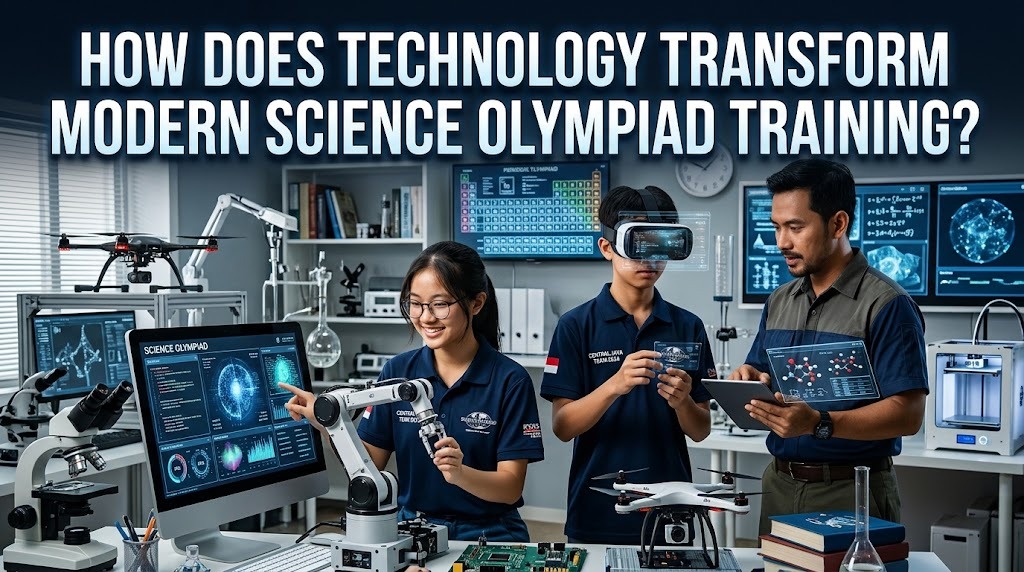
Technology has changed the way students prepare for Science Olympiad competitions. In the past, training often depended on printed textbooks, classroom explanations, and direct guidance from teachers. Today, students can access digital learning platforms, interactive simulations, online practice questions, and virtual laboratories to improve their scientific knowledge.
These technological developments make learning more flexible and provide opportunities to explore complex scientific concepts in different ways. Students can study independently, evaluate their progress, and practice solving challenging problems using digital tools. As a result, technology has become an important part of modern Science Olympiad training.
PROVIDING ACCESS TO DIGITAL LEARNING RESOURCES
One of the most noticeable changes is the availability of digital learning resources. Students can access electronic textbooks, scientific articles, educational videos, and online learning materials without depending entirely on printed books.
These resources help students explore topics beyond their regular school curriculum. For example, students preparing for physics competitions can watch explanations of mechanics and electricity, while biology participants can access materials about genetics, ecosystems, and human physiology.
Digital resources also allow students to study at their own pace. They can revisit difficult explanations, compare different learning materials, and focus on subjects that require additional attention.
MAKING COMPLEX CONCEPTS EASIER TO UNDERSTAND
Some scientific concepts are difficult to understand because they involve processes that cannot be observed directly. Technology helps explain these topics through animations, interactive diagrams, and three-dimensional models.
For example, biology students can explore the structure of cells and observe how certain biological processes occur through digital illustrations. Physics students can use simulations to understand motion, forces, and electrical circuits.
These visual learning tools make abstract information easier to interpret. Instead of relying only on written explanations, students can observe how scientific principles work and connect theoretical knowledge with practical examples.
INTRODUCING VIRTUAL LABORATORIES AND SIMULATIONS
Virtual laboratories allow students to explore experimental procedures in a digital environment. They can practice selecting equipment, adjusting variables, observing outcomes, and analyzing experimental results without always requiring physical laboratory facilities.
This technology is particularly useful when schools have limited access to laboratory equipment or specialized materials. Students can explore different experimental situations while learning about scientific methods and research procedures.
However, virtual experiments should complement rather than completely replace physical laboratory activities. Direct experimentation remains important for developing practical skills, including accurate measurement, equipment handling, and laboratory safety.
IMPROVING ACCESS TO ONLINE PRACTICE QUESTIONS
Online platforms provide students with opportunities to practice Science Olympiad questions from different subjects and difficulty levels. Some platforms include quizzes, timed examinations, and question banks that help students become familiar with competition formats.
Students can use these exercises to strengthen their understanding of scientific concepts and improve their ability to solve unfamiliar problems. Repeated practice also helps them recognize common question patterns and develop more effective problem-solving strategies.
Digital practice tools make preparation more flexible because students can complete exercises whenever they have available time. They can also revisit previous questions to review mistakes and strengthen their understanding.
USING ARTIFICIAL INTELLIGENCE FOR PERSONALIZED LEARNING
Artificial intelligence has introduced new possibilities for Science Olympiad training. AI-powered educational tools can explain scientific concepts, generate practice questions, and provide feedback based on students' responses.
For example, students who struggle with chemical equations can use AI tools to review the steps involved in balancing reactions. Students preparing for mathematics or physics competitions can request additional practice problems based on specific topics.
Personalized assistance can help students focus on their individual learning needs. Nevertheless, AI-generated explanations should be checked against reliable textbooks, teachers, and scientific references because automated systems can sometimes provide inaccurate information.
SUPPORTING COLLABORATION THROUGH DIGITAL PLATFORMS
Technology also makes it easier for students to collaborate during Science Olympiad preparation. Online discussion groups, video conferencing applications, and shared digital documents allow students to exchange ideas even when they study in different locations.
Through these platforms, students can discuss difficult questions, share learning resources, and work together on scientific projects. Collaboration exposes them to different approaches and encourages them to explain their reasoning clearly.
Teachers and mentors can also use digital communication tools to provide guidance outside regular classroom sessions. This creates additional opportunities for discussion and academic support.
HELPING STUDENTS TRACK THEIR LEARNING PROGRESS
Digital learning platforms can help students monitor their preparation through quiz results, progress reports, and performance records. These features make it easier to identify subjects that require additional practice.
For instance, a student may discover that they consistently perform well in biology but struggle with physics calculations. This information can help them adjust their study schedule and allocate more time to weaker areas.
Tracking progress also allows students to evaluate whether their learning strategies are effective. Instead of studying without clear direction, they can use performance data to establish more realistic learning targets.
MAKING TRAINING MORE FLEXIBLE AND ACCESSIBLE
Online learning resources give students greater flexibility in choosing when and where to study. They can access recorded lessons, digital notes, and practice materials through computers, tablets, or smartphones.
This flexibility is useful for students who need to balance competition preparation with regular school activities. They can review lessons after school, practice questions during available study periods, or participate in online training sessions.
However, access to technology is not equal for every student. Limited internet connectivity, device availability, and digital literacy can create barriers. Schools and educational institutions need to consider these differences when introducing technology-based training programs.
DEVELOPING DIGITAL AND SCIENTIFIC LITERACY
Modern Science Olympiad training requires more than understanding scientific theories. Students also need to develop digital literacy, including the ability to search for reliable information, interpret digital data, and use educational software responsibly.
These skills support scientific learning because modern research frequently involves digital tools, data processing, and online scientific publications. Students who understand how to use technology effectively can explore information more independently.
Digital literacy also teaches students to evaluate the credibility of online sources. They should distinguish scientific evidence from unsupported claims and avoid accepting information simply because it appears on a popular website.
BALANCING TECHNOLOGY WITH TRADITIONAL LEARNING METHODS
Although technology offers many advantages, it should not become the only method used in Science Olympiad training. Students still need direct instruction, textbooks, discussions, physical experiments, and independent problem-solving activities.
Relying too heavily on digital tools can create distractions, encourage passive learning, or reduce opportunities for hands-on experience. Students may also become dependent on automated answers instead of developing their own reasoning abilities.
A balanced training approach combines digital resources with traditional learning methods. Technology can support explanations and practice, while teachers provide deeper guidance and practical activities help students understand scientific principles through direct experience.
CONCLUSION
Technology transforms modern Science Olympiad training by making learning resources more accessible, introducing interactive simulations, supporting personalized learning, and improving progress monitoring. Digital platforms also create opportunities for collaboration and flexible study schedules.
However, technology is most effective when used alongside traditional teaching methods and independent thinking. Students still need strong scientific foundations, practical experience, and the ability to evaluate information critically. By using digital tools responsibly, they can develop the knowledge and skills needed to prepare for Science Olympiad competitions more effectively.
Recent Posts

Bagaimana Sistem SKS pada Program Kuliah... 22.11.2026/48 View

How Does Technology Make Daily Evaluation... 21.11.2026/76 View

Apa Strategi Menghadapi Kesenjangan antara Kompetensi... 21.11.2026/78 View

Mengapa Inventaris Aset Penting bagi Kelancaran... 21.11.2026/73 View

When Should Musicians Join a Record... 21.11.2026/78 View
