

How Does Technology Transform Traditional Library Services?
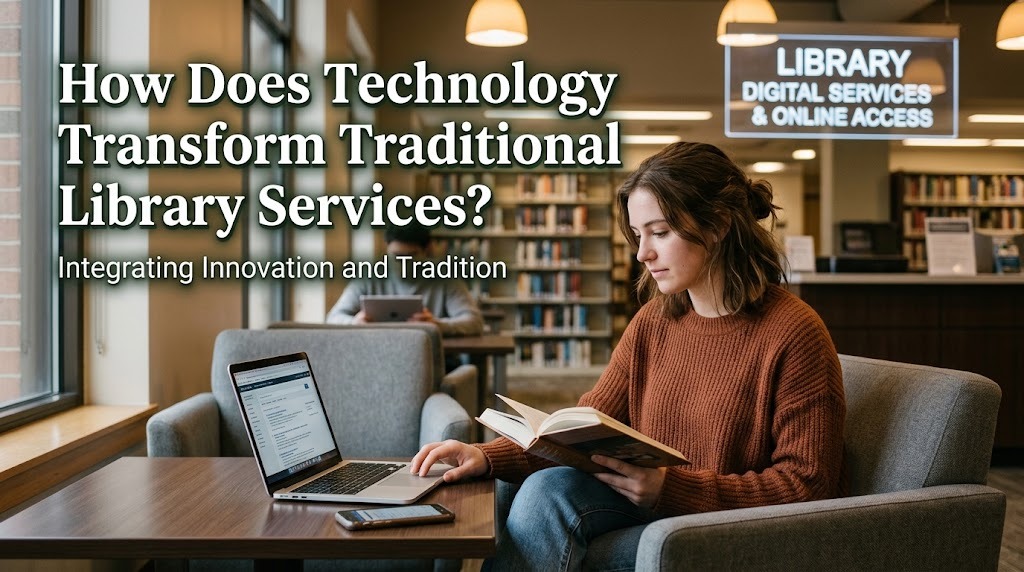
Technology has changed many aspects of modern education, including the way libraries provide information and services to their users. Traditional libraries have historically focused on physical books, printed journals, reading rooms, and direct assistance from librarians. Today, digital technology allows libraries to combine these traditional services with online catalogs, electronic resources, digital platforms, and automated services. This transformation can make library services more accessible and efficient for students and other users. As technology continues to develop, libraries are adapting their services to meet changing information needs.
EXPANDING ACCESS TO DIGITAL RESOURCES
One of the most significant changes technology brings to traditional libraries is the expansion of digital resource access. Instead of depending entirely on printed books, libraries can provide electronic books, online journals, research databases, and other digital publications. Users can search for available resources through online library systems without having to walk through physical shelves. This makes information discovery more convenient and can support students who need resources outside the physical library.
Digital collections can also complement existing physical collections. A library does not necessarily need to replace printed books with digital resources because both formats can serve different user preferences and purposes. Students may choose electronic materials when they need convenient remote access while still using physical books for longer reading sessions. Combining different formats allows libraries to provide a more diverse and adaptable information environment.
INTRODUCING ONLINE CATALOGS AND SEARCH TOOLS
Technology has transformed the way users find library materials. Traditional shelf searches can now be supported by online catalogs and digital search systems that allow users to find information using keywords, titles, authors, subjects, or other details. These tools can significantly reduce the time required to identify potentially useful resources. Users can also determine whether certain materials are available before visiting a physical library.
Digital search tools can make large collections easier to manage and explore. Students working on academic assignments, for example, can search for materials related to a particular subject and narrow the results using available filters. This encourages more systematic research rather than random searching. However, users still need to evaluate whether the sources they discover are relevant and credible for their specific purpose.
MAKING LIBRARY SERVICES MORE ACCESSIBLE
Technology allows libraries to provide services beyond the traditional physical environment. Remote access can enable authorized users to consult certain digital resources without being physically present at the library. This is particularly useful for students participating in online education or those who cannot easily travel to campus. Library information and selected services can therefore become available across a wider range of locations.
Greater accessibility can also support users with different schedules. Students can search catalogs or use permitted online resources during study periods that may not match traditional library operating hours. This flexibility makes library services more compatible with modern academic routines. Nevertheless, access to digital resources may depend on institutional subscriptions, licensing agreements, authentication systems, and copyright restrictions.
IMPROVING LIBRARY USER SERVICES
Technology can also improve the way libraries communicate with and assist users. Digital platforms can provide online assistance, notifications, electronic communication, and self service functions depending on the systems implemented by a library. These features can make routine interactions more convenient for users. For example, students may be able to check resource availability or receive important library information through digital systems.
Automation can also help library staff manage repetitive administrative tasks. Technology may support activities such as catalog management, circulation records, notifications, and resource organization. This can allow librarians to spend more time providing specialized assistance, research guidance, and information literacy support. Technology therefore does not necessarily eliminate the role of librarians but can change how they deliver their expertise.
SUPPORTING INFORMATION LITERACY AND MODERN LEARNING
Modern library services are not only about providing access to information. They can also help users develop information literacy and digital research skills. As students search digital collections, they need to learn how to select appropriate keywords, evaluate sources, identify credible publications, and use information responsibly. Libraries can support these skills through guidance, training, workshops, and research assistance.
The transformation of library services can also support independent learning. Students can explore resources according to their academic interests and conduct preliminary research without always requiring direct assistance. At the same time, librarians remain important because they can help users navigate complex research questions and evaluate information sources. A technology supported library can therefore combine digital convenience with professional human guidance.
CONCLUSION
Technology has transformed traditional library services by expanding digital access, improving search systems, increasing service accessibility, and supporting more convenient user experiences. Online catalogs and digital collections make it easier for students to discover and use educational resources. Remote services also allow libraries to support learners beyond their physical buildings.
However, technology does not make traditional library services irrelevant. Physical collections, reading spaces, librarians, and face to face assistance can remain valuable parts of the library experience. The most effective approach is to combine traditional strengths with modern digital services and information literacy support. Through this combination, libraries can continue to serve the changing needs of students and modern learners.
Recent Posts

Bagaimana Sistem SKS pada Program Kuliah... 22.11.2026/35 View

How Does Technology Make Daily Evaluation... 21.11.2026/69 View

Apa Strategi Menghadapi Kesenjangan antara Kompetensi... 21.11.2026/70 View

Mengapa Inventaris Aset Penting bagi Kelancaran... 21.11.2026/67 View

When Should Musicians Join a Record... 21.11.2026/69 View
