

How Does the Environment Influence Children's Moral Development?
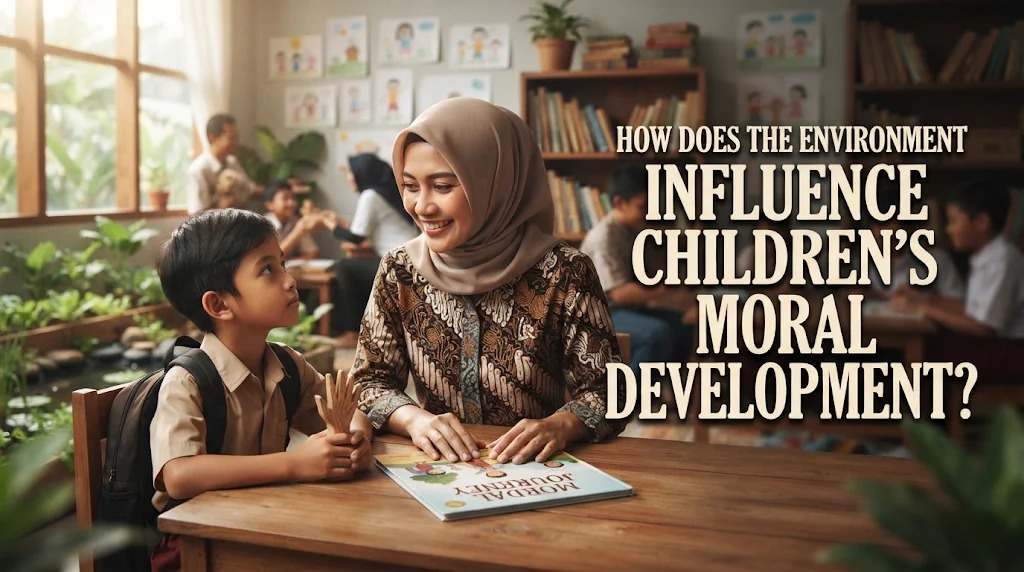
The environment plays an important role in shaping children's moral development from an early age. Children learn how to behave, communicate, and make decisions through interactions with their families, schools, friends, and communities. The values and habits they observe in their surroundings can influence their understanding of honesty, responsibility, respect, and kindness. A positive environment can encourage good behavior, while negative influences may create difficulties in developing strong moral values. Therefore, providing a supportive environment is essential for helping children build positive character.
FAMILY AS THE FIRST MORAL EDUCATOR
Family is the first environment where children learn about moral values and appropriate behavior. Parents introduce important lessons such as honesty, discipline, respect, and responsibility through everyday activities.
Children often imitate their parents' actions, so positive examples are important in shaping their character. When parents communicate politely, keep promises, and treat others kindly, children are more likely to develop similar habits.
SCHOOL AND TEACHER INFLUENCE
Schools provide opportunities for children to develop moral values through education and social interaction. Teachers can introduce lessons about honesty, fairness, tolerance, and responsibility through classroom activities.
School rules and group assignments also teach children to respect others and cooperate with classmates. A supportive learning environment helps children understand the importance of positive behavior in different situations.
PEER GROUP AND FRIENDSHIP
Friends can strongly influence children's attitudes, habits, and decisions. Through daily interactions, children learn how to share, cooperate, solve problems, and respect different opinions.
Positive friendships can encourage kindness, discipline, and responsible behavior. However, negative peer pressure may lead children to imitate inappropriate actions, making parental guidance important.
COMMUNITY AND SOCIAL INTERACTIONS
The surrounding community also contributes to children's moral development. Children observe how people interact, solve disagreements, and help one another in their neighborhoods.
Communities that encourage cooperation, respect, and social responsibility can provide positive examples. Participation in community activities also teaches children the importance of helping others and maintaining good relationships.
MEDIA AND DIGITAL ENVIRONMENT
Digital media has become an important influence on children's behavior and understanding of moral values. Educational videos, online stories, and positive digital content can introduce lessons about kindness, honesty, and respect.
However, children may also encounter inappropriate language, violence, misinformation, and negative online behavior. Parents should guide children's digital activities and help them distinguish between positive and harmful content.
CULTURAL VALUES AND TRADITIONS
Culture and traditions influence how children understand social behavior and moral responsibilities. Through family customs, community celebrations, and cultural activities, children learn values such as respect, cooperation, and appreciation of differences.
Positive cultural practices can strengthen children's identity and encourage them to respect other people. These experiences also help children understand the importance of maintaining harmonious relationships within society.
SOCIAL AND ECONOMIC CONDITIONS
Social and economic conditions can influence children's opportunities to learn and develop positive behavior. Access to education, safe environments, and supportive relationships can provide better opportunities for moral development.
When children experience unstable environments or limited social support, they may face additional challenges in developing healthy habits. Therefore, families, schools, and communities need to provide guidance and support regardless of their economic circumstances.
POSITIVE ROLE MODELS IN DAILY LIFE
Children learn moral values not only through direct instruction but also by observing the behavior of people around them. Parents, teachers, older siblings, and community members can become important role models.
When children regularly see examples of honesty, patience, empathy, and responsibility, they can understand how these values are practiced. Positive role models help turn moral lessons into everyday habits.
CONCLUSION
The environment strongly influences children's moral development through family relationships, school experiences, friendships, communities, and digital media. Positive surroundings can encourage honesty, responsibility, empathy, and respect, while negative influences may create challenges in developing good character. Therefore, parents, teachers, and communities should work together to provide supportive environments and positive examples. With consistent guidance, children can develop strong moral values that guide their behavior throughout life.
Recent Posts

How Does Technology Make Daily Evaluation... 21.11.2026/57 View

Apa Strategi Menghadapi Kesenjangan antara Kompetensi... 21.11.2026/59 View

Mengapa Inventaris Aset Penting bagi Kelancaran... 21.11.2026/55 View

When Should Musicians Join a Record... 21.11.2026/54 View

Daily Evaluation or Daily Planning Which... 21.11.2026/61 View
