

How Does the General Elections Commission Determine the Permanent Voter List?
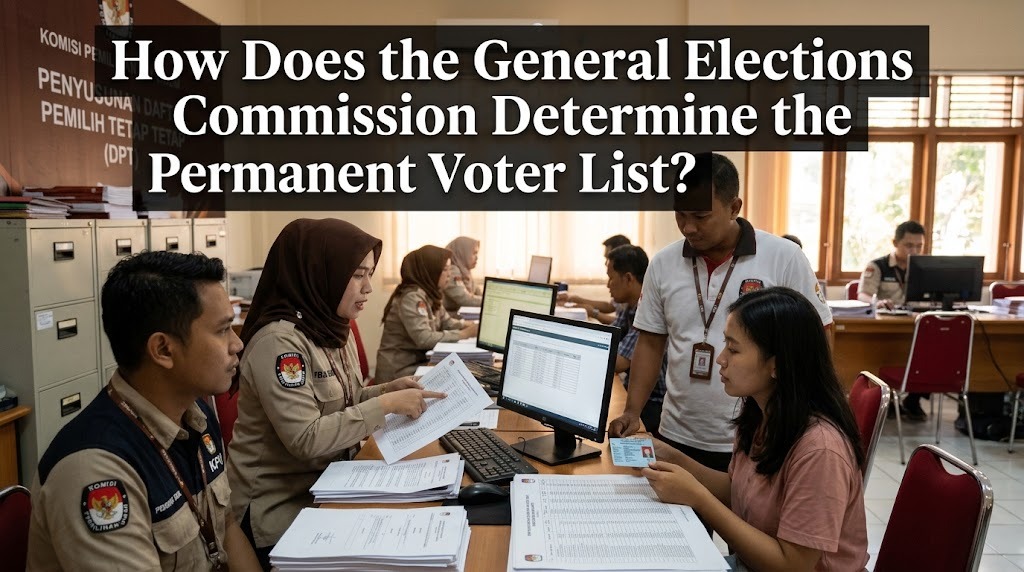
The Permanent Voter List (DPT) is an essential part of the election process in Indonesia because it determines which citizens are officially registered to participate in an election. The General Elections Commission (KPU) is responsible for preparing and establishing this list to ensure that eligible citizens can exercise their voting rights. Accurate voter registration helps create an orderly, fair, and transparent electoral process.
Determining the DPT involves several stages, including collecting population data, verifying voter information, updating records, and conducting public checks. The KPU coordinates with relevant government institutions and local election organizers to ensure that the information is accurate. Through this process, the commission aims to prevent duplicate registrations, identify eligible voters who have not been recorded, and reduce administrative problems on election day.
UNDERSTANDING THE PERMANENT VOTER LIST IN INDONESIA
The Permanent Voter List, commonly known as Daftar Pemilih Tetap (DPT), is an official record of Indonesian citizens who meet the legal requirements to vote in a particular election. The list contains important information about registered voters, including their identities and assigned polling locations. It serves as the main reference for organizing voting activities throughout the country.
The DPT is important because it helps election organizers estimate the number of voters and prepare the necessary election logistics. These include ballot papers, polling stations, voting booths, and other supporting equipment. Without accurate voter records, election organizers may face difficulties distributing resources and ensuring that every eligible citizen can participate. Therefore, preparing the DPT carefully is an important responsibility of the KPU.
COLLECTING INITIAL VOTER DATA
The first stage in determining the DPT is collecting initial voter information from population administration records. The KPU coordinates with the Ministry of Home Affairs and other relevant institutions to obtain population data that can be used as the basis for voter registration. This information helps identify citizens who may meet the legal requirements to participate in an upcoming election.
The initial data is then processed by election organizers at different administrative levels. The KPU uses this information to prepare preliminary voter records and distribute them for further verification. This stage is essential because incomplete or outdated population information can create problems during the registration process. Accurate initial data makes the subsequent verification stages more effective and reliable.
VERIFYING VOTER ELIGIBILITY AND PERSONAL INFORMATION
After collecting the initial data, the KPU conducts voter data verification to determine whether individuals meet the legal requirements to be registered. Under Indonesian election regulations, eligible voters generally must be Indonesian citizens who are at least 17 years old on election day or have been married or previously married, and must not have their voting rights revoked by a final court decision. The verification process also checks whether voter information is complete and consistent.
Election officers may conduct direct visits to verify information about voters and their residential status. They check whether registered individuals are still living at the recorded addresses and identify possible changes, such as deaths, relocations, or duplicate records. This process helps ensure that the voter list reflects actual conditions in the community. Any necessary corrections are processed according to established procedures before the list is finalized.
CONDUCTING PUBLIC ANNOUNCEMENTS AND VOTER DATA IMPROVEMENTS
Public participation is an important part of preparing an accurate Permanent Voter List. Before the DPT is officially established, preliminary voter lists are announced so that citizens can check whether their personal information has been recorded correctly. This stage gives voters an opportunity to identify missing names, incorrect information, or other administrative problems.
Citizens can report errors or submit requests for corrections through the designated election organizers. The KPU then processes these reports and coordinates with the relevant officers to verify the submitted information. Public involvement helps identify problems that may not have been discovered during the initial data collection. It also encourages communities to take an active role in protecting their voting rights.
ESTABLISHING THE PERMANENT VOTER LIST THROUGH OFFICIAL PROCEDURES
Once data collection, verification, and public improvements have been completed, the KPU proceeds with establishing the DPT. The process involves several administrative levels, beginning with local election organizers and continuing through the relevant regency or city, provincial, and national structures according to the applicable regulations. Each level is responsible for checking and finalizing voter information within its authority.
The final voter list becomes an official reference for election preparation and voting activities. It helps determine the number of registered voters in each polling station and supports the distribution of election materials. However, the establishment of the DPT does not mean that every voter-related administrative issue is automatically resolved. Applicable regulations provide procedures for handling certain changes and voters who are eligible but are not included in the final list.
CHALLENGES IN MAINTAINING ACCURATE VOTER DATA
Preparing an accurate DPT is not always easy because population information can change over time. People may move to different addresses, reach voting age, pass away, or experience changes in their administrative records. These developments require regular data updates and careful coordination between the KPU and relevant government institutions.
Geographical conditions also create challenges, particularly in remote islands and areas with limited transportation or communication facilities. In addition, technical errors, incomplete documents, and differences between population databases may affect the accuracy of voter records. The KPU needs to improve data management, strengthen coordination, and provide accessible public services to address these problems. Effective solutions help protect citizens' voting rights and improve the overall quality of elections.
CONCLUSION
The General Elections Commission determines the Permanent Voter List through a series of procedures involving initial data collection, voter eligibility verification, public announcements, data corrections, and official establishment. Each stage is important to ensure that registered voters meet legal requirements and that their information is accurate.
The accuracy of the DPT directly affects election preparation and the protection of citizens' voting rights. Therefore, cooperation between the KPU, government institutions, local election organizers, and the public is essential. Through transparent procedures and continuous data improvements, Indonesia can organize elections that are more orderly, inclusive, and trustworthy.
Recent Posts

Bagaimana Sistem SKS pada Program Kuliah... 22.11.2026/47 View

How Does Technology Make Daily Evaluation... 21.11.2026/74 View

Apa Strategi Menghadapi Kesenjangan antara Kompetensi... 21.11.2026/76 View

Mengapa Inventaris Aset Penting bagi Kelancaran... 21.11.2026/72 View

When Should Musicians Join a Record... 21.11.2026/76 View
