

How Does the General Elections Commission Prepare Election Logistics?
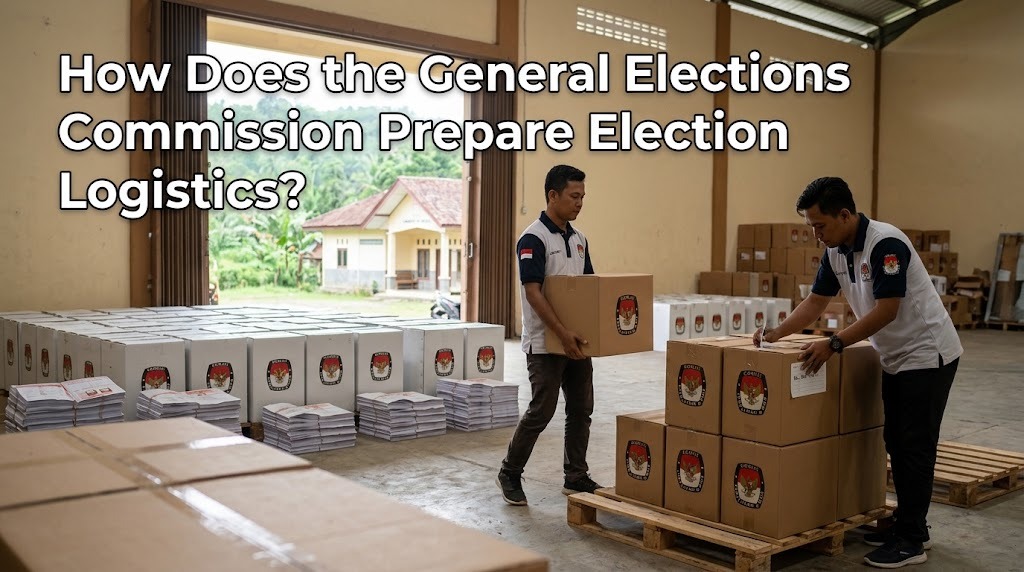
Election logistics are essential for ensuring that general elections run smoothly, efficiently, and fairly. In Indonesia, the General Elections Commission (KPU) is responsible for preparing and distributing various election materials needed by voters and election officers. These materials include ballot papers, ballot boxes, voting booths, ink, seals, and other supporting equipment required at polling stations.
Preparing election logistics is a complex process because Indonesia has thousands of islands, different geographical conditions, and millions of registered voters. The KPU must ensure that all necessary materials are available in the correct quantities and delivered to their destinations before election day. Careful planning, accurate data management, and effective coordination are important to prevent shortages, distribution delays, and administrative problems.
UNDERSTANDING THE IMPORTANCE OF ELECTION LOGISTICS
Election logistics refers to all materials, equipment, and supporting resources required to organize voting activities. These resources are essential because every polling station needs appropriate equipment to serve registered voters and conduct election procedures according to regulations. Without proper logistical preparation, election activities may experience delays or operational difficulties.
The KPU manages election logistics to ensure that voters across Indonesia receive equal opportunities to participate in elections. The materials must meet established specifications, be available in sufficient quantities, and reach polling stations on time. Proper logistical management also helps election officers perform their responsibilities effectively. Therefore, logistics preparation is an important part of maintaining election quality, accessibility, and public trust.
PLANNING ELECTION MATERIAL REQUIREMENTS
The first stage of election logistics preparation is identifying the quantity and types of materials needed throughout Indonesia. The KPU uses voter registration information, the number of polling stations, and election requirements to estimate logistical needs. This planning process helps determine how many ballot papers, ballot boxes, voting booths, and other materials must be prepared.
The KPU must also consider additional requirements, such as reserve ballot papers and supporting equipment, according to applicable regulations. Planning includes preparing budgets, establishing procurement schedules, and coordinating with regional election offices. Accurate calculations are essential because insufficient supplies can disrupt voting activities, while excessive procurement may create unnecessary costs. Through systematic planning, the KPU can manage resources more efficiently.
PRODUCING AND PROCURING ELECTION MATERIALS
After identifying logistical requirements, the KPU proceeds with procurement and production according to government procurement regulations. Ballot papers are among the most important election materials because they contain information about political parties and candidates participating in the election. Their production must follow approved designs and specifications to prevent printing errors and maintain ballot integrity.
Other materials, including ballot boxes, voting booths, ink, seals, and official documents, must also meet established standards. The procurement process requires careful supervision to ensure that materials are delivered in the correct quantities and quality. The KPU must coordinate with suppliers and relevant institutions to monitor production progress and address potential delays. Proper quality control helps ensure that all materials are ready before the distribution stage begins.
DISTRIBUTING LOGISTICS TO DIFFERENT REGIONS
Distributing election logistics is one of the most challenging responsibilities of the KPU. Indonesia's geographical conditions require materials to be transported through different routes, including roads, sea transportation, and air transportation. Remote islands, mountainous areas, and regions with limited infrastructure require special planning to ensure that election supplies arrive safely and on schedule.
The distribution process generally begins at central or regional storage facilities before materials are delivered to local election offices and polling stations. The KPU coordinates with transportation providers, regional governments, and election organizers to manage deliveries. Weather conditions, transportation limitations, and security concerns must also be considered. Effective distribution planning helps prevent delays and ensures that voters can participate according to the established election schedule.
USING DIGITAL TECHNOLOGY TO MONITOR ELECTION LOGISTICS
Digital technology helps the KPU manage and monitor election logistics more systematically. One example is the Election Logistics Information System (SILOG), which supports the recording and monitoring of logistical information. Through digital data management, election organizers can obtain information about material requirements, availability, and distribution progress.
The use of technology also helps improve coordination between central and regional election offices. Digital records make it easier to identify logistical shortages, monitor inventory, and evaluate the movement of election materials. However, digital systems must be supported by accurate data, trained personnel, and reliable technical infrastructure. Technology should complement physical inspections and administrative supervision to ensure that election logistics are properly managed.
MAINTAINING SECURITY AND SUPERVISING ELECTION MATERIALS
Election logistics must be protected throughout procurement, storage, transportation, and distribution. Ballot papers and other sensitive materials require careful handling to prevent damage, loss, unauthorized access, or misuse. Storage facilities must also be properly managed to maintain the condition and security of election equipment before it reaches polling stations.
The KPU coordinates with relevant institutions and election supervisors to support logistical security and accountability. Inventory records, delivery documentation, and physical inspections help ensure that the number of materials received matches the planned requirements. If shortages or damaged materials are discovered, election organizers must take appropriate action according to established procedures. Effective supervision helps protect election integrity and ensures that logistical resources are used responsibly.
CONCLUSION
The General Elections Commission prepares election logistics through systematic planning, procurement, production, distribution, digital monitoring, and security supervision. Each stage is important to ensure that ballot papers, ballot boxes, voting booths, and other necessary materials are available at polling stations before election day.
Indonesia's geographical conditions make logistical preparation particularly challenging, requiring careful coordination and effective resource management. By improving planning, using digital technology, and strengthening supervision, the KPU can reduce distribution problems and support smoother election activities. Proper logistical preparation ultimately helps protect voting rights and maintain public confidence in Indonesian democracy.
Recent Posts

Bagaimana Sistem SKS pada Program Kuliah... 22.11.2026/47 View

How Does Technology Make Daily Evaluation... 21.11.2026/74 View

Apa Strategi Menghadapi Kesenjangan antara Kompetensi... 21.11.2026/75 View

Mengapa Inventaris Aset Penting bagi Kelancaran... 21.11.2026/72 View

When Should Musicians Join a Record... 21.11.2026/75 View
