

How Does the Government Ensure Subsidies Reach the Right People?
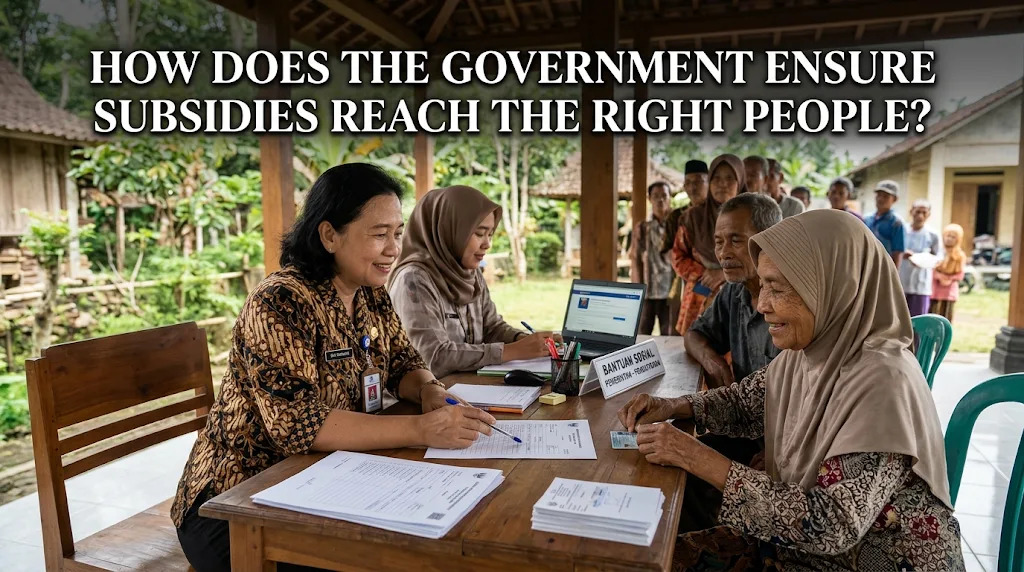
Government subsidies are designed to support eligible individuals, households, and economic sectors by reducing financial burdens and improving access to essential goods and services. However, distributing subsidies to the correct beneficiaries can be challenging, especially when a country has a large population and different economic conditions across regions. Without proper management, financial assistance may reach people who do not meet the requirements, while those who genuinely need support may be overlooked.
To address these challenges, governments establish various systems to identify beneficiaries, verify personal information, monitor distribution, and evaluate program effectiveness. In Indonesia, these efforts involve government databases, administrative verification, cooperation between institutions, and public supervision. Through these mechanisms, the government aims to improve the accuracy, transparency, and effectiveness of subsidy distribution.
USING ACCURATE BENEFICIARY DATA
One of the most important ways to ensure that subsidies reach the right people is by using accurate beneficiary data. Government agencies need reliable information about household conditions, income levels, employment, and other relevant socioeconomic factors. This information helps authorities identify individuals or families who meet the eligibility requirements of particular programs. Without accurate records, the distribution process may become inefficient and create opportunities for errors.
In Indonesia, the Data Tunggal Sosial dan Ekonomi Nasional (DTSEN) serves as an important reference for social and economic data used in government programs. The information helps authorities understand the socioeconomic conditions of communities and improve the targeting of social assistance and other relevant policies. However, the requirements of each subsidy program may differ, so the data must be used alongside program-specific eligibility criteria. Regular updates are also important because household circumstances can change over time.
VERIFYING THE ELIGIBILITY OF BENEFICIARIES
After collecting beneficiary information, the government needs to verify whether applicants meet the requirements of the relevant subsidy program. This process helps confirm personal identities, household conditions, and other information used to determine eligibility. Verification may involve checking official identification documents, reviewing administrative records, or coordinating with authorized institutions. These procedures reduce the risk of inaccurate registrations and inappropriate distribution.
Different subsidy programs may use different verification methods. For example, certain social assistance programs consider socioeconomic conditions, while energy subsidies may involve customer information and specific eligibility rules. Agricultural subsidies may require farmers to meet registration and allocation requirements established by the responsible authorities. By applying appropriate verification procedures, the government can make distribution decisions based on more reliable information.
COORDINATING BETWEEN GOVERNMENT INSTITUTIONS
Effective subsidy distribution requires cooperation between different government institutions. Ministries, local governments, administrative offices, and authorized distribution partners may have separate responsibilities throughout the process. One institution may manage beneficiary information, while another handles program implementation or monitors the delivery of benefits. Coordination helps ensure that these activities follow consistent procedures and support the same policy objectives.
In Indonesia, central and regional government institutions play important roles in implementing various subsidy programs. Local authorities can help verify information and communicate relevant requirements to residents, while national agencies establish policies and oversee program implementation. Cooperation between institutions also helps address administrative problems that may occur during distribution. Clear responsibilities and effective communication can reduce overlapping programs, improve efficiency, and strengthen public accountability.
MONITORING SUBSIDY DISTRIBUTION
Monitoring is necessary to ensure that subsidies are distributed according to established regulations. Government agencies need to examine whether benefits reach eligible recipients, whether distribution follows the required procedures, and whether public funds are used appropriately. Monitoring activities may involve administrative reviews, field inspections, financial reporting, and evaluations by authorized supervisory institutions. These measures help identify problems before they become more widespread.
Technology can also support the monitoring process by improving data management and recording distribution activities. Digital systems may help institutions identify unusual transactions, detect duplicate records, and track the implementation of certain programs. However, technology alone cannot guarantee accurate distribution. Reliable data, trained personnel, effective supervision, and appropriate responses to identified problems remain essential for maintaining program integrity.
PROVIDING PUBLIC COMPLAINT AND REPORTING CHANNELS
Public participation can strengthen the government's efforts to distribute subsidies fairly. Residents may notice situations where assistance is delivered incorrectly, eligibility information is inaccurate, or distribution procedures do not follow official regulations. Accessible complaint channels allow people to report these problems to the responsible institutions. Public feedback can also help government agencies identify weaknesses that may not be immediately visible through administrative records.
Complaint mechanisms should provide clear instructions about where and how people can submit reports. Government institutions must then review the information, investigate relevant cases, and take appropriate action when violations or administrative errors are confirmed. People should use official reporting channels and provide accurate information when submitting complaints. This approach encourages transparency and helps improve the quality of government subsidy programs.
CONCLUSION
The government ensures that subsidies reach the right people through accurate beneficiary data, eligibility verification, institutional coordination, distribution monitoring, and public complaint mechanisms. These efforts help reduce administrative errors, prevent misuse of public funds, and improve the effectiveness of subsidy programs. In Indonesia, strengthening socioeconomic data and cooperation between government institutions remains important for improving distribution accuracy. With transparent management and regular evaluation, subsidies can provide greater benefits to the communities they are intended to support.
Recent Posts

Bagaimana Sistem SKS pada Program Kuliah... 22.11.2026/25 View

How Does Technology Make Daily Evaluation... 21.11.2026/64 View

Apa Strategi Menghadapi Kesenjangan antara Kompetensi... 21.11.2026/65 View

Mengapa Inventaris Aset Penting bagi Kelancaran... 21.11.2026/62 View

When Should Musicians Join a Record... 21.11.2026/61 View
