

How Does the Government Estimate National Revenue During Budget Preparation?
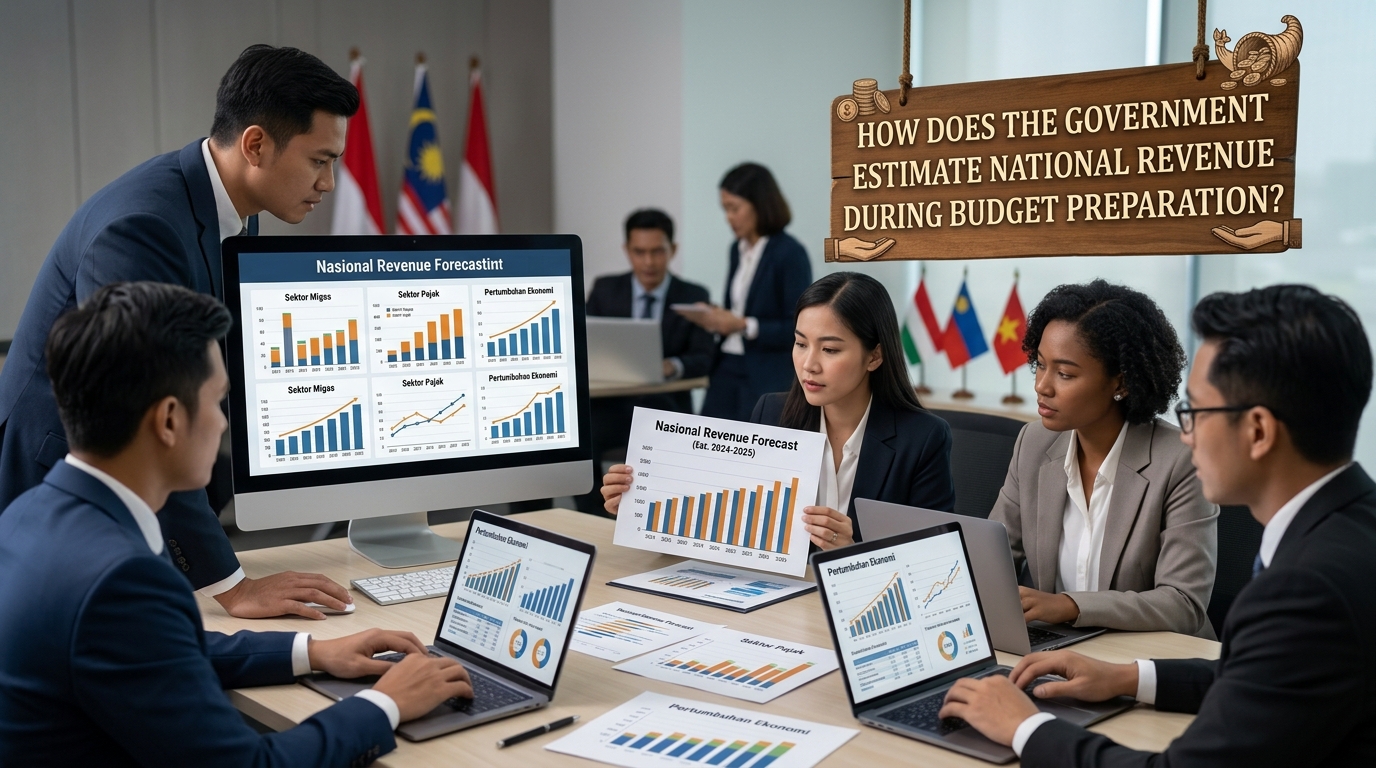
Estimating national revenue is an important step in preparing a state budget because it helps the government determine how much money will be available to finance public programs and national development. The government must calculate expected income carefully to ensure that planned spending matches available financial resources. In Indonesia, this process is part of preparing the State Budget or Anggaran Pendapatan dan Belanja Negara (APBN). Revenue estimates are influenced by economic growth, tax collection, natural resource income, and global market conditions. By using reliable data and realistic forecasts, the government can create a more effective, transparent, and sustainable budget.
UNDERSTANDING THE MAIN SOURCES OF NATIONAL REVENUE
Before estimating national revenue, the government identifies the main sources of money that will enter the state treasury. In Indonesia, state revenue generally consists of tax revenue, non-tax state revenue, and grants. Tax revenue includes income tax, value-added tax, excise, and other taxes collected under applicable laws. Non-tax state revenue can come from natural resources, government services, and other authorized sources, while grants are funds received under specific arrangements. Understanding these sources helps the government estimate how much money may be collected during the next budget year.
ANALYZING ECONOMIC GROWTH AND FINANCIAL CONDITIONS
Economic growth is one of the main factors used to estimate national revenue. When economic activity increases, businesses may earn higher profits, household incomes may rise, and consumer spending may expand. These developments can increase tax collections from individuals, companies, and transactions. The government also considers indicators such as inflation, employment, exchange rates, and interest rates when preparing revenue forecasts. By examining these economic conditions, officials can develop estimates that reflect the country's expected financial performance.
ESTIMATING TAX REVENUE
Tax revenue is a major source of funding for public services and development programs. To estimate future tax collections, the government examines previous revenue data, expected economic activity, tax regulations, and the number of taxpayers who are expected to comply with their obligations. It also considers changes in consumption, imports, business profits, wages, and other activities that affect taxable income. Improvements in tax administration and compliance may increase revenue without requiring every increase to come from higher tax rates. Accurate tax revenue projections help the government plan public spending while maintaining a realistic view of its financial capacity.
CALCULATING NON-TAX STATE REVENUE
Non-tax state revenue, known in Indonesia as Penerimaan Negara Bukan Pajak (PNBP), is another important component of the national revenue estimate. It may come from natural resources, administrative services, government agencies, and other activities regulated by law. The government examines factors such as production volumes, commodity prices, service demand, and applicable fees to estimate this income. For example, changes in global energy prices can influence revenue from certain natural resources. Because some sources fluctuate significantly, careful forecasting is necessary to avoid relying on income that may not materialize.
USING HISTORICAL DATA AND REVENUE TRENDS
Historical revenue data helps the government understand how much money has been collected in previous years. Officials can compare earlier estimates with actual results to identify patterns, forecasting errors, and changes in collection performance. They also review seasonal trends and economic developments that may affect particular revenue sources. However, past performance alone cannot guarantee future results, especially when economic conditions or government policies change. Combining historical data with current economic indicators produces a more reliable basis for national revenue estimates.
CONSIDERING GLOBAL ECONOMIC CONDITIONS
Indonesia participates in international trade and is affected by developments in global financial markets. Changes in commodity prices, international demand, exchange rates, and global economic growth can influence exports, imports, company profits, and state revenue. For instance, higher commodity prices may increase certain resource-related revenues, while weaker global demand can reduce export earnings and related economic activity. The government therefore needs to assess both domestic and international risks when preparing the budget. Global economic analysis helps officials create more realistic forecasts and prepare for possible changes in revenue.
COORDINATING GOVERNMENT INSTITUTIONS
National revenue estimates require coordination among government institutions responsible for economic planning, taxation, customs, and state finances. In Indonesia, the Ministry of Finance plays a central role in preparing fiscal projections and compiling the state budget proposal. Other relevant ministries and agencies provide data about economic conditions, natural resources, and revenue-generating activities within their responsibilities. These institutions review assumptions and estimates to improve consistency across the budget. Coordination helps reduce calculation errors and ensures that revenue projections are supported by relevant information.
REVIEWING AND ADJUSTING REVENUE ESTIMATES
Revenue estimates may need to be revised when economic conditions or collection results differ from initial expectations. The government monitors actual revenue during the year and compares it with the approved budget. If revenue is lower than expected, officials may need to review spending plans or identify lawful financing options. If revenue increases, any additional use of funds must still follow applicable budget rules and approval procedures. Regular monitoring and fiscal evaluation help the government respond to changing conditions while maintaining responsible financial management.
CONCLUSION
The government estimates national revenue by analyzing economic growth, tax collections, non-tax state revenue, historical trends, and global market conditions. It also coordinates with relevant institutions and reviews projections to ensure that the budget is based on realistic assumptions. In Indonesia, these estimates are essential for preparing the APBN and determining how much funding can be allocated to public services and development. Reliable revenue forecasting helps reduce financial uncertainty and supports responsible spending decisions. By combining accurate data, careful analysis, and regular evaluation, the government can prepare a more balanced and sustainable state budget.
Recent Posts

Bagaimana Sistem SKS pada Program Kuliah... 22.11.2026/47 View

How Does Technology Make Daily Evaluation... 21.11.2026/74 View

Apa Strategi Menghadapi Kesenjangan antara Kompetensi... 21.11.2026/76 View

Mengapa Inventaris Aset Penting bagi Kelancaran... 21.11.2026/72 View

When Should Musicians Join a Record... 21.11.2026/76 View
