

How Does the Ishihara Color Blindness Test Work?
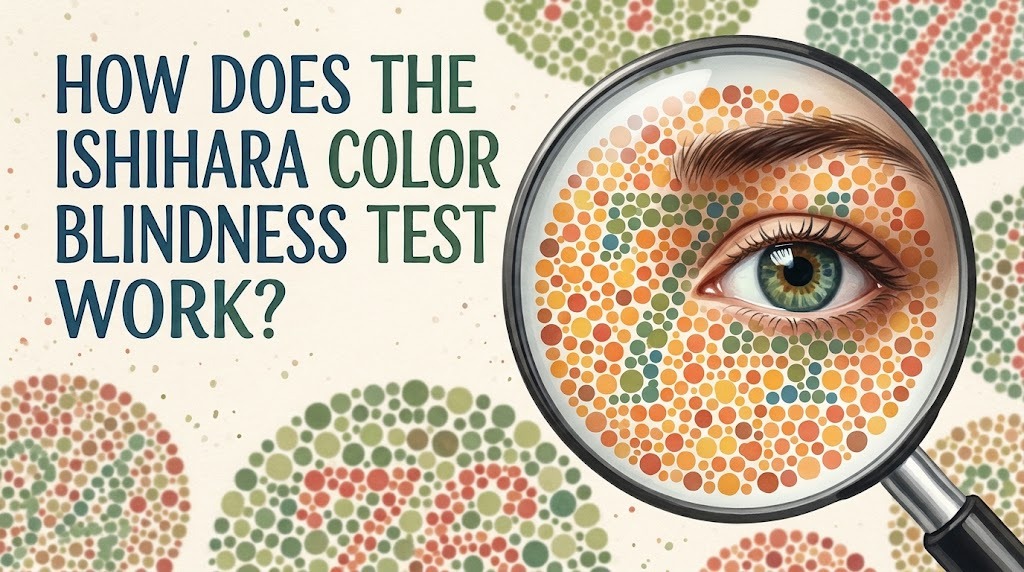
The Ishihara Color Blindness Test is one of the most widely used methods for identifying color vision deficiencies, particularly red-green color blindness. This test uses specially designed images containing colored dots that form numbers, patterns, or shapes. People with normal color vision can generally recognize the hidden figures, while individuals with certain color vision deficiencies may see different numbers or have difficulty identifying them.
The test is commonly used in hospitals, eye clinics, medical examinations, and health screenings. Its simple procedure makes it a practical tool for detecting potential color vision problems without complicated equipment. Understanding how the Ishihara test works can help people recognize the importance of early detection and proper eye examinations.
WHAT IS THE ISHIHARA COLOR BLINDNESS TEST?
The Ishihara Color Blindness Test is a visual examination designed to identify color vision deficiencies, especially difficulties distinguishing between red and green. It was developed by Japanese ophthalmologist Shinobu Ishihara and first introduced in the early twentieth century. The test consists of several circular plates filled with small colored dots arranged in specific patterns. These dots create numbers, lines, or shapes that are easier to recognize for people with normal color vision.
Each plate uses carefully selected color combinations to reveal differences in how individuals perceive certain colors. People with red-green color blindness may have difficulty distinguishing the numbers or patterns because some colors appear similar to them. The test is widely used because it is relatively quick, simple, and does not require advanced medical equipment.
HOW DOES THE ISHIHARA TEST WORK?
The Ishihara test works by presenting a series of colored plates called pseudoisochromatic plates. Each plate contains dots with different sizes, shades, and color intensities. These dots form a hidden number or pattern that the person being examined must identify. The color combinations are specifically designed so that certain visual deficiencies make the hidden figures difficult to distinguish.
During the examination, an eye care professional shows the plates one at a time under appropriate lighting conditions. The person is asked to identify the number, shape, or pattern displayed on each plate within a limited amount of time. Their answers are then compared with the expected responses to determine whether they may have a red-green color vision deficiency.
The test does not directly measure how strongly someone experiences colors. Instead, it identifies specific difficulties in recognizing color differences. This makes it useful as an initial screening method before further examinations are considered.
WHAT TYPES OF PLATES ARE USED IN THE ISHIHARA TEST?
The Ishihara test contains several types of plates, each designed to evaluate different aspects of color perception. Some plates are intended to be visible to people with normal color vision but difficult for individuals with color blindness. Other plates help distinguish between different types of red-green color vision deficiencies. The number and arrangement of plates can vary depending on the version of the test being used.
Common plate types include demonstration plates, transformation plates, vanishing plates, hidden digit plates, and diagnostic plates. Demonstration plates introduce the test and help explain how the examination works. Transformation plates may show different numbers to people with normal vision and those with color vision deficiencies. Vanishing plates are designed so that certain figures become difficult or impossible to recognize for individuals with particular color vision problems.
Hidden digit plates contain figures that may only be visible to people with certain color vision deficiencies. Diagnostic plates provide additional information that helps eye care professionals identify possible patterns of red-green color blindness. Together, these different plate types make the examination more useful for detecting color vision abnormalities.
WHAT HAPPENS DURING AN ISHIHARA COLOR BLINDNESS TEST?
The Ishihara color blindness test is generally performed in a comfortable examination room with suitable lighting. The individual sits at an appropriate distance from the test plates, which are presented by a healthcare professional. Each plate is shown separately, and the person is asked to identify the numbers or patterns they can see. The examiner records each response to evaluate the person's ability to distinguish the displayed colors.
The examination usually takes only a few minutes, depending on the number of plates used. It is non-invasive, painless, and does not require injections, eye drops, or physical contact with the eyes. In some cases, each eye may be examined separately to obtain more detailed information about visual function.
After completing the examination, the healthcare professional evaluates the answers according to the test guidelines. If the results suggest a color vision deficiency, additional examinations may be recommended to understand the condition more accurately. These further assessments can help determine the type and severity of the color vision problem.
HOW ACCURATE IS THE ISHIHARA COLOR BLINDNESS TEST?
The Ishihara test is considered a useful and widely recognized screening method for detecting red-green color vision deficiencies. Its accuracy depends on several factors, including the quality of the test plates, lighting conditions, viewing distance, and the individual's ability to understand the instructions. Properly maintained test materials are important because faded or damaged plates can affect the results. Following the correct examination procedure also helps reduce the possibility of inaccurate findings.
However, the Ishihara test does not detect every type of color vision deficiency. It is primarily designed to identify red-green color blindness and is less suitable for detecting blue-yellow color vision problems. It also cannot always determine the exact severity of a person's condition.
For this reason, an abnormal result should not automatically be considered a final diagnosis. An eye care professional may recommend additional tests, such as the Farnsworth D-15 or other specialized color vision assessments. Combining different examinations can provide a more complete understanding of an individual's color perception.
CONCLUSION
The Ishihara Color Blindness Test works by using specially designed colored plates containing hidden numbers, shapes, or patterns to identify difficulties in color perception. It is particularly effective as a screening method for detecting red-green color blindness. The examination is simple, painless, and generally takes only a few minutes to complete.
Although the test provides valuable information about color vision, it does not identify every type of color blindness or determine all aspects of its severity. Anyone who experiences difficulty distinguishing colors or receives an unusual test result should consider consulting an eye care professional. Early detection can help individuals better understand their visual condition and make appropriate adjustments to their daily activities.
Recent Posts

Bagaimana Sistem SKS pada Program Kuliah... 22.11.2026/42 View

How Does Technology Make Daily Evaluation... 21.11.2026/72 View

Apa Strategi Menghadapi Kesenjangan antara Kompetensi... 21.11.2026/74 View

Mengapa Inventaris Aset Penting bagi Kelancaran... 21.11.2026/70 View

When Should Musicians Join a Record... 21.11.2026/73 View
