

How Does the MAPSI Competition Improve Students Confidence and Courage?
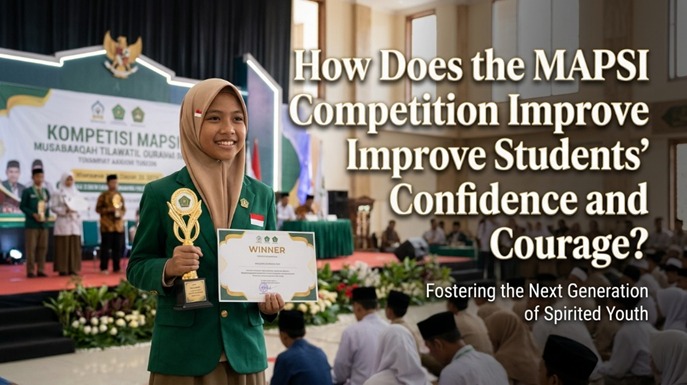
The MAPSI Competition is more than an academic event where students demonstrate their Islamic knowledge and talents. It is also an opportunity to develop important personal qualities, especially self-confidence, courage, independence, and communication skills. Through various competitions, students are encouraged to challenge themselves, express their abilities, and gain valuable experiences.
For many students, participating in a competition can feel challenging, particularly when they have to perform in front of an audience or compete with other talented participants. However, these experiences can help them overcome fear, recognize their potential, and become more confident in their abilities. So, how does the MAPSI Competition improve students confidence and courage? Here are some important ways this competition contributes to students' personal development.
1. PROVIDING OPPORTUNITIES TO SHOWCASE STUDENTS' ABILITIES
One of the main ways the MAPSI Competition builds confidence is by providing students with opportunities to demonstrate their knowledge, skills, and talents. Through different competition categories, students can show what they have learned in Islamic education, including religious understanding, artistic abilities, and practical skills.
When students receive the opportunity to perform or present their abilities, they gradually become more comfortable expressing themselves. They also learn that everyone has different strengths and that their abilities deserve appreciation. This experience helps students develop a positive view of themselves and become more confident when facing new challenges.
2. TRAINING COURAGE TO PERFORM IN FRONT OF AN AUDIENCE
Performing in front of an audience can be intimidating, especially for students who are not accustomed to public appearances. The MAPSI Competition provides valuable opportunities to practice performing in public, whether through religious speeches, Quran recitation, or other performance-based activities.
By participating, students learn to control nervousness and focus on delivering their best performance. Repeated practice also helps reduce the fear of making mistakes or receiving attention from others. Over time, these experiences encourage students to become more brave, confident, and comfortable speaking or performing in public.
3. DEVELOPING BETTER COMMUNICATION SKILLS
Good communication skills are essential for building confidence in academic and social environments. During the MAPSI Competition, students may need to communicate with teachers, judges, fellow participants, and audiences. These interactions help them practice expressing ideas, responding to questions, and delivering information clearly.
Furthermore, students learn how to communicate respectfully and appropriately in different situations. They become more familiar with expressing their opinions without feeling excessively worried about how others will respond. These skills are useful not only during competitions but also in classroom discussions, school activities, and everyday social interactions.
4. TEACHING STUDENTS TO OVERCOME FEAR AND SELF-DOUBT
Many students experience fear of failure, nervousness, and self-doubt when facing unfamiliar situations. The MAPSI Competition encourages them to challenge these feelings by taking part in activities that require preparation, effort, and courage.
Through the competition process, students discover that making mistakes is a normal part of learning. They also understand that success does not always mean winning first place. Having the courage to participate, try something new, and complete a challenging performance is already a valuable achievement. This mindset helps students develop greater mental strength and a more positive attitude toward future challenges.
5. BUILDING A SENSE OF ACHIEVEMENT AND SELF-APPRECIATION
Participating in the MAPSI Competition allows students to experience the satisfaction of achieving personal goals. Whether they win an award, improve their performance, or successfully complete a competition, every positive experience can strengthen their confidence.
Recognition from teachers, parents, and fellow students can also motivate participants to appreciate their efforts. However, students should understand that their value is not determined only by competition results. Personal progress, dedication, and willingness to learn are equally important achievements that deserve appreciation.
6. ENCOURAGING INDEPENDENCE AND RESPONSIBILITY
Preparing for the MAPSI Competition requires students to take responsibility for their own learning and performance. They need to manage practice schedules, understand competition materials, and improve their abilities through consistent preparation.
These activities teach students to become more independent instead of relying entirely on teachers or parents. They also learn to make decisions, manage their time, and remain committed to their goals. As a result, students become more confident in handling responsibilities and facing situations that require individual effort.
7. CREATING OPPORTUNITIES TO LEARN FROM OTHER PARTICIPANTS
The MAPSI Competition brings together students with different abilities, experiences, and backgrounds. Meeting other participants gives students opportunities to build friendships, exchange knowledge, and observe different ways of performing.
By interacting with others, students can recognize their strengths while identifying areas that need improvement. They also learn that competition does not always have to involve rivalry. Instead, it can become a positive environment for mutual learning, respect, and personal growth. These experiences help students become more open-minded and confident when interacting with new people.
8. DEVELOPING A POSITIVE ATTITUDE TOWARD CHALLENGES
Confidence and courage grow when students are willing to face situations outside their comfort zones. The MAPSI Competition introduces challenges that encourage students to practice, prepare seriously, and perform to the best of their abilities.
Students gradually understand that challenges are opportunities to improve rather than reasons to give up. They learn to remain optimistic when facing difficulties and to evaluate their experiences constructively. This positive attitude can help them become more resilient, motivated, and confident in pursuing their academic and personal goals.
CONCLUSION
The MAPSI Competition plays an important role in developing students' confidence and courage through meaningful learning experiences. By showcasing their abilities, performing in public, improving communication skills, and overcoming fear, students gain valuable opportunities to develop their personalities.
More importantly, the competition teaches students that confidence does not appear instantly but grows through preparation, practice, and experience. Winning is certainly an achievement, but having the courage to participate and continuously improve is equally meaningful. With these experiences, students can become more independent, responsible, and confident individuals who are ready to face challenges in school and everyday life.
Recent Posts

How Does Technology Make Daily Evaluation... 21.11.2026/62 View

Apa Strategi Menghadapi Kesenjangan antara Kompetensi... 21.11.2026/63 View

Mengapa Inventaris Aset Penting bagi Kelancaran... 21.11.2026/59 View

When Should Musicians Join a Record... 21.11.2026/58 View

Daily Evaluation or Daily Planning Which... 21.11.2026/66 View
