

How Does the Social Media Algorithm Determine Content That Attracts Users?
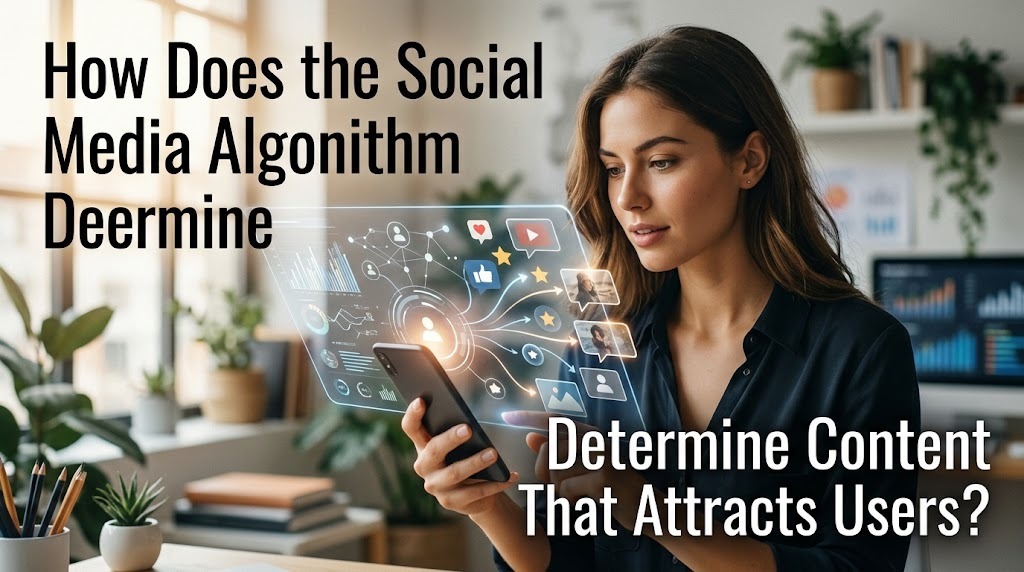
Social media platforms contain an enormous amount of content that is uploaded every day. Because users cannot see all available posts at once, platforms use social media algorithms to select and organize content that is considered relevant. These algorithms analyze different signals, including user interactions, viewing behavior, content characteristics, and previous interests. As a result, two users may see completely different content even when they use the same platform.
Understanding how algorithms determine attractive content is important for both users and content creators. It helps users understand why certain posts repeatedly appear on their feeds while other content receives less attention. For creators, this knowledge can support better decisions when developing content and building audience engagement.
HOW SOCIAL MEDIA ALGORITHMS UNDERSTAND USER INTERESTS
A social media algorithm observes various forms of user behavior to estimate what type of content a person may find interesting. These signals can include likes, comments, shares, saves, follows, searches, and the amount of time a user spends viewing a particular post. Watching a video until the end, for example, can indicate stronger interest than immediately scrolling past it. The algorithm combines these signals to build a general understanding of a user's preferences.
The system can also consider the relationship between users and content creators. If someone regularly interacts with posts from a particular account, the platform may consider future content from that account more relevant. However, this does not mean that every interaction automatically guarantees high visibility. Algorithms usually evaluate multiple signals together before deciding which content should receive greater exposure.
HOW CONTENT RELEVANCE AFFECTS USER ATTENTION
Content that matches a user's interests has a greater opportunity to attract attention. Relevance can come from the topic, format, language, previous interactions, or similarities with content that the user has already consumed. For example, someone who frequently watches educational videos may receive more recommendations related to learning, technology, or career development. This process allows platforms to create a more personalized experience.
However, relevance alone is not enough to make content successful. The content also needs to provide something that encourages users to stop scrolling and pay attention. A clear message, useful information, strong visual presentation, or interesting opening can increase the possibility that users will continue viewing the content. Therefore, creators should focus on audience needs rather than simply trying to satisfy the algorithm.
WHY USER INTERACTIONS ARE IMPORTANT
User interactions are among the important signals that can help an algorithm evaluate how people respond to content. Likes can indicate appreciation, comments may show that a topic encourages discussion, and shares can suggest that users consider the content valuable enough to recommend to others. Saves can also indicate that users want to return to the information later. These different actions provide useful signals about content performance.
The type and quality of interaction can also matter more than simply collecting a large number of reactions. Content that encourages meaningful discussions or provides useful information may generate stronger audience responses than content that receives passive views. For this reason, creators should develop content that naturally invites meaningful engagement instead of using artificial methods to generate interactions.
HOW CONTENT QUALITY SUPPORTS ALGORITHM RECOMMENDATIONS
Algorithms are designed to help users discover content that is potentially relevant and engaging, but creators still have an important role in determining whether people respond positively. Content quality includes factors such as accuracy, originality, clarity, usefulness, and presentation. A well-produced post may attract attention initially, while valuable information can encourage users to watch, read, save, or share it. Combining these elements can create a stronger overall content experience.
Creators should also pay attention to consistency and audience expectations. Posting content with a clear theme can make it easier for audiences to understand what an account offers. At the same time, creators should avoid producing repetitive content only because a particular format previously performed well. Original and useful content can help maintain audience interest while allowing creators to experiment with new approaches.
HOW CREATORS CAN ADAPT TO SOCIAL MEDIA ALGORITHMS
Creators do not need to know the exact technical formula used by every platform to improve their content strategy. Instead, they can observe performance data and identify patterns in what their audience responds to. Metrics such as views, watch time, comments, shares, saves, and audience retention can provide valuable information. This data can then be used to improve future content without relying entirely on assumptions.
Creators should also prioritize audience value over chasing algorithmic trends. Trends can provide opportunities to reach new people, but they may not always match the identity or purpose of an account. A better approach is to combine relevant trends with useful and original ideas. By maintaining consistency, understanding the audience, and evaluating performance regularly, creators can adapt to algorithm changes more effectively.
CONCLUSION
The social media algorithm determines potentially attractive content by analyzing many signals related to user interests, interactions, content relevance, and viewing behavior. It does not simply choose content based on the number of likes or followers. Instead, platforms can combine multiple types of information to predict what users may want to see and interact with.
For creators, understanding this process can help them produce more relevant and valuable content. Quality, relevance, originality, and meaningful engagement remain important elements of a strong content strategy. Rather than attempting to manipulate the algorithm, creators should focus on understanding their audience and consistently providing content that deserves attention.
Recent Posts

Bagaimana Sistem SKS pada Program Kuliah... 22.11.2026/34 View

How Does Technology Make Daily Evaluation... 21.11.2026/68 View

Apa Strategi Menghadapi Kesenjangan antara Kompetensi... 21.11.2026/68 View

Mengapa Inventaris Aset Penting bagi Kelancaran... 21.11.2026/66 View

When Should Musicians Join a Record... 21.11.2026/67 View
