

How Does the Student Senate Encourage Critical Thinking and Leadership Among Students?
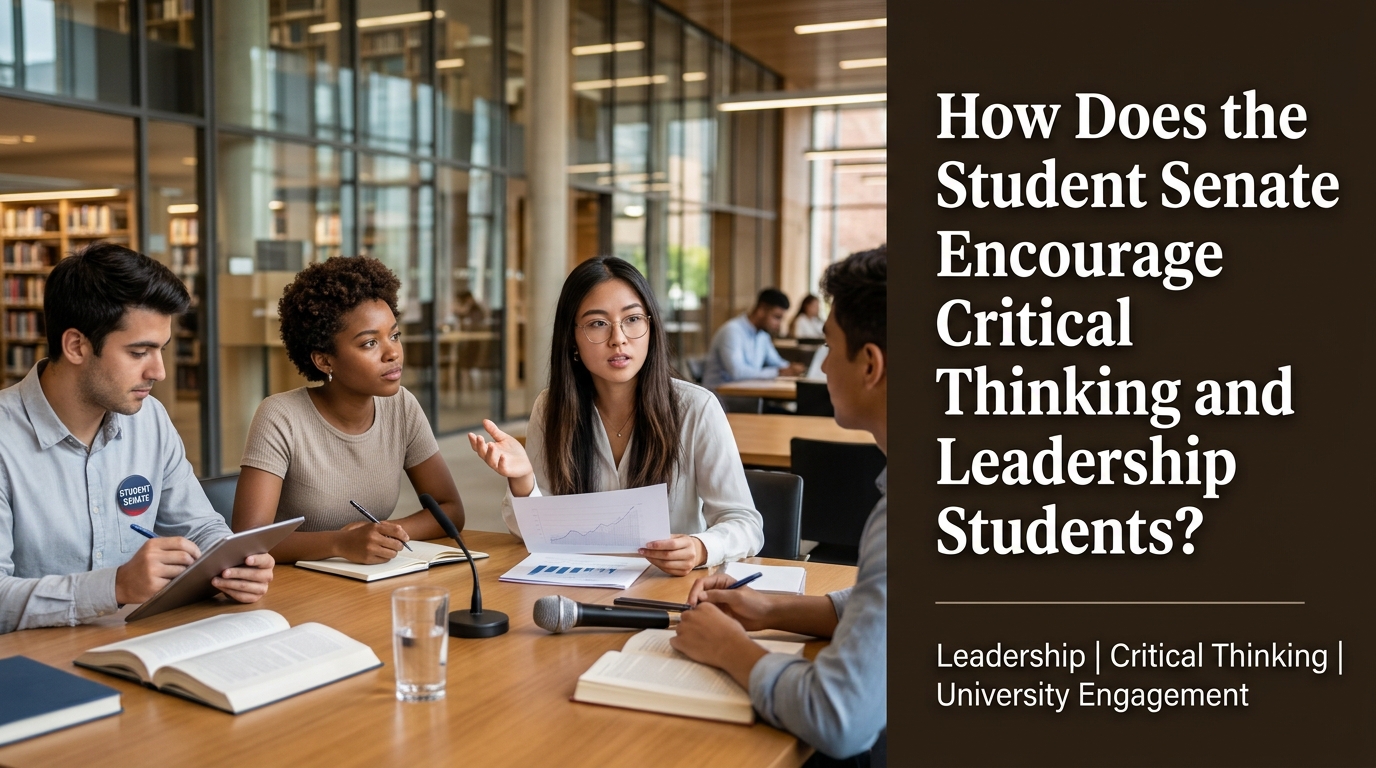
The student senate plays an important role in developing students beyond their academic achievements. As a representative organization, it provides opportunities for students to express opinions, discuss campus issues, participate in decision-making, and work together to achieve common goals. These activities help students develop essential abilities that are useful in university life and future careers. Two of the most important abilities strengthened through student senate involvement are critical thinking and leadership skills.
Through organizational activities, discussions, policy evaluations, and student representation, the student senate encourages students to become more independent, responsible, and confident. Members learn how to analyze problems, consider different perspectives, communicate ideas, and make decisions based on relevant information. These experiences also help students understand the importance of teamwork, accountability, and ethical leadership. Therefore, the student senate can become an effective environment for developing future leaders and thoughtful decision-makers.
PROVIDING OPPORTUNITIES FOR OPEN DISCUSSIONS
Open discussions are one of the most effective ways the student senate encourages critical thinking among students. During meetings and discussion forums, members have opportunities to express opinions, present arguments, and respond to different perspectives. They learn that a single issue may have several possible explanations and solutions. This experience encourages students to think more carefully before accepting information or making conclusions.
Furthermore, open discussions teach students to support their opinions with logical arguments and relevant evidence. Members must learn to listen respectfully, ask meaningful questions, and consider alternative viewpoints. These habits help them develop analytical thinking and communication skills. As a result, students become more confident in expressing ideas while remaining open to constructive criticism.
INVOLVING STUDENTS IN DECISION-MAKING PROCESSES
The student senate encourages leadership and critical thinking by involving members in organizational decision-making. Students may participate in determining program priorities, evaluating proposals, discussing organizational regulations, and identifying solutions to campus problems. These responsibilities require them to consider different factors before choosing an appropriate course of action. They also learn that decisions can affect many people, not just individual interests.
Through this process, students develop decision-making abilities and a sense of responsibility. They learn to compare alternatives, evaluate possible consequences, and consider the needs of the wider student community. Leadership also develops when members take responsibility for explaining and implementing decisions. These experiences prepare students to handle responsibilities in academic, organizational, and professional environments.
DEVELOPING PROBLEM-SOLVING SKILLS THROUGH REAL CAMPUS ISSUES
The student senate often deals with practical issues involving academic services, campus facilities, student welfare, and organizational activities. These challenges provide opportunities for students to practice identifying problems and developing realistic solutions. Instead of responding based on assumptions, members learn to collect information, examine possible causes, and understand the perspectives of affected students.
Problem-solving activities also encourage creative and logical thinking. Members may discuss several possible solutions before deciding which approach is most appropriate. They must consider available resources, institutional regulations, and the potential impact of their recommendations. By working through real challenges, students develop the confidence to face complex situations and make thoughtful decisions.
PROVIDING LEADERSHIP OPPORTUNITIES AND ORGANIZATIONAL RESPONSIBILITIES
One of the main ways the student senate develops leadership is by giving members opportunities to take responsibility for organizational activities. Students may become committee coordinators, project leaders, meeting facilitators, or representatives in discussions with university management. Each role requires different abilities, including planning, communication, coordination, and problem-solving. These responsibilities allow students to understand how leadership works in practical situations.
Through direct experience, members learn that effective leadership involves responsibility rather than authority alone. They must guide others, distribute tasks fairly, monitor progress, and help their teams achieve shared objectives. They also learn to remain accountable when activities do not go according to plan. Such experiences encourage students to become more independent, disciplined, and confident when leading others.
ENCOURAGING TEAMWORK AND COLLABORATION
Teamwork is an important part of student senate activities because organizational goals cannot be achieved through individual efforts alone. Members must cooperate when preparing programs, discussing student concerns, and organizing institutional activities. Working with people who have different backgrounds and opinions encourages students to understand various perspectives. This interaction helps them become more flexible and respectful when dealing with differences.
Collaboration also strengthens leadership and interpersonal skills. Students learn how to delegate responsibilities, support their teammates, manage disagreements, and maintain productive relationships. They discover that successful leadership requires the ability to motivate others and recognize individual contributions. These experiences help create students who can work effectively in diverse academic and professional environments.
STRENGTHENING PUBLIC SPEAKING AND CONFIDENCE
Student senate members often participate in meetings, presentations, public discussions, and formal consultations. These activities provide opportunities to practice expressing ideas in front of different audiences. Students learn how to organize their thoughts, explain arguments clearly, and respond to questions with confidence. Regular practice can gradually reduce nervousness when speaking in public.
In addition, public speaking helps students develop self-confidence and persuasive communication skills. They learn to present information using clear explanations and relevant supporting arguments. These abilities are especially useful when representing student interests or presenting organizational recommendations to university administrators. Greater confidence also encourages students to participate more actively in academic discussions and other campus activities.
PROMOTING ETHICAL LEADERSHIP AND ACCOUNTABILITY
Critical thinking and leadership are more effective when supported by strong ethical values. The student senate can teach students to make decisions based on fairness, honesty, and consideration for others. Members are expected to respect organizational regulations, avoid abusing their authority, and prioritize collective interests over personal benefits. These principles help students understand the importance of ethical behavior in leadership positions.
Accountability and integrity are also developed when members are responsible for their decisions and assigned tasks. They should communicate organizational progress honestly, accept constructive criticism, and acknowledge mistakes when necessary. Students learn that good leadership requires transparency and consistency between words and actions. These values can guide them when taking responsibility in future professional and community environments.
PROVIDING TRAINING AND PERSONAL DEVELOPMENT PROGRAMS
The student senate can strengthen student abilities through structured training and personal development activities. Workshops, leadership seminars, organizational training, and public speaking sessions can introduce students to practical knowledge and useful skills. Topics may include critical thinking, negotiation, conflict resolution, time management, and strategic planning. These programs help members understand organizational responsibilities more effectively.
Training should also be supported by practical experience so students can apply what they have learned. For example, participants can practice leading discussions, analyzing case studies, and preparing solutions to organizational problems. Regular evaluation and feedback can help identify areas that need improvement. Through continuous learning and personal development, student senate members can improve their leadership abilities and become more effective representatives.
PREPARING STUDENTS FOR FUTURE CAREER AND SOCIAL RESPONSIBILITIES
The abilities developed through student senate involvement are valuable beyond university life. Critical thinking helps students analyze workplace challenges, evaluate information, and make decisions based on evidence. Leadership skills prepare them to coordinate teams, manage responsibilities, and communicate with different individuals. These abilities are relevant in many professional fields and community activities.
Furthermore, student senate experience encourages professionalism, adaptability, and social responsibility. Students become more familiar with teamwork, organizational planning, negotiation, and ethical decision-making. They also develop a better understanding of how to represent the interests of others and contribute to shared goals. These experiences can provide a strong foundation for future careers and active participation in society.
CONCLUSION
The student senate encourages critical thinking and leadership among students by providing opportunities to participate in discussions, decision-making, problem-solving, and organizational activities. Through these experiences, students learn to analyze information, communicate ideas, cooperate with others, and take responsibility for their actions. Leadership opportunities also help them develop confidence, accountability, and ethical values.
Ultimately, student senate involvement is an important learning experience beyond the classroom. Students can develop practical abilities by actively participating in organizational activities and learning from real challenges. With continuous practice, constructive guidance, and a commitment to personal development, the student senate can help prepare students to become critical thinkers, responsible leaders, and valuable contributors to society.
Recent Posts

Bagaimana Sistem SKS pada Program Kuliah... 22.11.2026/34 View

How Does Technology Make Daily Evaluation... 21.11.2026/68 View

Apa Strategi Menghadapi Kesenjangan antara Kompetensi... 21.11.2026/68 View

Mengapa Inventaris Aset Penting bagi Kelancaran... 21.11.2026/66 View

When Should Musicians Join a Record... 21.11.2026/67 View
