

How Does the Student Senate Monitor the Performance of Student Organizations?
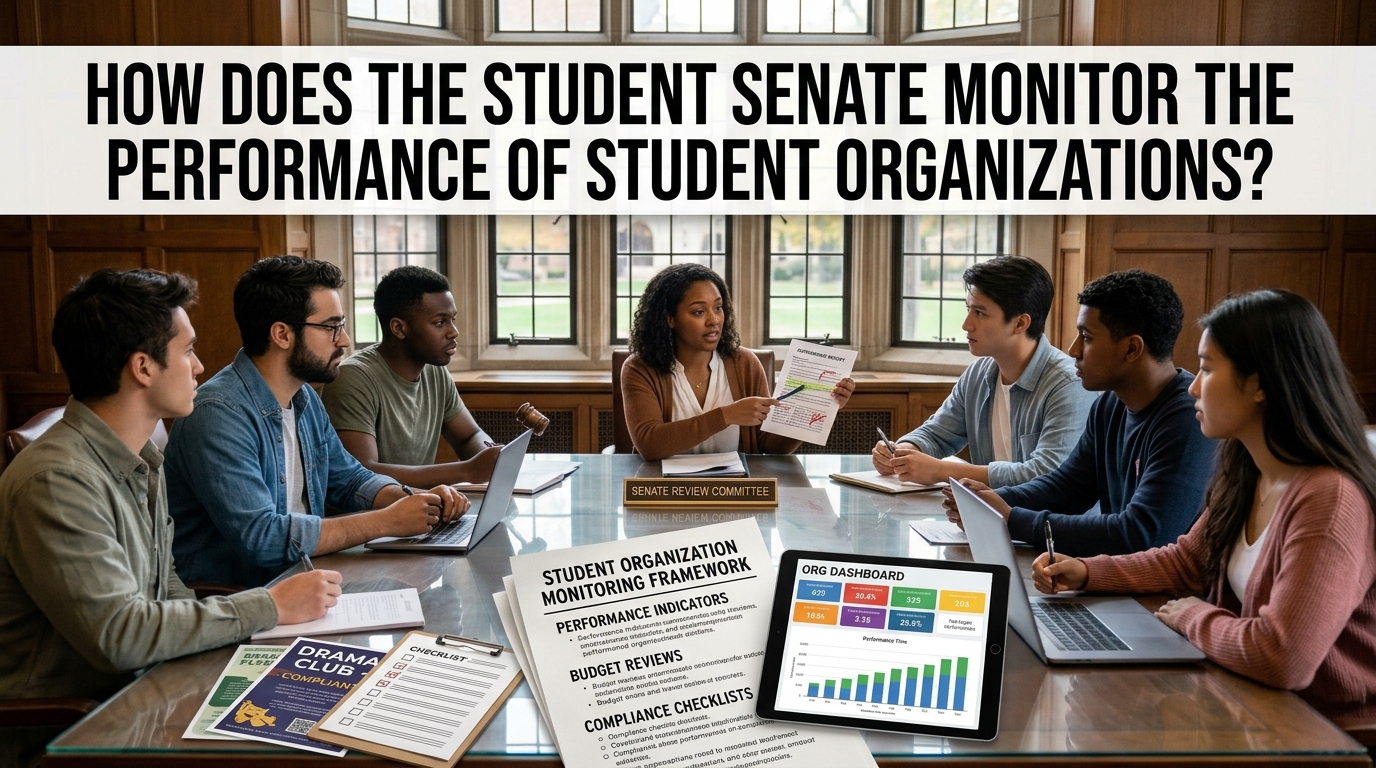
Student organizations play an important role in creating an active and productive campus environment. They provide opportunities for students to develop leadership, teamwork, communication, and organizational skills. However, these organizations need proper guidance and evaluation to ensure that their activities follow university regulations and benefit their members. The Student Senate can help monitor their performance by reviewing programs, evaluating activities, and encouraging responsible organizational management. Through a transparent monitoring process, student organizations can become more effective, accountable, and responsive to student needs.
ESTABLISHING PERFORMANCE STANDARDS FOR STUDENT ORGANIZATIONS
The first step in monitoring student organizations is establishing clear performance standards. The Student Senate can work with relevant university departments to identify expectations for organizational activities, leadership responsibilities, financial management, and member participation. These standards help organizations understand their responsibilities and the results they are expected to achieve. They can also serve as guidelines for evaluating whether programs are implemented properly. Clear expectations make the monitoring process more consistent and objective.
Performance standards should consider the different purposes and characteristics of each organization. For example, an academic club may focus on research activities and educational discussions, while an arts organization may prioritize creative events and performances. The Student Senate should therefore use relevant evaluation criteria rather than applying exactly the same measurements to every organization. Fair and measurable standards help ensure that each organization is assessed according to its goals and responsibilities.
REVIEWING WORK PROGRAMS AND ACTIVITIES
The Student Senate can monitor organizational performance by reviewing proposed work programs before they are implemented. Organizations may be asked to submit activity plans that explain their objectives, schedules, budgets, target participants, and expected outcomes. This process allows the senate to check whether planned activities are relevant, realistic, and consistent with campus regulations. It can also identify overlapping programs or potential problems before activities begin. Program reviews help organizations prepare more organized and beneficial activities.
After programs have been completed, organizations can submit reports explaining what was achieved and whether the original objectives were met. These reports may include attendance records, activity documentation, participant feedback, and financial summaries. The Student Senate can compare the results with the original plans to identify strengths and weaknesses. This evaluation helps determine whether activities have provided meaningful benefits to students. It also encourages organizations to improve the quality of their future programs.
EVALUATING ORGANIZATIONAL REPORTS AND DOCUMENTATION
Regular reporting is an important part of organizational accountability. The Student Senate can require student organizations to prepare periodic reports about their activities, membership, achievements, and challenges. These documents provide information about how an organization operates throughout its management period. They also help the senate identify organizations that need additional guidance or administrative support. Complete and accurate documentation makes performance evaluation more reliable.
The evaluation should consider both the quality and consistency of submitted reports. For example, the senate can check whether activities were carried out according to the approved plans and whether the organization provided sufficient supporting documents. If important information is missing, the organization should receive an opportunity to clarify or complete its report. The purpose is not simply to find mistakes but to encourage better management practices. Regular documentation also helps preserve organizational knowledge when leadership changes.
MONITORING FINANCIAL MANAGEMENT AND TRANSPARENCY
Financial management is another important area that the Student Senate may monitor within its authorized responsibilities. Student organizations often receive funding from university allocations, membership contributions, sponsorships, or other permitted sources. The senate can review financial reports to ensure that funds are used according to approved budgets and university policies. Organizations should provide clear records of income, expenses, and supporting receipts. Financial transparency helps prevent misunderstandings and builds trust among members and the university community.
The monitoring process should also encourage responsible budgeting and proper financial planning. If an organization spends more or less than expected, it should explain the reasons in its financial report. Any suspected financial irregularities should be handled through established university procedures and the appropriate authorities. The Student Senate should not make accusations without sufficient evidence or exceed its official authority. Accountable financial practices help protect organizational resources and ensure that funding supports student activities.
COLLECTING FEEDBACK FROM MEMBERS AND STUDENTS
Performance cannot be measured only through reports and administrative documents. The Student Senate should also consider the experiences of students who participate in organizational activities. Feedback can be collected through surveys, open discussions, interviews, or evaluation forms. Students can share their opinions about program quality, leadership, communication, and the benefits they receive. Student feedback provides valuable information about how well an organization serves its members.
The senate can also provide a channel for students to report concerns about organizational activities or management. These concerns should be handled fairly, confidentially when appropriate, and according to applicable campus procedures. The organization involved should have an opportunity to respond and explain its position. By considering different perspectives, the Student Senate can make more balanced evaluations. Open communication helps create a healthier organizational environment and encourages continuous improvement.
ASSESSING LEADERSHIP AND MEMBER PARTICIPATION
Strong leadership is essential for maintaining an effective student organization. The Student Senate can evaluate how organizational leaders communicate with members, distribute responsibilities, make decisions, and manage internal challenges. It can also examine whether leaders follow the organization's rules and respect the rights of its members. Responsible leadership supports cooperation and helps prevent unnecessary conflicts. Effective leaders should also encourage members to participate actively in organizational activities.
Member participation is another important indicator of organizational performance. An organization that consistently involves its members may have stronger teamwork and a more active campus presence. The senate can review attendance, volunteer involvement, member development, and opportunities for students to contribute ideas. However, participation should not be judged only by the number of attendees because the quality of involvement also matters. Inclusive leadership and meaningful participation help organizations remain active and beneficial to their members.
PROVIDING GUIDANCE AND RECOMMENDATIONS FOR IMPROVEMENT
Monitoring should not focus only on identifying weaknesses or administrative violations. The Student Senate should also provide constructive recommendations that help organizations improve their performance. For example, an organization with poor activity planning may need training in project management, while one with weak communication may benefit from leadership or teamwork workshops. These recommendations should be based on evaluation results and the actual needs of each organization. Constructive guidance makes monitoring more useful and supportive.
The senate can also organize coordination meetings where organizations share experiences, discuss challenges, and learn from successful programs. Collaboration between organizations can encourage new ideas and reduce unnecessary competition. If an organization repeatedly fails to meet its responsibilities, the senate may recommend further evaluation or refer the matter to the appropriate university authority. Any corrective action should follow established regulations and provide a fair process. This approach balances accountability with organizational development.
USING PERFORMANCE INDICATORS AND REGULAR EVALUATION
Performance indicators help the Student Senate evaluate organizations using more objective measurements. These indicators may include the number of completed programs, member participation, achievement of organizational goals, quality of reports, and student satisfaction. The senate can compare these results with the organization's original work plan. However, indicators should be adjusted to reflect the organization's specific objectives and available resources. Relevant performance measurements make evaluations more accurate and meaningful.
Regular evaluations are also necessary because organizational performance can change over time. The Student Senate can conduct reviews at the beginning, middle, and end of a management period, depending on campus regulations. Early evaluations help identify problems before they become more serious, while final evaluations provide lessons for future leadership. The results should be communicated clearly to the organizations concerned. Consistent evaluation encourages organizations to maintain their responsibilities and improve their performance over time.
CONCLUSION
The Student Senate monitors the performance of student organizations through work program reviews, report evaluations, financial monitoring, student feedback, and leadership assessments. It can also establish performance standards, provide constructive recommendations, and encourage regular organizational evaluation. These activities help ensure that student organizations operate responsibly and provide meaningful benefits to the campus community. However, effective monitoring requires fairness, transparency, clear standards, and respect for university regulations. When carried out properly, the Student Senate can help create stronger, more accountable, and more productive student organizations.
Recent Posts

Bagaimana Sistem SKS pada Program Kuliah... 22.11.2026/35 View

How Does Technology Make Daily Evaluation... 21.11.2026/69 View

Apa Strategi Menghadapi Kesenjangan antara Kompetensi... 21.11.2026/69 View

Mengapa Inventaris Aset Penting bagi Kelancaran... 21.11.2026/67 View

When Should Musicians Join a Record... 21.11.2026/68 View
