

How Does Traditional Music Reflect Indonesia's Cultural Diversity?
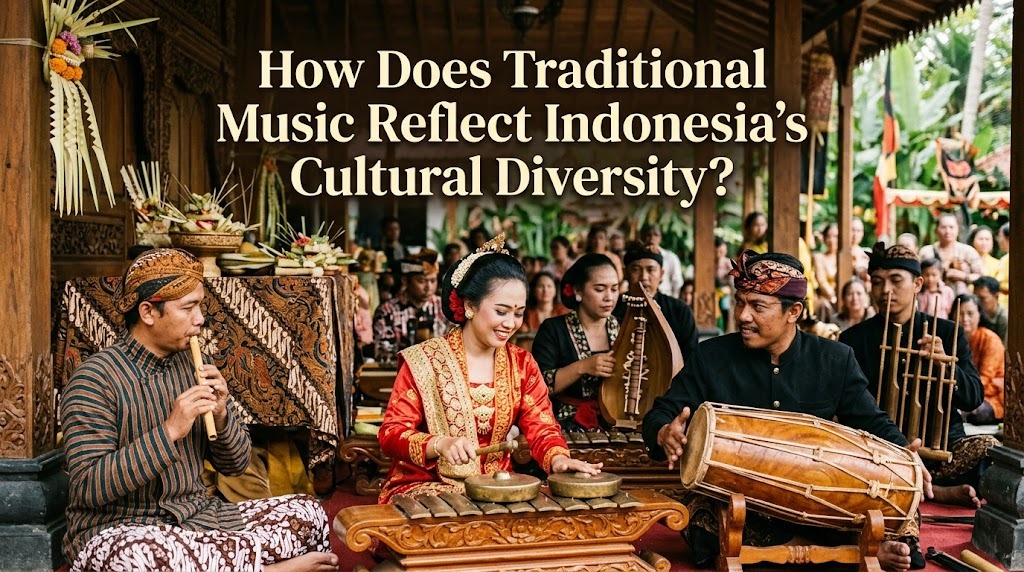
Traditional music reflects Indonesia's cultural diversity through its unique instruments, rhythms, languages, and performance styles. Each region has musical traditions that express local identity, history, beliefs, and community values. From gamelan in Java and Bali to angklung in West Java and sasando in East Nusa Tenggara, Indonesian traditional music shows how different communities preserve their cultural heritage. These musical traditions also demonstrate how diversity contributes to Indonesia's national identity.
TRADITIONAL MUSIC SHOWS REGIONAL IDENTITIES
Indonesia consists of many ethnic groups with distinct cultural characteristics. Traditional music helps each community express its identity through distinctive melodies, instruments, and musical techniques. For example, Javanese gamelan is known for its layered sounds and is often performed during cultural ceremonies and traditional performances. Balinese gamelan is frequently associated with energetic rhythms, dance, and religious celebrations. These differences show how music reflects the customs and lifestyles of individual regions.
MUSICAL INSTRUMENTS REPRESENT CULTURAL HERITAGE
Traditional musical instruments are important symbols of Indonesia's cultural heritage. Many instruments are made from locally available materials and reflect the creativity of the communities that developed them. Angklung, made from bamboo, produces musical notes when shaken and is closely associated with West Java. Sasando, a traditional string instrument from Rote Island in East Nusa Tenggara, has a distinctive sound and construction. Instruments such as these help preserve local knowledge and allow younger generations to learn about their cultural roots.
TRADITIONAL SONGS PRESERVE LANGUAGES AND STORIES
Traditional songs often use regional languages to communicate stories, emotions, advice, and community experiences. Their lyrics may describe nature, family relationships, historical events, or everyday life. Songs passed down through generations help maintain local languages and preserve knowledge that might otherwise be forgotten. Different singing styles and melodies also reflect the values and experiences of particular communities. In this way, traditional music becomes a living record of Indonesia's cultural diversity.
MUSIC PLAYS AN IMPORTANT ROLE IN CEREMONIES
Traditional music is often performed during weddings, religious celebrations, harvest festivals, and other community events. The instruments and musical styles used can differ depending on the region and the purpose of the ceremony. Music may accompany traditional dances, welcome guests, or create a meaningful atmosphere during important rituals. These performances show the relationship between music, social traditions, and spiritual beliefs. By continuing to perform traditional music, communities help maintain customs and strengthen relationships between generations.
CULTURAL EXCHANGE CREATES MUSICAL DIVERSITY
Indonesia's position along historical trade routes encouraged interaction among different communities and cultures. Over time, these connections influenced local musical instruments, melodies, and performance practices. Some traditional musical forms reflect a combination of local traditions and outside influences that developed through long-term cultural contact. Despite these exchanges, communities have adapted musical elements to their own identities and artistic preferences. This process demonstrates that cultural diversity can grow through interaction while maintaining distinctive local characteristics.
TRADITIONAL MUSIC CONNECTS YOUNGER GENERATIONS WITH CULTURE
Traditional music helps young people understand and appreciate the cultural heritage of their communities. Schools, cultural organizations, and local artists can introduce traditional instruments and songs through lessons, workshops, and performances. Digital platforms also allow musicians to share traditional music with wider audiences. However, modern adaptations should respect the origins and meanings of the musical traditions they use. When young people actively learn and perform traditional music, they help ensure that cultural knowledge continues to develop across generations.
CONCLUSION
Traditional music reflects Indonesia's cultural diversity through regional identities, musical instruments, languages, ceremonies, and historical influences. Each musical tradition offers insight into the experiences and values of the community that maintains it. Although musical styles differ across the archipelago, they collectively contribute to Indonesia's rich cultural heritage. Preserving traditional music through education, community participation, and responsible innovation helps keep these traditions alive. By appreciating the country's musical diversity, Indonesians can strengthen cultural understanding and national unity.
Recent Posts

Bagaimana Sistem SKS pada Program Kuliah... 22.11.2026/49 View

How Does Technology Make Daily Evaluation... 21.11.2026/77 View

Apa Strategi Menghadapi Kesenjangan antara Kompetensi... 21.11.2026/78 View

Mengapa Inventaris Aset Penting bagi Kelancaran... 21.11.2026/74 View

When Should Musicians Join a Record... 21.11.2026/79 View
