

How Does Traffic Congestion Affect Working Hours and Family Life?
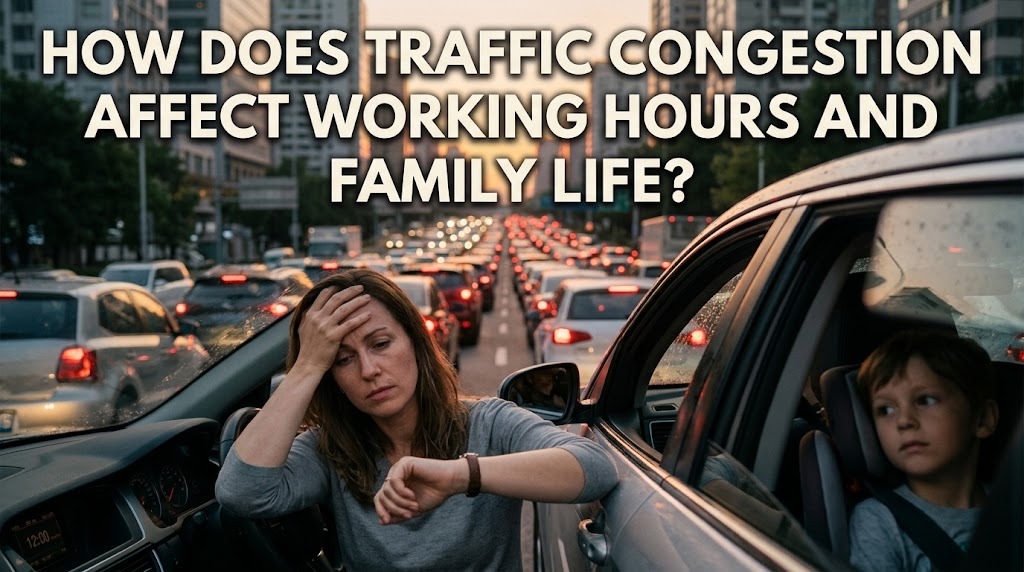
Traffic congestion is a common problem in growing cities that affects how people manage their working hours and family responsibilities. As roads become more crowded, commuters often spend more time traveling between home and work. These delays can disrupt daily schedules, reduce opportunities for rest, and make it harder to maintain a healthy balance between professional and personal life. Understanding how urban traffic congestion affects workers and families can help individuals, employers, and governments develop practical solutions.
LONGER COMMUTING TIMES AND WORK SCHEDULES
One of the most direct effects of traffic congestion is the increase in commuting time. Workers who usually need a short journey to reach their offices may spend much longer on the road during peak hours. Unexpected delays caused by accidents, road construction, or overcrowded intersections can make arrival times difficult to predict. As a result, employees may arrive late, miss important meetings, or struggle to follow their planned working schedules.
Longer commutes can also force workers to leave home earlier and return later than expected. This reduces the time available for sleep, exercise, household responsibilities, and personal activities. Employees who repeatedly experience these disruptions may find it harder to maintain consistent routines. Improving traffic management and providing reliable public transportation can help make commuting more predictable and reduce unnecessary delays.
REDUCED WORKPLACE PRODUCTIVITY
Traffic congestion can affect workplace productivity by making employees tired and stressed before their working day even begins. Spending a long time in crowded traffic may reduce concentration and make it harder to remain focused on demanding tasks. Workers who arrive late may also need to adjust their schedules or rush through activities to meet deadlines. These challenges can affect both individual performance and the overall efficiency of an organization.
Businesses may experience additional problems when employees, customers, and suppliers encounter transportation delays. Meetings may start late, deliveries may arrive behind schedule, and service appointments may need to be rearranged. Although the effects vary across industries, repeated delays can increase operating costs and reduce the effective use of working hours. Employers can respond by offering flexible working hours, remote work where appropriate, and schedules that avoid the busiest commuting periods.
LESS QUALITY TIME WITH FAMILY
One important consequence of traffic congestion is the reduction of family time. When parents spend several hours commuting each day, they may have less time to talk with their children, share meals, or participate in family activities. Returning home late can also make it difficult to help children with schoolwork or manage household responsibilities. Over time, these missed opportunities may weaken daily family routines and reduce meaningful interaction.
The impact can be particularly challenging for families with young children or relatives who need regular care. Parents may have to coordinate school pickups, childcare arrangements, and other responsibilities around unpredictable travel times. Family members may also experience disappointment when traffic delays cause someone to miss planned activities or important events. Better transportation options and more flexible work arrangements can help families protect valuable time together.
STRESS, FATIGUE, AND PERSONAL WELL-BEING
Repeated exposure to congested traffic can contribute to commuting stress and emotional fatigue. Drivers may become frustrated by slow-moving vehicles, frequent stops, and uncertainty about when they will arrive. Public transportation passengers can also experience stress when services are overcrowded or delayed. When these difficulties occur every day, they may affect a person's mood and overall sense of well-being.
Long commuting hours can also reduce opportunities for physical activity, adequate sleep, and relaxation. People who return home exhausted may find it difficult to prepare healthy meals, exercise regularly, or engage in hobbies. Although individuals respond differently to commuting pressures, persistent stress can make it harder to balance work and personal responsibilities. Walking, cycling, reliable public transport, and flexible schedules may help reduce some of these pressures.
ECONOMIC COSTS AND HOUSEHOLD RESPONSIBILITIES
Traffic congestion can increase household expenses through additional fuel consumption, vehicle maintenance, parking fees, and public transportation costs when delays require alternative travel arrangements. Commuters may also lose valuable time that could otherwise be used for paid work, education, or household activities. For workers paid by the hour, arriving late or missing working time may sometimes affect their earnings. These effects depend on individual employment arrangements and commuting circumstances.
Families may also need to spend more money on childcare, meal delivery, or other services when commuting reduces the time available for household responsibilities. In some cases, parents may have to rearrange work schedules or ask relatives for help with transportation and caregiving. Employers and local governments can help by improving access to public transportation and encouraging work arrangements that reduce unnecessary peak-hour travel. These measures can lower commuting pressures and support better work-life balance.
KESIMPULAN
Traffic congestion affects working hours and family life by increasing commuting time, reducing workplace productivity, limiting time with loved ones, and contributing to stress and fatigue. It can also increase household expenses and make everyday responsibilities more difficult to manage. These challenges show that congestion is not only a transportation problem but also an issue affecting personal well-being and family relationships.
Practical solutions include improving public transportation, introducing flexible working hours, supporting remote work when suitable, and developing better urban infrastructure. Workers can also consider carpooling or alternative travel times when possible. By reducing commuting difficulties, cities and employers can help people use their time more effectively and maintain a healthier balance between work and family life.
Recent Posts

Bagaimana Sistem SKS pada Program Kuliah... 22.11.2026/54 View

How Does Technology Make Daily Evaluation... 21.11.2026/83 View

Apa Strategi Menghadapi Kesenjangan antara Kompetensi... 21.11.2026/81 View

Mengapa Inventaris Aset Penting bagi Kelancaran... 21.11.2026/78 View

When Should Musicians Join a Record... 21.11.2026/82 View
