

How Does Vehicle Tax Payment Work at Mobile Samsat?
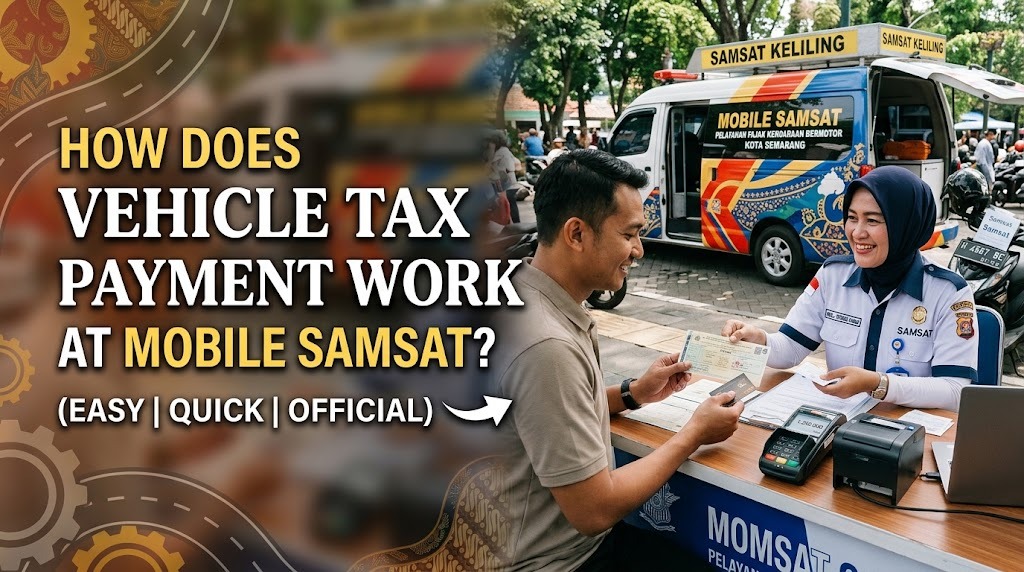
Mobile Samsat provides a convenient way for vehicle owners to pay annual vehicle tax without visiting a permanent Samsat office. The service operates at designated locations and times, allowing eligible taxpayers to complete certain vehicle administration procedures closer to their homes or workplaces. Although the process is generally straightforward, vehicle owners need to understand the requirements, payment steps, and service limitations before visiting. Knowing how the process works can help prevent delays and make tax payments more efficient.
CHECKING THE MOBILE SAMSAT SCHEDULE
The first step is to find out when and where Mobile Samsat services are available. Each service unit may follow a specific schedule, visiting different locations on designated days. Vehicle owners should check recent announcements from official Samsat channels or the relevant regional revenue agency to confirm the operating hours and service point. Checking this information in advance helps prevent unnecessary travel and ensures that the service is available when needed.
PREPARING THE REQUIRED DOCUMENTS
Before visiting Mobile Samsat, vehicle owners should prepare the documents required for their transaction. These commonly include the original vehicle registration certificate, known as STNK, and valid identification belonging to the registered vehicle owner. Additional requirements may apply depending on local regulations and the type of service requested. Reviewing the latest official requirements helps ensure that the application can proceed without avoidable delays.
VERIFYING VEHICLE INFORMATION
When the vehicle owner arrives, officers generally check the submitted documents and verify the relevant vehicle registration information. This process helps confirm the vehicle's identity, ownership records, and tax obligations. If the documents contain inconsistencies or the vehicle's administrative status requires further examination, the transaction may need additional verification. Some cases cannot be completed through a mobile unit and may require assistance from a permanent Samsat office.
CHECKING THE AMOUNT OF VEHICLE TAX
After the necessary information has been verified, the vehicle owner can confirm the amount payable. The total may depend on the vehicle's tax assessment, applicable regional rules, outstanding obligations, and any legally applicable administrative charges. Because the amount can differ between vehicles and circumstances, taxpayers should rely on the official calculation provided by the authorized service. Confirming the amount before payment helps prevent misunderstandings and supports accurate financial preparation.
COMPLETING THE PAYMENT
Once the amount has been confirmed, the vehicle owner follows the payment procedure provided by the Mobile Samsat officers. Accepted payment methods can vary by region and service unit, so visitors should check whether cashless payment, cash, or another authorized method is available. Taxpayers should follow the official instructions and avoid transferring money to unauthorized individuals. After paying, they should retain the official payment receipt or transaction confirmation as proof of the transaction.
RECEIVING PAYMENT CONFIRMATION AND DOCUMENT VALIDATION
After the payment has been processed successfully, officers provide the applicable proof of payment and complete the relevant registration validation procedure. The vehicle owner should check that the receipt and returned documents contain accurate information. If any details appear incorrect or a document is missing, the issue should be reported to authorized staff before leaving the service point. Keeping payment records in a safe place can also help when checking the transaction later.
UNDERSTANDING MOBILE SAMSAT SERVICE LIMITATIONS
Mobile Samsat generally focuses on eligible annual vehicle tax payments and related registration validation. It may not handle every administrative procedure, such as ownership transfers, certain registration changes, or cases requiring additional inspections and verification. Requirements can also differ depending on regional arrangements and the taxpayer's circumstances. Vehicle owners should confirm whether their specific needs can be handled by Mobile Samsat before traveling to the service location.
TIPS FOR A SMOOTH PAYMENT PROCESS
Vehicle owners can make their visit more efficient by checking the latest schedule, preparing complete documents, and arriving early enough to account for queues. They should also confirm the accepted payment methods and bring sufficient funds for the amount officially assessed. Following instructions from authorized officers and keeping transaction receipts can help resolve questions that arise after payment. If the mobile service is unavailable or cannot process the transaction, taxpayers can ask about alternative authorized payment channels.
CONCLUSION
Vehicle tax payment at Mobile Samsat typically involves checking the schedule, preparing documents, verifying vehicle information, confirming the tax amount, completing payment, and receiving official confirmation. The exact procedure and accepted payment methods may vary by region, so checking current official information is essential. With proper preparation, eligible vehicle owners can complete their annual tax obligations more conveniently while reducing the risk of unnecessary delays.
Recent Posts

Bagaimana Sistem SKS pada Program Kuliah... 22.11.2026/57 View

How Does Technology Make Daily Evaluation... 21.11.2026/86 View

Apa Strategi Menghadapi Kesenjangan antara Kompetensi... 21.11.2026/84 View

Mengapa Inventaris Aset Penting bagi Kelancaran... 21.11.2026/82 View

When Should Musicians Join a Record... 21.11.2026/86 View
