

How Does Verbal Intelligence Help During a Job Interview?
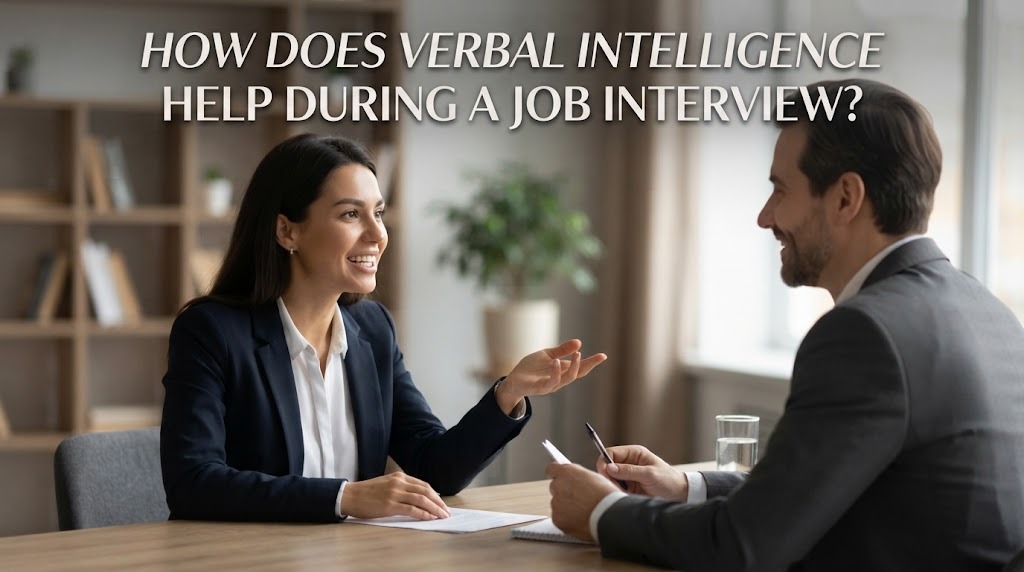
A job interview requires candidates to communicate information about their skills, experience, and qualifications. Verbal intelligence can help candidates understand questions and provide answers that are clear and relevant. It also supports listening, vocabulary, sentence organization, and appropriate word choice. Good communication can make it easier for interviewers to understand the information provided by a candidate. However, interview preparation should also include knowledge of the position, relevant experience, and professional behavior.
UNDERSTANDING VERBAL INTELLIGENCE IN JOB INTERVIEWS
Verbal intelligence involves the ability to understand and use language effectively. During an interview, candidates need to listen carefully before responding to questions. They also need to organize their thoughts so their answers are easy to follow. Communication skills can help candidates explain information without unnecessary confusion. These abilities are useful throughout different stages of an interview.
Verbal intelligence also involves understanding the context of a conversation. Candidates may need to adjust their language depending on the question and the professional setting. For example, an answer about work experience should usually focus on relevant responsibilities and results. Clear and appropriate language can help communicate information efficiently. Strong verbal skills can therefore support the overall interview process.
HELPING CANDIDATES UNDERSTAND QUESTIONS
Listening carefully is an important part of a successful interview conversation. Candidates need to understand what the interviewer is asking before deciding how to respond. Active listening can help them identify the main point of a question and avoid giving unrelated answers. If a question is unclear, candidates can politely ask the interviewer to clarify it. This is often more useful than answering based on an incorrect interpretation.
Candidates can practice listening by using common interview questions before the actual interview. They can listen to the question completely and then take a brief moment to organize their response. This can reduce the tendency to answer too quickly. Practice can also help candidates become familiar with different ways interview questions may be phrased. Over time, this preparation can make conversations feel more manageable.
HELPING CANDIDATES EXPLAIN THEIR EXPERIENCE
Candidates often need to describe their education, work experience, projects, skills, and achievements. Verbal intelligence can help them organize this information into a clear explanation. Speaking skills allow candidates to explain what they did, how they contributed, and what they learned. Specific examples can make answers more informative than general statements. The goal is to provide information that is relevant to the position.
Candidates can prepare by reviewing their experiences before the interview. They can identify several situations that demonstrate relevant skills and prepare short explanations for each one. Practicing these explanations can help them communicate without relying entirely on memorized sentences. They should remain truthful and avoid exaggerating their experience. Clear and accurate answers are more useful than complicated responses.
SUPPORTING PROFESSIONAL COMMUNICATION
A job interview is a professional conversation, so candidates need to consider their vocabulary, tone, and sentence structure. Using clear and professional language can help communicate ideas appropriately. Candidates should avoid unnecessary slang or overly complicated expressions that may make their answers difficult to understand. They can also adjust their communication according to the formality of the interview. This shows awareness of the professional context.
Verbal intelligence can also help candidates respond to follow-up questions. Interviewers may ask for additional details when they want to understand an experience more clearly. Candidates need to listen, identify the new focus of the question, and provide relevant information. Staying focused can make answers more organized. These communication habits can be developed through practice and feedback.
BUILDING CONFIDENCE THROUGH INTERVIEW PRACTICE
Interview practice can help candidates become more familiar with communicating under professional conditions. They can practice with friends, teachers, mentors, or by recording themselves answering common questions. Reviewing the recording can help identify unclear pronunciation, repeated words, or overly long answers. Candidates can then practice making their responses more concise and organized. This process can improve communication without requiring perfect speech.
Preparation can also include researching the organization and understanding the responsibilities of the position. Knowing relevant information can make it easier to connect personal skills and experiences with the role. Candidates should remember that communication is only one part of an interview. Qualifications, experience, preparation, and the requirements of the position also matter. Combining these areas can help candidates communicate their information more effectively.
CONCLUSION
Verbal intelligence can help during a job interview by supporting active listening, clear answers, organized explanations, professional language, and confident communication. Candidates can use these abilities to explain their qualifications and experiences in a way that is easier to understand. Regular interview practice can help improve speaking and listening skills while reducing unnecessary hesitation. However, good verbal communication should be combined with relevant preparation, accurate information, and knowledge of the position. Developing these abilities can help candidates communicate more effectively in professional interview situations.
Recent Posts

Bagaimana Sistem SKS pada Program Kuliah... 22.11.2026/21 View

How Does Technology Make Daily Evaluation... 21.11.2026/64 View

Apa Strategi Menghadapi Kesenjangan antara Kompetensi... 21.11.2026/65 View

Mengapa Inventaris Aset Penting bagi Kelancaran... 21.11.2026/62 View

When Should Musicians Join a Record... 21.11.2026/60 View
