

How Has Technological Development Transformed Everyday Human Activities?
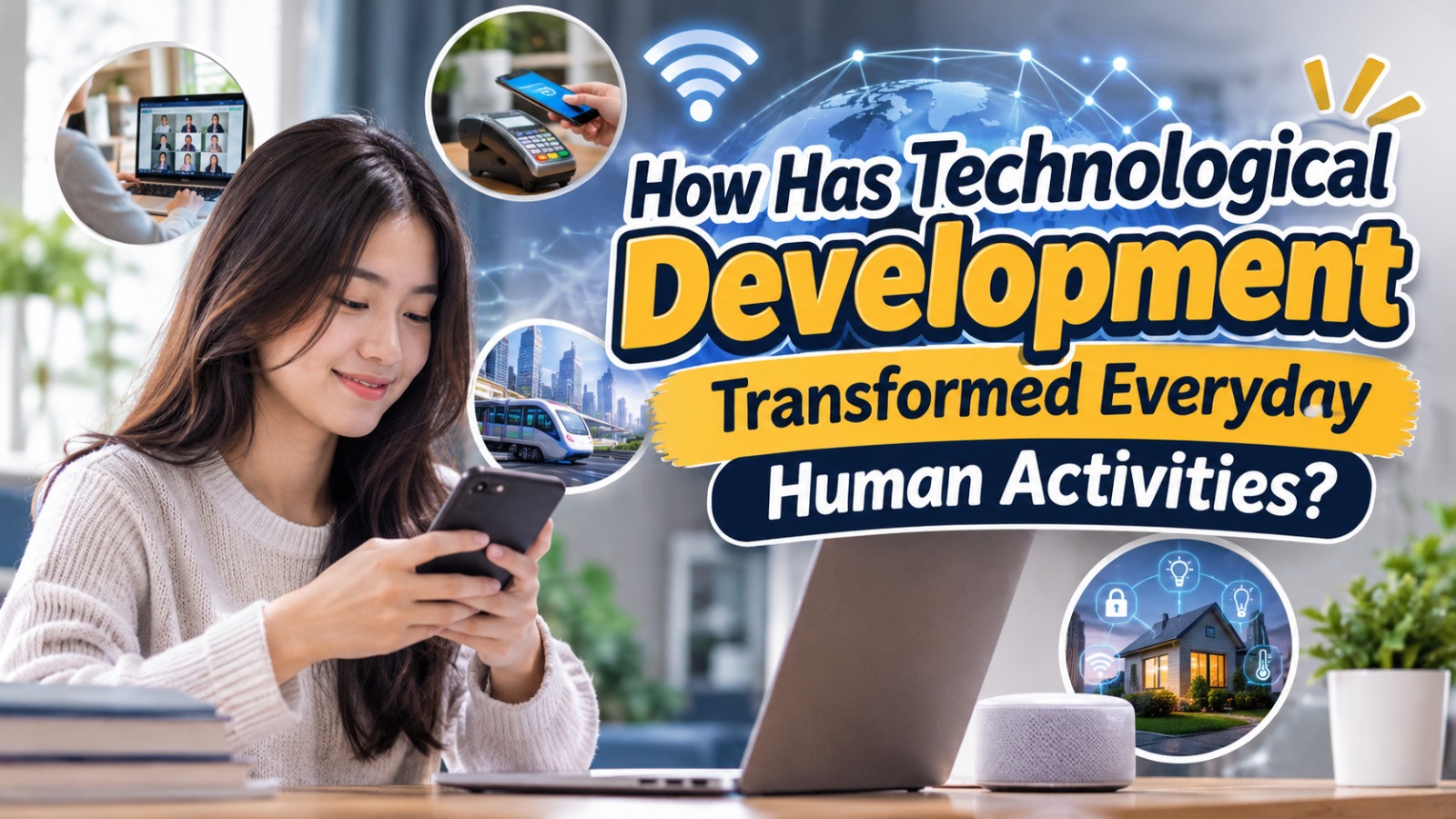
Technological development has significantly changed the way people carry out their daily activities. In the past, many tasks required considerable time, physical effort, and direct interaction. Today, various technological innovations allow people to complete activities more quickly, communicate easily, and access information from almost anywhere. Smartphones, the internet, artificial intelligence, and digital applications have become important parts of modern life.
These developments have influenced many areas, including communication, education, transportation, healthcare, and economic activities. People can now work remotely, study online, shop through digital platforms, and manage their finances without visiting physical locations. Although technology provides many benefits, it also creates challenges that require responsible use. Understanding these changes helps people take advantage of technology while maintaining a healthy balance in everyday life.
TRANSFORMATION OF COMMUNICATION IN EVERYDAY LIFE
Communication technology has changed how people interact with family members, friends, colleagues, and communities. In the past, communication over long distances often depended on letters or expensive telephone services. These methods required more time, especially when people needed to exchange information with someone in another country.
Today, smartphones and internet-based applications allow people to communicate through instant messages, voice calls, and video conferences. Social media platforms also make it easier to share information, photographs, and personal experiences with a wider audience. These developments help people maintain relationships even when they live far apart.
However, modern communication also has disadvantages. Excessive use of digital devices can reduce direct interaction and create misunderstandings because written messages do not always express emotions clearly. Therefore, digital communication should complement face-to-face interaction rather than completely replace it.
CHANGES IN EDUCATION AND LEARNING ACTIVITIES
Technological development has created new opportunities in the education sector. Students no longer depend entirely on printed textbooks or classroom explanations to understand different subjects. Through the internet, they can access digital libraries, educational videos, online courses, and interactive learning platforms.
Teachers can also use technology to improve the learning process. Digital presentations, virtual classrooms, and educational applications make it easier to explain complex topics. In addition, students can review recorded lessons and complete assignments through online platforms. Flexible learning opportunities allow individuals to develop their knowledge according to their schedules and learning needs.
Nevertheless, technology cannot guarantee better educational results without proper guidance. Students may become distracted by entertainment platforms or rely too heavily on artificial intelligence when completing assignments. Limited internet access and unsuitable devices can also create difficulties for some learners. For this reason, digital literacy, independent thinking, and responsible technology use remain essential in modern education.
THE DEVELOPMENT OF DIGITAL ECONOMIC ACTIVITIES
Technology has transformed how people earn money, purchase products, and manage financial transactions. Traditional business activities often required customers to visit physical stores and complete payments directly. Today, online marketplaces and digital payment applications allow people to buy products and services more conveniently.
Businesses also benefit from technological development because they can promote products through social media, reach customers in different locations, and manage transactions using digital systems. Small business owners can use online platforms to introduce their products without always requiring large investments in physical stores. This creates opportunities for entrepreneurs to expand their businesses.
Furthermore, digital economic activities have encouraged the growth of freelance work and remote employment. People can offer professional services through online platforms and collaborate with clients from different countries. However, these opportunities also involve competition, cybersecurity risks, and changing professional requirements. Individuals must continuously improve their abilities to remain competitive in the digital economy.
IMPROVEMENTS IN TRANSPORTATION AND HEALTHCARE SERVICES
Technological development has made transportation more practical and efficient. Navigation applications help drivers find suitable routes, estimate travel times, and avoid certain traffic problems. Online transportation services also allow people to order vehicles or delivery services through smartphones. These innovations make daily travel and transportation arrangements more convenient.
Technology has also improved healthcare services in several ways. Medical professionals can use modern equipment to examine patients, identify health problems, and support medical procedures. Digital health platforms allow people to access certain healthcare services, arrange appointments, and receive medical information more easily.
In addition, telemedicine enables patients to consult healthcare professionals remotely when appropriate. This can be particularly helpful for people who have difficulty visiting healthcare facilities. However, digital healthcare services have limitations and cannot replace every physical examination or emergency medical procedure. Technology should support professional medical care rather than encourage people to make medical decisions without proper guidance.
THE INFLUENCE OF TECHNOLOGY ON PERSONAL LIFESTYLE
Modern technology has influenced how people organize their time, complete household responsibilities, and enjoy entertainment. Smart home devices, digital calendars, and productivity applications help individuals manage different activities more efficiently. People can also order food, purchase daily necessities, and pay bills through digital services without spending much time traveling.
Entertainment has also become more accessible. Streaming platforms, online games, digital music services, and social media provide various forms of entertainment through internet-connected devices. People can choose content according to their interests and access it whenever they want.
However, excessive dependence on technology can negatively affect personal habits. Spending too much time looking at screens may reduce physical activity, interrupt sleep schedules, and limit direct social interaction. Maintaining a healthy balance between digital activities and real-life experiences is important for personal well-being. People should use technology according to their needs rather than allowing digital devices to control their daily routines.
CHALLENGES AND RESPONSIBLE USE OF MODERN TECHNOLOGY
Although technology offers many advantages, its development also introduces challenges that affect individuals and society. One major concern is data privacy and cybersecurity. People share personal information through digital applications, websites, and online services, which may create risks when information is not properly protected.
Another challenge is the spread of misinformation. Social media allows information to circulate quickly, but not every published statement is accurate. People who accept information without checking its source may misunderstand important issues or share misleading content with others. Therefore, critical thinking and information verification are necessary when using digital platforms.
Technology can also create differences between people who have sufficient access to digital resources and those who do not. Individuals without reliable internet connections or appropriate devices may experience difficulties participating in modern educational and economic activities. Governments, businesses, and communities should work together to improve digital access and awareness.
Responsible technology use requires individuals to understand both its benefits and limitations. Protecting personal information, managing screen time, checking information sources, and respecting others online are important habits. With these practices, people can enjoy technological convenience while reducing potential risks.
CONCLUSION
Technological development has transformed everyday human activities in many important ways. Communication has become faster, education more flexible, economic activities more accessible, and transportation and healthcare services more efficient. Technology has also changed personal lifestyles by providing convenient solutions for daily responsibilities and entertainment.
However, these developments also bring challenges, including privacy risks, misinformation, digital inequality, and excessive dependence on electronic devices. Using technology responsibly is essential to gaining its benefits while minimizing its negative effects.
Ultimately, technology should serve as a tool that improves human life rather than replacing important human values and relationships. By developing digital literacy, critical thinking, and responsible habits, individuals can adapt to technological changes and use modern innovations to create a more productive and balanced future.
Recent Posts

How Does Technology Make Daily Evaluation... 21.11.2026/57 View

Apa Strategi Menghadapi Kesenjangan antara Kompetensi... 21.11.2026/59 View

Mengapa Inventaris Aset Penting bagi Kelancaran... 21.11.2026/55 View

When Should Musicians Join a Record... 21.11.2026/54 View

Daily Evaluation or Daily Planning Which... 21.11.2026/61 View
