

How Have Changing Times Transformed Human Communication and Access to Information?
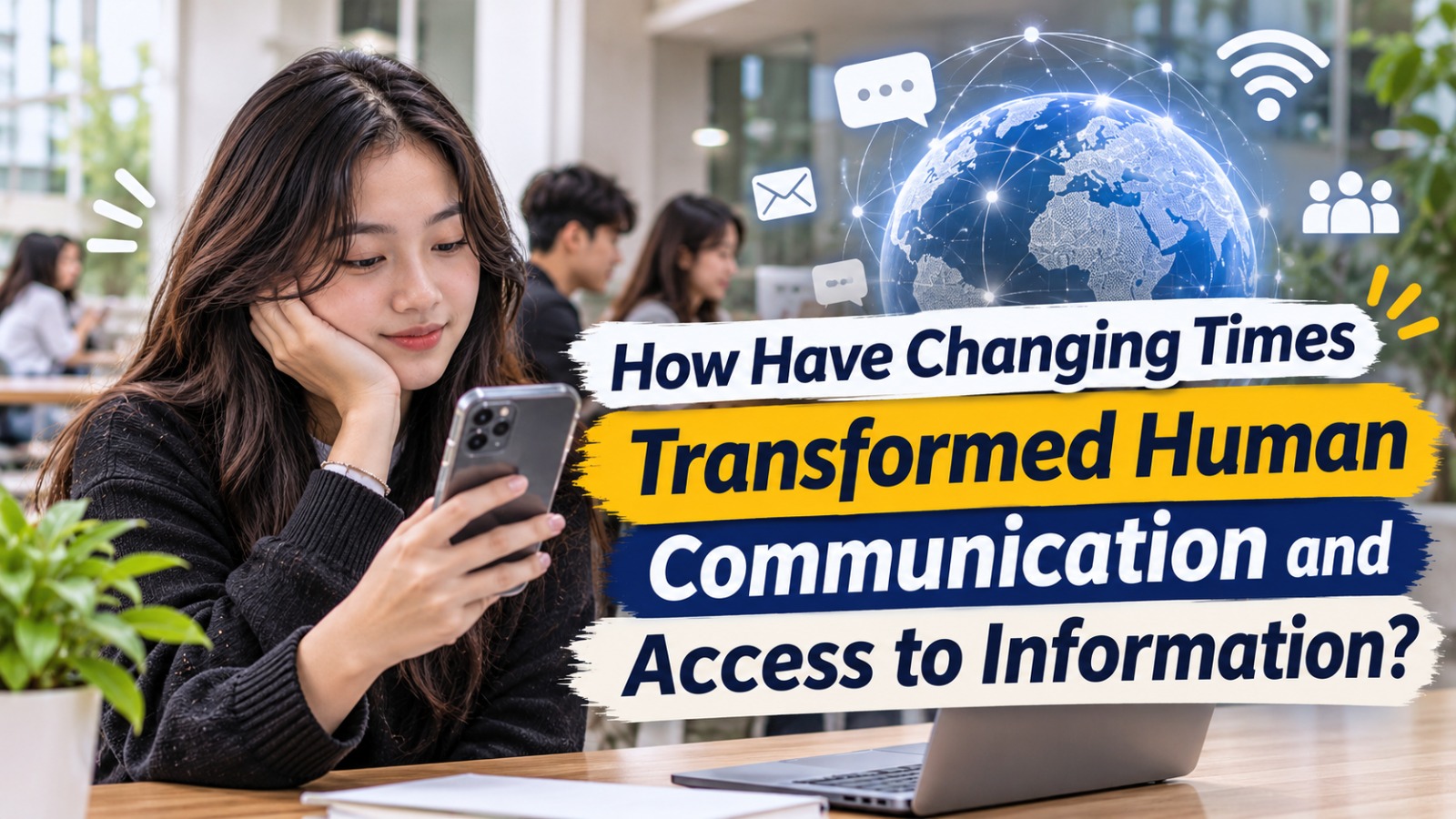
Changing times have significantly transformed how people communicate and access information in modern society. Technological development, internet connectivity, and digital platforms have changed the way individuals exchange messages, share knowledge, and obtain news. In the past, communication often depended on face-to-face conversations, letters, newspapers, and traditional broadcasting. Today, smartphones and internet services allow people to communicate and access information within seconds. These developments provide greater convenience and wider opportunities for learning, but they also introduce challenges related to misinformation, privacy, and digital dependence. Understanding these changes is important so individuals can use modern communication technology wisely and responsibly.
THE EVOLUTION OF HUMAN COMMUNICATION METHODS
Human communication has developed significantly alongside technological progress. In the past, people mainly relied on direct conversations, handwritten letters, and telephone calls to exchange information. Although these methods allowed individuals to maintain relationships, communicating over long distances often required more time and effort. The development of modern communication technology has gradually made these activities faster and more practical.
Today, people can use messaging applications, video calls, and social media to communicate with others regardless of geographical distance. Businesses can also coordinate activities through digital communication systems, while families can maintain relationships even when members live in different countries. These developments have made communication more flexible and accessible. However, direct human interaction remains important because personal conversations help individuals understand emotions, facial expressions, and body language more effectively.
THE ROLE OF THE INTERNET IN ACCESSING INFORMATION
The internet has become one of the most important sources of information in modern society. People can search for educational materials, research articles, news, and practical knowledge through various online platforms. Information that previously required visits to libraries or specialized institutions can now be accessed through computers and smartphones.
This development has created greater learning opportunities for students, workers, researchers, and the general public. Individuals can explore different subjects, compare information from multiple sources, and improve their knowledge independently. However, not all information available online is accurate or trustworthy. Some websites publish misleading content, outdated information, or unverified claims. Therefore, information literacy and critical thinking are necessary to evaluate sources and distinguish reliable information from inaccurate content.
THE INFLUENCE OF SOCIAL MEDIA ON INFORMATION SHARING
Social media has changed how information is distributed and received by the public. Platforms that allow users to publish text, photographs, videos, and personal opinions make information sharing faster and more interactive. Individuals no longer depend entirely on traditional media organizations to communicate experiences or discuss current issues. They can participate in online discussions and share information with audiences from different locations.
Social media also provides opportunities for businesses, educational institutions, and community organizations to reach wider audiences. Important announcements, educational campaigns, and public information can be distributed efficiently through digital networks. However, information can spread rapidly without proper verification, increasing the risk of misinformation and misleading content. Users should avoid sharing unverified information and consider the credibility of the original source. Responsible information sharing and digital awareness are essential for maintaining a healthy online environment.
CHANGES IN EDUCATION AND KNOWLEDGE DISTRIBUTION
Modern communication technology has transformed how educational information is distributed and understood. Students can access online courses, electronic books, academic publications, and educational videos without depending entirely on physical learning materials. Teachers can also communicate with students through digital platforms and provide additional resources outside classroom hours.
Furthermore, online learning communities allow individuals to exchange knowledge with people from different backgrounds and geographical locations. Students can participate in virtual discussions, attend webinars, and develop new abilities through independent learning. These opportunities make education more flexible and accessible. Nevertheless, students must learn to manage their time and evaluate the quality of online materials. Digital learning, independent research, and continuous education have become important elements of modern knowledge development.
CHALLENGES OF MODERN COMMUNICATION AND INFORMATION ACCESS
Although modern technology provides many advantages, it also creates challenges that affect communication and information access. One major concern is the spread of misinformation, which can influence public opinions and create misunderstandings. False information may spread quickly when users share content without checking its accuracy. This problem can affect discussions about health, education, politics, and other important social issues.
Another challenge is the protection of personal information. Digital communication platforms often involve the exchange of private messages, photographs, and personal data. Without proper security awareness, users may become vulnerable to online fraud, identity theft, and privacy violations. Excessive use of digital communication can also reduce face-to-face interaction and affect social relationships. To address these problems, individuals need to develop cybersecurity awareness, critical thinking, and responsible digital habits.
THE FUTURE OF COMMUNICATION AND INFORMATION ACCESS
Communication and information access will continue to develop as new technologies become more advanced. Artificial intelligence, voice recognition, automated translation, and immersive communication systems may create more efficient ways for people to exchange information. These technologies can reduce language barriers, support international cooperation, and provide faster access to relevant knowledge.
However, technological progress should also consider human needs and social responsibilities. Governments, educational institutions, technology companies, and communities need to encourage digital literacy and protect users from harmful online activities. Individuals should also develop the ability to communicate clearly, evaluate information, and respect different opinions. Inclusive digital access, technological innovation, and responsible communication can help create a society where information is available to more people without sacrificing accuracy, privacy, and meaningful human relationships.
CONCLUSION
Changing times have transformed human communication and access to information through the development of the internet, smartphones, social media, and digital learning platforms. These technologies allow people to communicate faster, access wider knowledge, and participate in information sharing across geographical boundaries. However, challenges such as misinformation, privacy risks, and excessive digital dependence require careful attention.
To benefit from modern communication systems, individuals must develop digital literacy, critical thinking, and responsible online behavior. Technology should also complement direct human interaction rather than completely replace personal communication. Ultimately, modern communication becomes more valuable when technological convenience is combined with accurate information, mutual respect, and responsible use.
Recent Posts

How Does Technology Make Daily Evaluation... 21.11.2026/57 View

Apa Strategi Menghadapi Kesenjangan antara Kompetensi... 21.11.2026/59 View

Mengapa Inventaris Aset Penting bagi Kelancaran... 21.11.2026/54 View

When Should Musicians Join a Record... 21.11.2026/54 View

Daily Evaluation or Daily Planning Which... 21.11.2026/61 View
