

How Is a Color Blindness Test Performed Correctly?
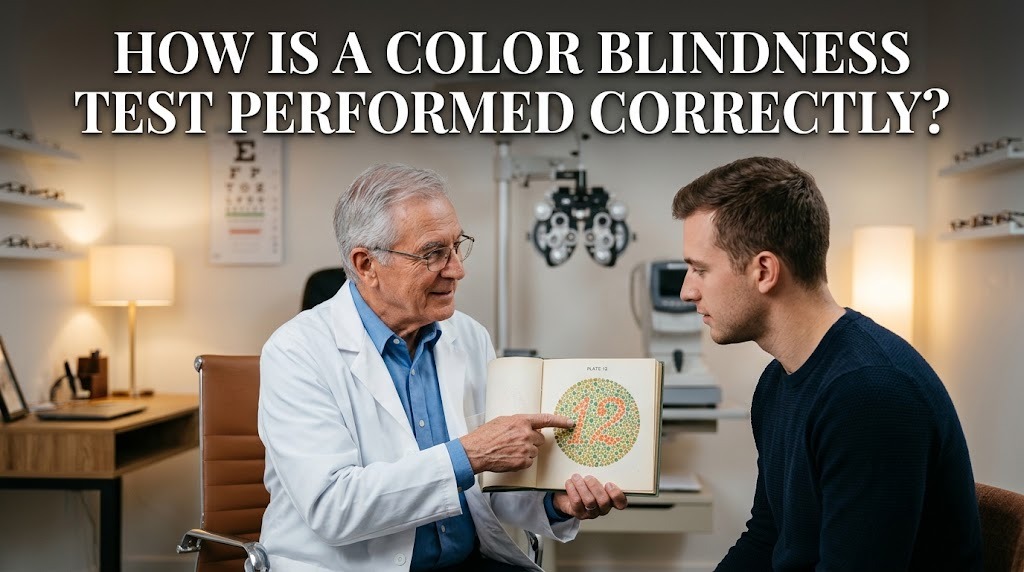
A color blindness test is an eye examination designed to determine whether someone has difficulty recognizing or distinguishing certain colors. This condition, also known as color vision deficiency, can affect everyday activities such as choosing clothes, reading color-coded information, recognizing traffic signals, and performing tasks that require accurate color identification. Some people are born with color vision deficiencies, while others may develop them because of eye diseases, certain medications, or other health conditions.
Performing a color blindness test correctly is important to obtain reliable results and identify the type of color vision problem. The examination generally uses specially designed color patterns, numbers, symbols, or colored objects to evaluate how the eyes recognize different colors. Although the procedure is usually simple and painless, several factors must be considered to ensure accurate results.
UNDERSTANDING THE PURPOSE OF A COLOR BLINDNESS TEST
A color blindness test aims to determine whether someone has normal color vision or experiences difficulties distinguishing particular colors. The examination can identify different types of color vision deficiencies, including problems recognizing red and green or distinguishing blue and yellow. In more severe cases, individuals may experience a significant reduction in their ability to perceive colors. The results help healthcare professionals understand how well someone recognizes different color combinations.
This examination is useful because color vision deficiencies can influence various aspects of daily life. For example, individuals may have difficulty interpreting colored charts, identifying certain warning indicators, or completing activities that require precise color recognition. Testing can also be important for people applying for professions with specific visual requirements. By identifying the condition early, individuals can better understand their visual abilities and find suitable ways to manage everyday challenges.
PREPARING BEFORE TAKING A COLOR BLINDNESS TEST
Proper preparation helps ensure that a color blindness test produces reliable results. The examination should be conducted in a room with sufficient and evenly distributed lighting. Appropriate daylight or standardized examination lighting is generally recommended because dim lighting and unusual light colors can affect how individuals perceive different shades. Direct sunlight and excessive glare should also be avoided because they may interfere with the examination.
Individuals should follow the examiner's instructions regarding the use of prescription glasses or contact lenses. They should also make sure their eyes are comfortable and not excessively tired before starting the test. The examiner needs to explain how to identify the numbers, symbols, or patterns displayed during the examination. Understanding the instructions is important because incorrect answers may result from confusion rather than an actual color vision deficiency.
FOLLOWING THE CORRECT PROCEDURE DURING A COLOR BLINDNESS TEST
One of the most common methods used to examine color vision is the Ishihara test. This examination uses specially designed plates containing numerous colored dots arranged to form numbers, shapes, or patterns. Individuals are asked to identify the numbers or symbols they can recognize on each plate. The examiner then records their answers and compares them with the expected responses to identify possible color vision difficulties.
During the examination, each plate should be presented individually at the recommended viewing distance, generally around 75 centimeters, depending on the test instructions. Individuals are usually given only a few seconds to identify each pattern. They should answer honestly based on what they can actually see rather than repeatedly guessing or receiving assistance from other people. Depending on the examination protocol, testing may involve both eyes or one eye at a time. Following these procedures helps minimize errors and provides more consistent results.
UNDERSTANDING DIFFERENT METHODS OF COLOR BLINDNESS TESTING
Several examination methods can be used to evaluate color vision, depending on the individual's condition and the purpose of the assessment. The Ishihara test is widely used to identify red-green color vision deficiencies. Its plates contain colored patterns that appear different to individuals with normal color vision compared with those who have certain types of color blindness. However, this examination is primarily designed to detect red-green deficiencies and cannot identify every possible color vision problem.
Another method is the Farnsworth D-15 test, which requires individuals to arrange colored caps according to their similarities. This examination helps identify difficulties distinguishing particular color groups and provides additional information about the type of color vision deficiency. The anomaloscope is also used in specialized examinations, particularly to evaluate red-green color vision through controlled color matching. In addition, digital color blindness tests are available through computers and mobile devices. However, their accuracy can vary depending on screen quality, brightness, color calibration, and surrounding lighting conditions.
FACTORS THAT CAN AFFECT COLOR BLINDNESS TEST ACCURACY
Several factors can influence the accuracy of color blindness test results. One of the most important is lighting because different light sources can change how colors appear to the human eye. If the examination room is too dark, excessively bright, or uses colored lighting, individuals may struggle to recognize the patterns correctly. Poor-quality testing materials can also produce misleading results.
Individual eye conditions and the ability to understand instructions may also affect the examination. Certain eye diseases, neurological conditions, and medication effects can interfere with normal color perception. Digital examinations may produce different results because computer and mobile screens do not always display colors consistently. For this reason, standardized testing materials and appropriate examination conditions are important. If the results are unclear or inconsistent, an eye care professional may recommend additional tests to obtain a more complete assessment.
CONCLUSION
A color blindness test should be performed using appropriate examination methods, proper lighting, and clear instructions to obtain accurate results. The Ishihara test is commonly used to identify red-green color vision deficiencies, while the Farnsworth D-15 test and anomaloscope can provide additional information about color perception. Although online tests can provide an initial indication, they should not replace professional eye examinations. Understanding the correct testing procedure helps individuals recognize potential color vision problems and determine whether further evaluation is necessary. Anyone experiencing sudden changes in color perception should consult an eye care professional for an appropriate examination.
Recent Posts

Bagaimana Sistem SKS pada Program Kuliah... 22.11.2026/42 View

How Does Technology Make Daily Evaluation... 21.11.2026/72 View

Apa Strategi Menghadapi Kesenjangan antara Kompetensi... 21.11.2026/74 View

Mengapa Inventaris Aset Penting bagi Kelancaran... 21.11.2026/70 View

When Should Musicians Join a Record... 21.11.2026/73 View
