

How Is Artificial Intelligence Shaping the Future of Human Life?
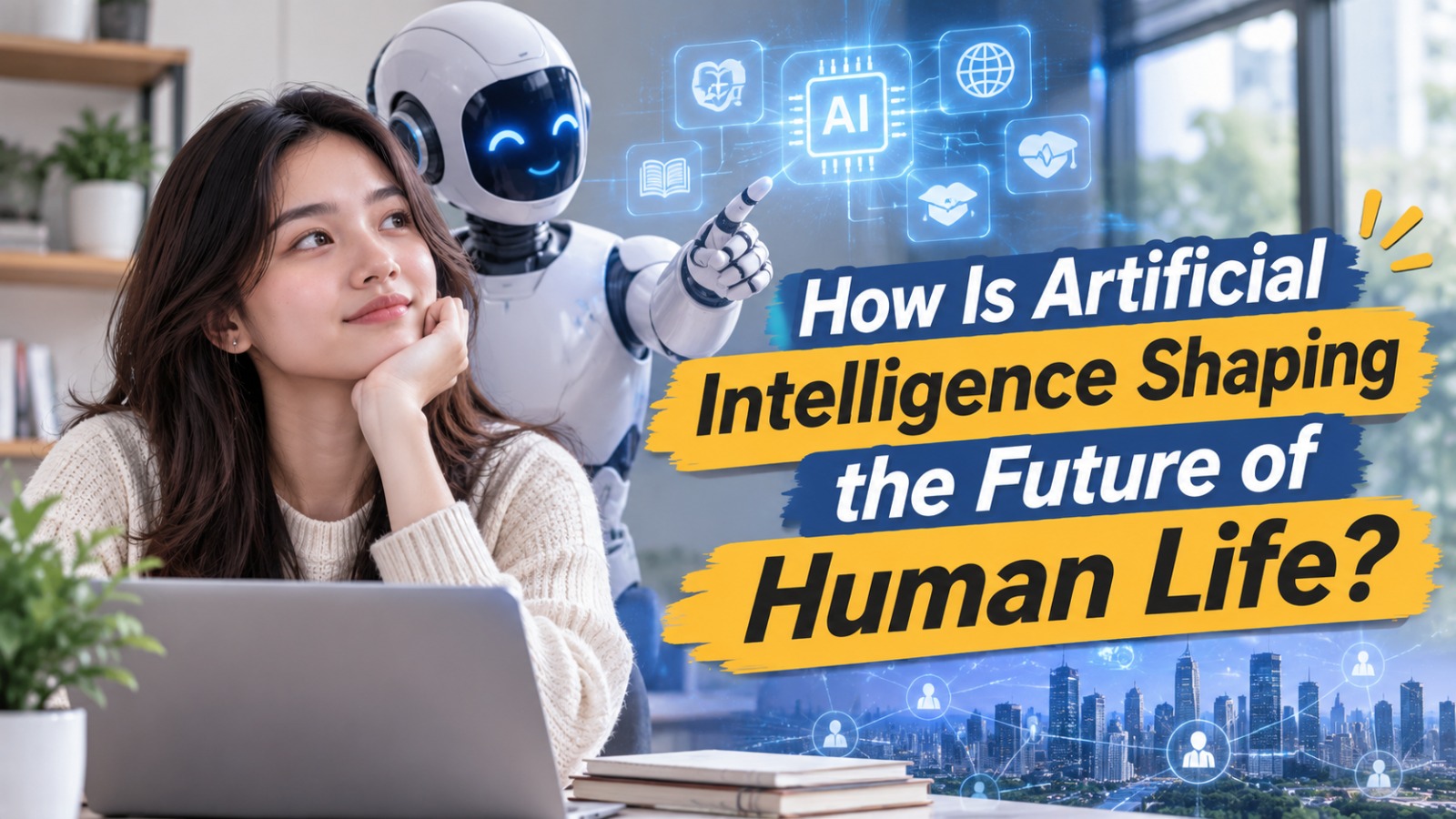
Artificial intelligence has become one of the most influential technological developments shaping modern society. Its ability to process information, recognize patterns, and perform tasks has transformed various aspects of human life. Artificial intelligence (AI) is increasingly used in education, healthcare, business, transportation, communication, and many other industries. These technologies help people complete activities more efficiently and provide new solutions to everyday problems. However, the development of AI also raises concerns about employment, privacy, security, and human decision-making. Understanding how artificial intelligence influences the future is important so society can use this technology responsibly and benefit from its potential.
THE ROLE OF ARTIFICIAL INTELLIGENCE IN MODERN DAILY ACTIVITIES
Artificial intelligence has gradually become part of everyday life. Many people interact with AI through smartphone assistants, recommendation systems, navigation applications, and online customer services. These technologies can analyze user preferences and provide information or suggestions based on collected data. As a result, individuals can complete certain activities more quickly and conveniently.
AI also helps people manage daily responsibilities. For example, navigation applications can recommend efficient travel routes, while smart devices can automate certain household activities. Online platforms use AI to suggest products, entertainment, and information that may interest their users. Although these features provide convenience, individuals should understand that AI-generated recommendations are not always accurate or suitable. Human judgment and responsible technology use remain important when relying on artificial intelligence.
THE TRANSFORMATION OF EDUCATION THROUGH ARTIFICIAL INTELLIGENCE
Artificial intelligence is changing how students learn and how teachers deliver educational materials. AI-powered learning platforms can provide explanations, practice questions, and learning recommendations based on individual needs. Students can use these tools to explore difficult subjects, improve their understanding, and receive additional learning support outside the classroom.
Teachers can also use AI to prepare educational materials, organize information, and support certain assessment activities. This allows educators to focus more attention on student development, classroom interaction, and individual guidance. However, excessive dependence on AI may reduce opportunities for students to develop independent thinking and problem-solving abilities. Students must learn to evaluate AI-generated information instead of accepting every answer without verification. Digital literacy, critical thinking, and academic integrity are essential for using AI effectively in education.
THE IMPACT OF ARTIFICIAL INTELLIGENCE ON HEALTHCARE AND BUSINESS
Artificial intelligence provides significant opportunities for improving healthcare services. Medical professionals can use AI-supported systems to analyze medical images, organize patient information, and identify patterns that may help support clinical decisions. Some applications can also assist with monitoring health conditions and improving hospital administration. Nevertheless, AI should support qualified healthcare professionals rather than independently replace medical judgment and patient care.
In the business sector, AI helps companies analyze market trends, understand customer behavior, and improve operational efficiency. Automated customer service systems can answer common questions, while data analysis tools can help businesses make more informed decisions. Small businesses can also explore AI tools to support marketing, content development, and administrative activities. Business innovation and operational efficiency can improve when organizations combine artificial intelligence with human expertise and proper supervision.
CHANGES IN EMPLOYMENT AND FUTURE CAREER OPPORTUNITIES
Artificial intelligence is transforming employment by changing how tasks are performed across different industries. Some repetitive activities, including basic data processing and routine administrative work, can increasingly be handled by automated systems. This development may reduce the demand for certain tasks while changing the responsibilities of existing occupations.
At the same time, AI creates new career opportunities in areas such as machine learning, data science, AI development, cybersecurity, and technology management. Workers are increasingly expected to understand digital tools and develop abilities that complement technological systems. Communication, creativity, leadership, and complex problem-solving remain valuable because many professional situations require human understanding and judgment. Therefore, continuous learning, adaptability, and relevant digital skills are important for preparing individuals to face changes in the future workplace.
THE CHALLENGES AND RISKS OF ARTIFICIAL INTELLIGENCE DEVELOPMENT
Although artificial intelligence offers many benefits, its development also creates challenges that society must address. One major concern is data privacy because AI systems may process large amounts of personal information. If data is collected or managed improperly, individuals may face privacy violations, unauthorized access, or misuse of sensitive information. Strong security measures and clear regulations are necessary to protect users.
Another challenge involves inaccurate information and algorithmic bias. AI systems can produce incorrect answers or reflect unfair patterns contained in their training data. People may also become overly dependent on automated recommendations and gradually reduce their own decision-making efforts. Furthermore, AI-generated content can be misused to create misleading information, including manipulated images and videos. Ethical AI development, transparency, and human supervision are essential to reduce these risks and ensure that technological progress benefits society.
PREPARING SOCIETY FOR AN AI-DRIVEN FUTURE
Preparing for a future influenced by artificial intelligence requires cooperation between individuals, educational institutions, businesses, and governments. People need to understand the basic principles of AI and learn how to use technological tools responsibly. Developing digital literacy and critical thinking can help individuals distinguish reliable information from inaccurate or misleading content.
Educational institutions should also update learning approaches to prepare students for future technological developments. Students need opportunities to develop creativity, communication, problem-solving, and practical technology skills. Meanwhile, governments and businesses should establish appropriate regulations, protect personal data, and provide training for workers affected by technological changes. By combining technological innovation with human values, society can build a future where AI supports human progress. Responsible innovation, lifelong learning, and human-centered development should become important priorities in the development of artificial intelligence.
CONCLUSION
Artificial intelligence is shaping the future of human life by transforming daily activities, education, healthcare, business, and employment. Its ability to process information and automate certain tasks provides opportunities to improve efficiency and create innovative solutions. However, concerns about privacy, inaccurate information, employment changes, and ethical responsibilities must also receive serious attention.
Society should not view artificial intelligence only as a replacement for human abilities but as a technology that can support human development. Individuals need to improve their knowledge, develop relevant skills, and maintain critical thinking when using AI applications. Ultimately, the future of artificial intelligence should be guided by human responsibility, ethical principles, and technological innovation that improves the quality of life.
Recent Posts

How Does Technology Make Daily Evaluation... 21.11.2026/57 View

Apa Strategi Menghadapi Kesenjangan antara Kompetensi... 21.11.2026/59 View

Mengapa Inventaris Aset Penting bagi Kelancaran... 21.11.2026/54 View

When Should Musicians Join a Record... 21.11.2026/54 View

Daily Evaluation or Daily Planning Which... 21.11.2026/61 View
