

How Is Artificial Intelligence Transforming the Industrial Revolution?
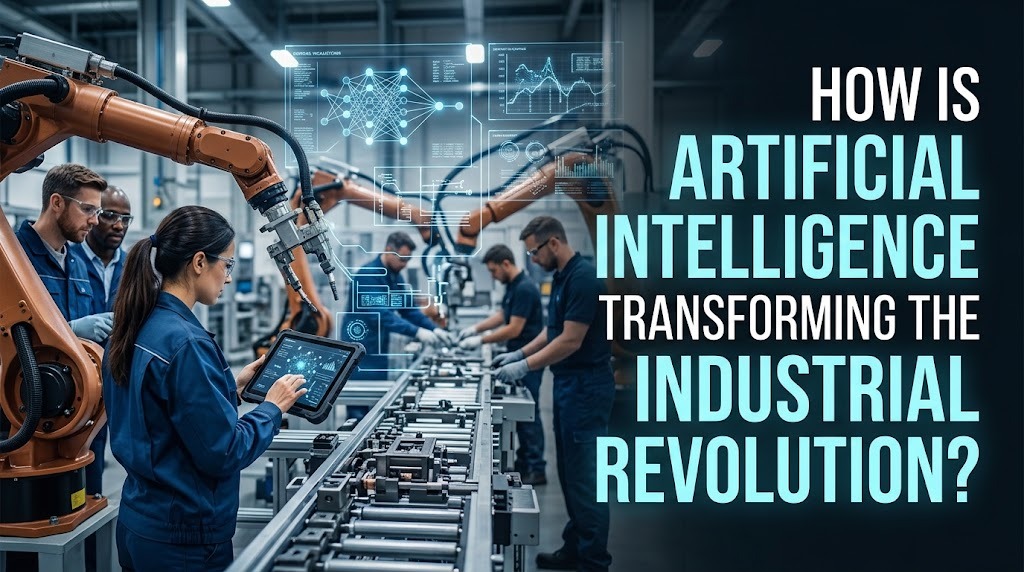
Artificial Intelligence (AI) is transforming the modern Industrial Revolution by enabling machines and computer systems to perform tasks that traditionally require human intelligence. These tasks include analyzing information, recognizing patterns, predicting outcomes, and supporting decision-making. In the era of Industry 4.0, AI works alongside automation, robotics, and connected devices to make industrial processes faster and more efficient. Businesses use AI to improve product quality, reduce operational costs, and respond to changing customer demands. However, this transformation also raises concerns about employment, data security, and the responsible use of technology.
THE ROLE OF ARTIFICIAL INTELLIGENCE IN INDUSTRY 4.0
Artificial intelligence is one of the key technologies supporting Industry 4.0, which connects digital systems with industrial operations. AI allows machines to process large amounts of data and identify patterns that can help businesses improve their performance. For example, manufacturers can use AI systems to analyze production data and detect inefficiencies that may not be immediately visible to human operators. These insights help companies make decisions based on more accurate and timely information.
AI also supports the development of smart factories, where machines, sensors, and computer systems communicate to coordinate production activities. When connected to the Internet of Things, AI can interpret information collected from equipment and recommend adjustments to industrial processes. This integration can reduce delays, improve resource management, and increase productivity. Although AI can automate many analytical tasks, human supervision remains essential to verify results, manage unexpected situations, and ensure that industrial decisions are safe and appropriate.
AI IN MANUFACTURING AND INDUSTRIAL AUTOMATION
Manufacturing is one of the sectors experiencing significant changes because of artificial intelligence. AI-powered systems can inspect products, identify defects, and monitor production quality more consistently than some traditional manual inspection methods. For instance, computer vision technology can analyze images of manufactured components and detect visible flaws during production. This helps companies reduce waste and maintain consistent product standards.
AI also improves industrial automation by helping robots perform tasks with greater adaptability. In some factories, intelligent robotic systems can assist with assembling components, sorting materials, and handling repetitive operations. AI-based predictive maintenance can analyze machine data to identify signs of possible equipment failure before a breakdown occurs. This allows maintenance teams to schedule repairs more effectively and reduce unexpected downtime. Nevertheless, automated equipment requires proper installation, regular maintenance, and trained personnel to operate safely and reliably.
THE IMPACT OF AI ON JOBS AND EMPLOYMENT
Artificial intelligence is changing the types of skills and occupations needed in the modern economy. Some repetitive tasks in manufacturing, administration, customer service, and data processing can be automated, potentially reducing demand for certain roles. Workers whose responsibilities change may need additional training to remain competitive. However, the impact varies by industry, occupation, and the extent to which employers adopt AI technology.
At the same time, AI creates opportunities in areas such as data science, machine learning, robotics, cybersecurity, and AI system development. Businesses also need employees who can supervise automated processes, interpret AI-generated information, and combine technical tools with human judgment. Skills such as creativity, communication, critical thinking, and problem-solving remain valuable because many workplace situations require context and human understanding. Therefore, reskilling and upskilling are important strategies for helping workers adapt to technological change and prepare for emerging career opportunities.
AI IN BUSINESS, HEALTHCARE, AND DAILY LIFE
Artificial intelligence has expanded beyond factories and now influences many aspects of business and daily life. Companies use AI-powered systems to analyze customer preferences, forecast demand, manage inventory, and provide automated customer support. Online shopping platforms can recommend products based on browsing behavior, while logistics companies use data-driven systems to improve delivery planning. These applications can help organizations provide more personalized services and operate more efficiently.
Healthcare is another field benefiting from AI development. AI tools can assist qualified medical professionals in analyzing medical images, organizing patient information, and identifying patterns that may support diagnosis. In transportation, AI helps power driver-assistance systems, traffic prediction tools, and certain autonomous driving technologies. People also encounter AI through voice assistants, translation applications, and digital productivity tools. However, AI-generated results are not always accurate, so important decisions require appropriate human review, particularly in healthcare, finance, and other sensitive areas.
THE CHALLENGES AND FUTURE OF ARTIFICIAL INTELLIGENCE
Despite its benefits, artificial intelligence presents challenges that businesses and governments must address. One major concern is data privacy, because AI systems may process large quantities of personal or commercially sensitive information. Poorly secured systems can expose data to unauthorized access, while biased training data can produce unfair outcomes. AI systems may also generate inaccurate information, making human oversight and careful evaluation necessary.
Another challenge is the cost of implementation and the unequal availability of digital infrastructure. Smaller businesses may struggle to afford advanced AI systems or recruit workers with specialized skills. To use AI responsibly, organizations should establish clear rules for data protection, cybersecurity, transparency, and accountability. Governments and educational institutions can also support responsible adoption by improving digital literacy and expanding access to relevant training. In the future, AI is likely to become more integrated into industrial processes, but its long-term benefits will depend on responsible innovation and effective cooperation between humans and machines.
KESIMPULAN
Artificial intelligence is transforming the Industrial Revolution by improving manufacturing, automating repetitive tasks, supporting business decisions, and expanding technological capabilities across different sectors. Through Industry 4.0, AI works with robotics, connected devices, and data analytics to increase productivity and improve efficiency. At the same time, it creates challenges involving employment, privacy, cybersecurity, and unequal access to technology. Workers need continuous learning and digital skills, while businesses must ensure that AI is implemented safely and responsibly. By combining human intelligence with artificial intelligence, society can take advantage of technological progress while managing its potential risks.
Recent Posts

Bagaimana Sistem SKS pada Program Kuliah... 22.11.2026/50 View

How Does Technology Make Daily Evaluation... 21.11.2026/79 View

Apa Strategi Menghadapi Kesenjangan antara Kompetensi... 21.11.2026/79 View

Mengapa Inventaris Aset Penting bagi Kelancaran... 21.11.2026/75 View

When Should Musicians Join a Record... 21.11.2026/80 View
