

How Is Artificial Intelligence Transforming the Music Industry?
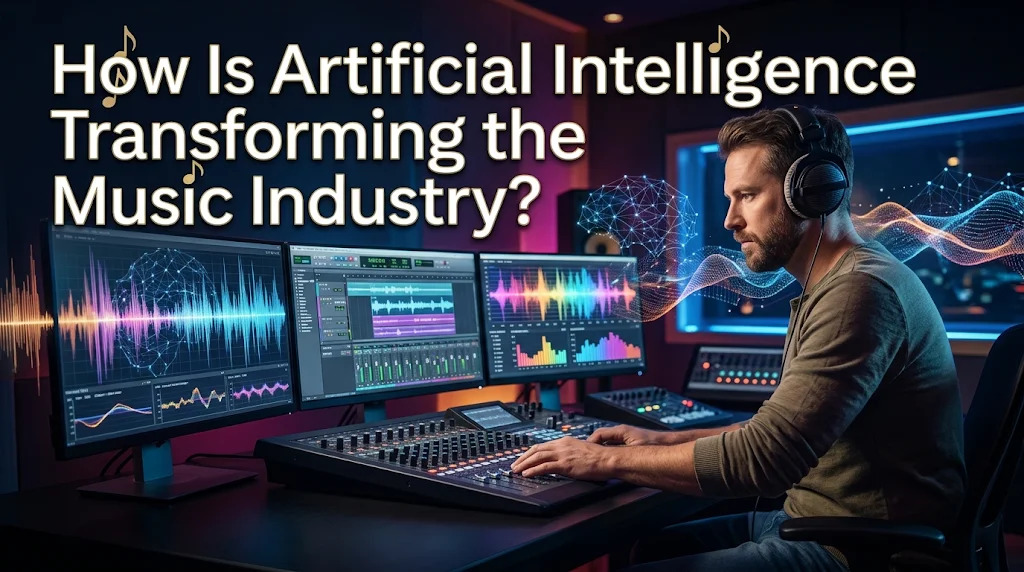
Artificial Intelligence (AI) is transforming the music industry by changing how music is created, produced, distributed, and promoted. Modern AI technology allows musicians and producers to use digital tools to support their creative processes and improve production efficiency. From generating musical ideas to analyzing listener preferences, AI is becoming an increasingly important part of the music business.
The development of AI also creates new opportunities for artists, producers, record labels, and streaming platforms. However, its use raises important questions about creativity, copyright, and the future role of human musicians.
AI IS CHANGING HOW MUSIC IS CREATED
Artificial intelligence allows musicians to explore new ways of creating music. AI-powered tools can generate melodies, suggest chord progressions, produce instrumental arrangements, and assist with songwriting. These features can help artists develop musical ideas more efficiently, especially when they need inspiration or want to experiment with different sounds.
AI does not necessarily replace human creativity. Musicians can use it as a supporting tool while maintaining control over their artistic direction. Human imagination, musical experience, and emotional expression remain important elements of meaningful music. The combination of human creativity and AI technology creates new possibilities for music production.
IMPROVING MUSIC PRODUCTION AND SOUND QUALITY
AI technology helps improve various stages of music production. Some tools can assist with audio editing, noise reduction, vocal processing, mixing, and mastering. These features allow producers to complete certain technical tasks more efficiently and focus on other creative decisions.
AI-powered software can also analyze audio recordings and suggest adjustments to improve sound quality. Independent musicians may benefit from these tools because some production features are becoming more accessible without expensive studio equipment. However, professional judgment is still necessary to ensure that the final recording meets the artist's creative expectations.
PERSONALIZING MUSIC STREAMING EXPERIENCES
Music streaming platforms use artificial intelligence to understand listener preferences and recommend songs. By analyzing listening history, search activity, and interactions, recommendation systems can identify music that may interest individual users. This makes it easier for listeners to discover new artists, albums, and genres.
AI also helps streaming services organize large music libraries and create personalized playlists. For artists, these recommendation systems can provide opportunities to reach listeners who may not have discovered their music otherwise. Personalized music recommendations have therefore become an important part of the modern digital music experience.
TRANSFORMING MUSIC MARKETING AND BUSINESS STRATEGIES
Artificial intelligence helps music companies understand audience behavior and improve their marketing strategies. AI-powered analytics can examine streaming trends, listener demographics, and engagement patterns. This information helps record labels and artists identify potential audiences and plan promotional campaigns more effectively.
AI can also support social media content planning, advertising optimization, and market research. For example, music businesses can use data analysis to identify which songs are gaining attention and which audiences respond positively to particular releases. These insights help companies make more informed business decisions. Data-driven marketing allows the music industry to develop promotional strategies based on actual audience behavior.
CHALLENGES OF USING AI IN THE MUSIC INDUSTRY
Despite its advantages, artificial intelligence creates several challenges for musicians and music businesses. One major concern is copyright protection, especially when AI systems are trained using existing recordings or generate music that resembles the work of established artists. Questions about ownership, permission, and compensation remain important issues in the development of AI-generated music.
Another challenge involves the potential misuse of AI-generated voices and recordings. Technology can imitate recognizable vocal characteristics, creating concerns about identity, consent, and authenticity. Music companies, artists, and policymakers need clear rules to protect creative rights. Responsible AI development should support innovation while respecting the contributions of human musicians.
CONCLUSION
Artificial intelligence is transforming the music industry through music creation, production, streaming recommendations, and marketing. It provides artists and music businesses with new tools to improve efficiency, explore creative possibilities, and understand audiences. However, challenges involving copyright, ownership, and authenticity must be addressed. The future of music will depend on balancing technological innovation with human creativity and fair protection for artists.
Recent Posts

How Does Technology Make Daily Evaluation... 21.11.2026/55 View

Apa Strategi Menghadapi Kesenjangan antara Kompetensi... 21.11.2026/57 View

Mengapa Inventaris Aset Penting bagi Kelancaran... 21.11.2026/51 View

When Should Musicians Join a Record... 21.11.2026/52 View

Daily Evaluation or Daily Planning Which... 21.11.2026/59 View
